
Imagine sending money across borders without a bank taking a cut, or getting paid for your music instantly instead of waiting eighteen months. For decades, we’ve accepted that every transaction needs a middleman-a broker, a bank, or a platform-to verify it works. But what if you didn’t need them? That is the promise of blockchain, a distributed ledger technology that enables peer-to-peer transactions without trusted third parties. It’s not just hype; it’s a structural shift in how value moves.
When Satoshi Nakamoto launched Bitcoin in 2009, the goal was simple: allow people to send electronic cash directly to each other. No banks. No intermediaries. Just code and cryptography. Since then, the technology has evolved far beyond digital currency. Today, industries from finance to supply chain management are using blockchain to strip out layers of bureaucracy that add cost, delay, and risk. This process is called disintermediation.
The Core Mechanism: Trust Without Intermediaries
To understand how middlemen disappear, you first have to understand why they exist in the first place. In traditional systems, you need a central authority-like a bank or a government registry-to keep records and prevent fraud. If I say I sent you $100, you don’t know if I’m telling the truth unless a bank confirms it. That confirmation costs money and time.
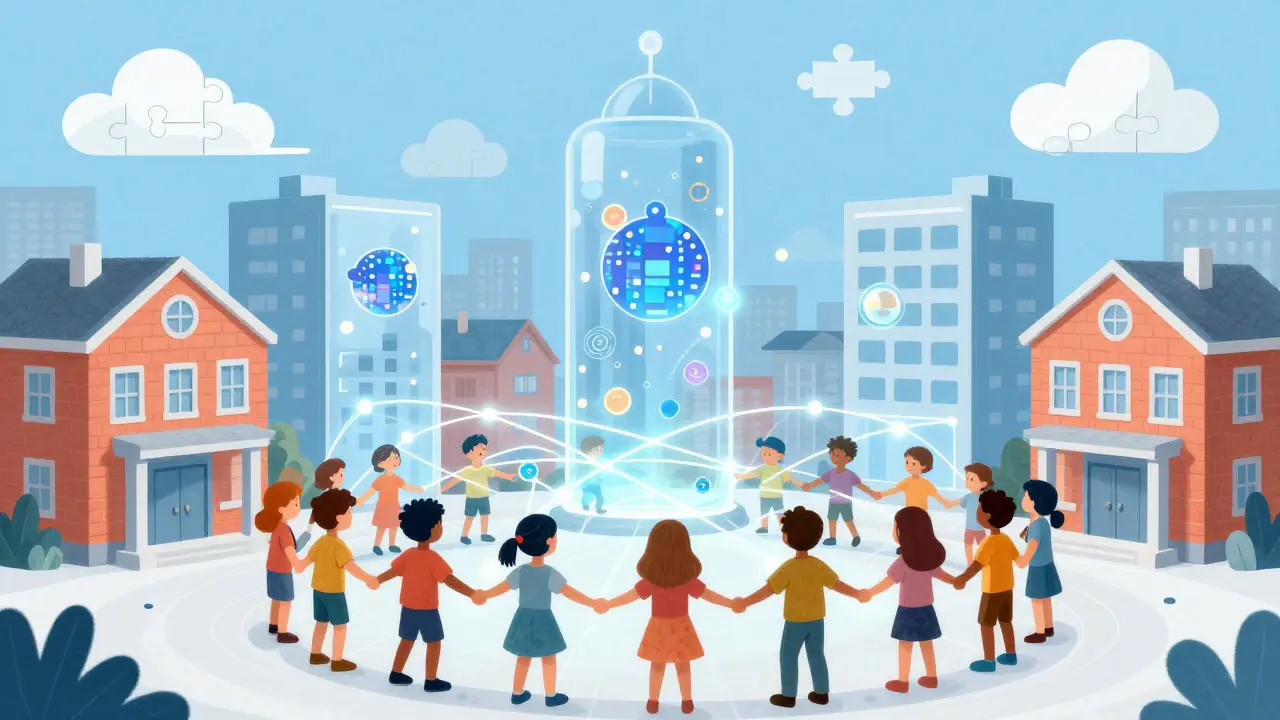
Blockchain replaces this centralized trust with distributed consensus, a mechanism where multiple network nodes independently verify transactions. Instead of one entity keeping the ledger, thousands of computers around the world do. They use cryptographic proofs to agree on the state of the data. If the math checks out, the transaction is recorded permanently. You don’t need to trust a person or a company; you trust the protocol.
This "trustless" system means that verification happens automatically through software rather than manual review by humans. The result? Transactions that are transparent, immutable, and significantly cheaper because you’re paying for computational power, not corporate overhead.
Smart Contracts: The Code That Replaces Brokers
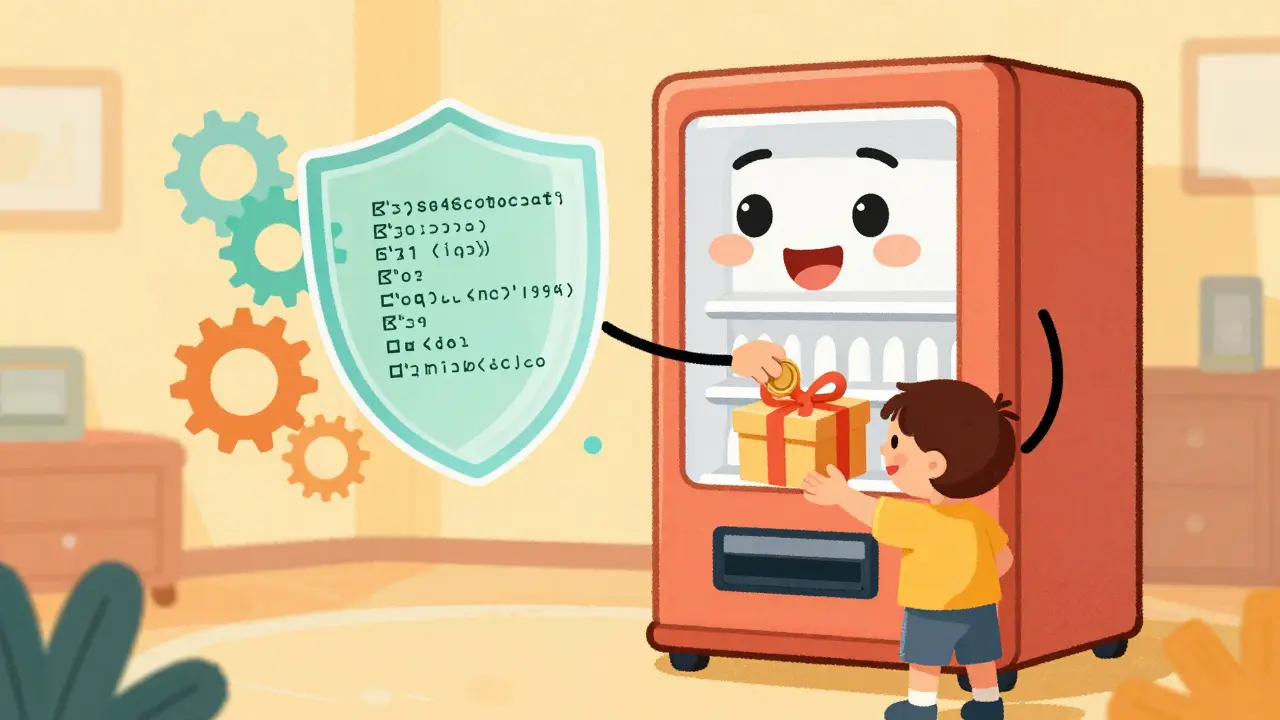
While Bitcoin proved you could move money without banks, it couldn’t execute complex agreements. That changed in 2015 when Vitalik Buterin introduced Ethereum. Ethereum added smart contracts, self-executing agreements with terms written directly into code. These are programs that live on the blockchain and run exactly as programmed, without any possibility of downtime, censorship, fraud, or third-party interference.
Think of a smart contract like a vending machine. You put in money, select an item, and the machine delivers it. There’s no cashier, no negotiation, and no chance the cashier will decide to keep your money. Similarly, a smart contract can hold funds in escrow and release them only when specific conditions are met-for example, releasing payment to a freelancer once the client approves the work via a digital signature.
This automation eliminates the need for lawyers, brokers, and escrow agents in many scenarios. According to data from Kaleido in 2023, these automated processes can reduce administrative costs by up to 40% in sectors like real estate and intellectual property.
Real-World Impact Across Industries
The theory is compelling, but does it work in practice? Let’s look at three major industries where disintermediation is already reshaping operations.
| Industry | Traditional Process | Blockchain Solution | Key Benefit | ||||
|---|---|---|---|---|---|---|---|
| Cross-Border Payments | 3-5 banking intermediaries, 2-5 days settlement, 6.5% fees | Direct peer-to-peer transfer, minutes to hours, <1% fees | Speed and Cost Reduction | Music Royalties | 7-11 intermediaries, 18-24 month delays, 25-40% fees | Near-instant distribution, <5% fees | Fair Compensation |
| Digital Advertising | Platform-dominated (Google/Facebook), 20-35% fees, opaque tracking | Direct publisher-advertiser connection, transparent metrics, higher ROI | Data Privacy & Revenue Share |
In finance, cross-border payments have long been plagued by high fees and slow settlement times. A World Bank report from 2022 showed that remittance costs averaged 6.5%. Blockchain solutions bypass the correspondent banking network entirely, allowing users to send value globally for fractions of a cent. Platforms like Hedera Hashgraph now handle over 10,000 transactions per second with finality in under five seconds, compared to the two-day wait typical of SWIFT transfers.
The music industry offers another stark contrast. Artists have historically struggled to get paid fairly due to a tangled web of labels, distributors, and collection societies. Blockchain-based platforms enable direct streaming royalties. One independent artist reported earning $2,300 from 47,000 streams in March 2023 through a blockchain platform, compared to just $800 for the same activity on Spotify. The difference isn’t just volume-it’s speed and transparency.
The Hidden Costs: Why Middlemen Aren’t Completely Gone
If blockchain is so efficient, why hasn’t it replaced every middleman yet? The answer lies in complexity. While blockchain removes financial intermediaries, it introduces technical ones. This is often called the "middleman paradox."
When you remove a bank, you also remove its customer service, fraud protection, and dispute resolution mechanisms. Now, you are responsible for securing your private keys, understanding gas fees, and navigating decentralized applications (dApps). If you lose your password, there is no help desk. As of 2023, approximately 3.7 million ETH were lost forever due to forgotten passwords. That’s billions of dollars vanished because individuals couldn’t manage the responsibility previously held by institutions.
Furthermore, new types of intermediaries have emerged. Oracles like Chainlink provide off-chain data to blockchains, bridging the gap between physical events and digital contracts. Layer-2 scaling solutions like Polygon optimize throughput but require users to interact with additional protocols. So while the *traditional* middlemen are gone, *technical* gatekeepers remain.
Challenges to Mass Adoption
For blockchain disintermediation to become mainstream, several hurdles must be cleared:
- Scalability Limits: Bitcoin processes about 7 transactions per second. Even Ethereum struggles with congestion during peak times, leading to high gas fees. While Layer-2 solutions help, mass adoption requires seamless performance.
- Regulatory Uncertainty: Laws vary wildly by country. The EU’s MiCA regulation provides clarity, but the US still relies on fragmented agency approaches. Businesses hesitate to invest heavily when the legal ground shifts.
- User Experience: Managing wallets, seed phrases, and network switches is intimidating for non-technical users. Until interfaces become invisible-like email or online banking-adoption will remain niche.
- Integration Friction: Legacy systems don’t talk to blockchains easily. Connecting enterprise ERP systems to decentralized ledgers requires significant engineering effort and custom APIs.
Future Outlook: Reconfiguration, Not Elimination
Experts suggest that complete disintermediation is unlikely. Instead, we’re seeing "reconfigured intermediation." Traditional players aren’t disappearing; they’re adapting. JPMorgan’s JPM Coin processes $1 billion daily in institutional payments, showing that banks are building their own blockchain rails rather than being displaced by them.
By 2027, the World Economic Forum predicts that 10% of global GDP will be stored on blockchain technology. However, intermediaries will transform into validators, auditors, and service aggregators. The role shifts from controlling access to facilitating efficiency.
For businesses and consumers, the takeaway is clear: blockchain won’t erase all middlemen overnight. But it will force them to justify their existence through genuine value addition, not mere gatekeeping. Those who embrace this shift early will benefit from lower costs, faster settlements, and greater transparency.
Does blockchain really eliminate all middlemen?
No. While blockchain removes traditional financial and administrative intermediaries like banks and brokers, it often introduces technical dependencies such as oracles, wallet providers, and layer-2 networks. The nature of intermediation changes rather than disappears completely.
What are smart contracts, and how do they replace lawyers?
Smart contracts are self-executing codes on a blockchain that enforce agreement terms automatically. They replace lawyers in routine, rule-based transactions by removing the need for manual enforcement, though complex legal disputes still require human judgment.
Is blockchain secure enough for large-scale business use?
Yes, blockchain is highly secure due to cryptographic hashing and decentralized consensus. However, security risks exist in smart contract coding errors and user key management. Major enterprises use permissioned blockchains or hybrid models to mitigate these risks.
How much can businesses save by using blockchain?
Savings vary by industry. In cross-border payments, costs can drop from 6.5% to under 1%. In supply chains, documentation processing time can decrease by 35-50%. Overall, McKinsey estimates potential annual savings of $1.5 trillion across key sectors by 2027.
What is the biggest barrier to adopting blockchain disintermediation?
The primary barriers are regulatory uncertainty, scalability limitations, and poor user experience. Non-technical users find managing private keys and understanding gas fees difficult, while businesses struggle with integrating legacy systems.
