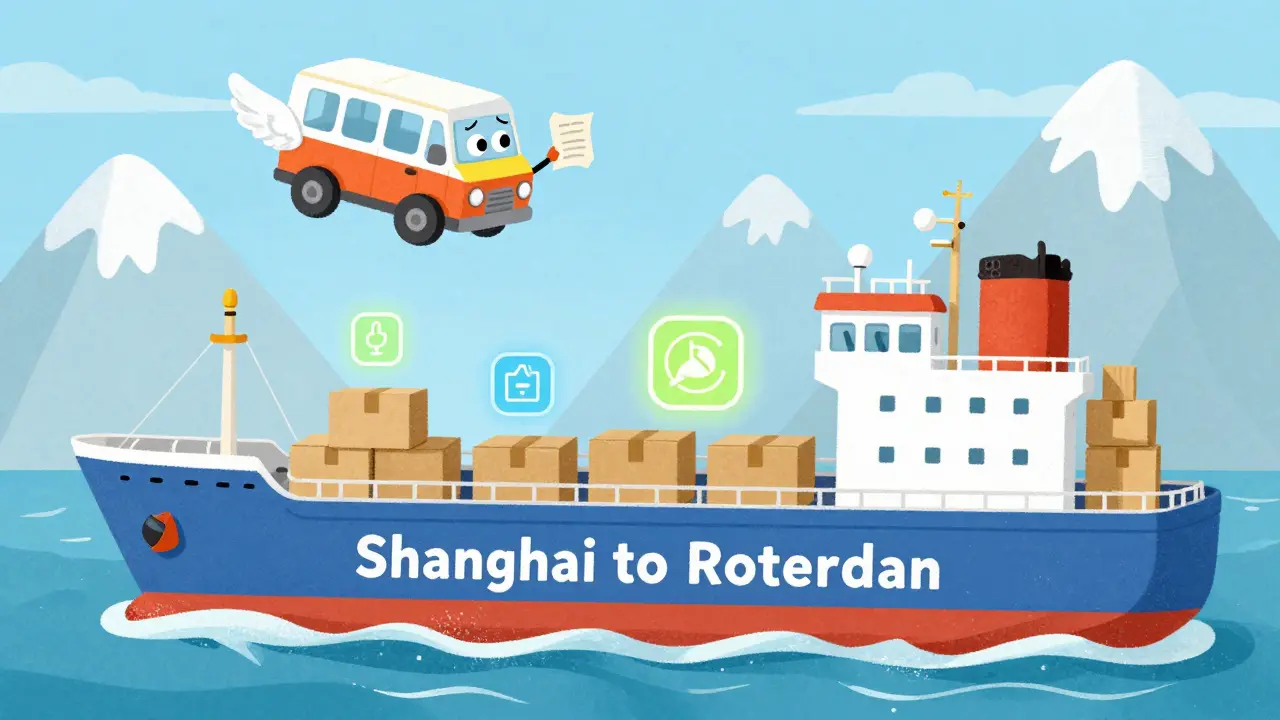
Imagine a container ship leaving Shanghai bound for Rotterdam. Inside are thousands of dollars worth of electronics. But here’s the catch: the physical paper proving ownership of those goods is stuck in a courier van somewhere over the Himalayas. If that paper gets lost, stolen, or delayed, the cargo sits idle. That was the reality of global trade until CargoX stepped in.
You might have seen the ticker symbol CXO on your crypto exchange and wondered what it actually does. Unlike Bitcoin, which is digital gold, or Ethereum, which is a platform for apps, CargoX solves a very specific, gritty problem in the logistics industry. It replaces paper documents with blockchain records. In this guide, we’ll break down what CargoX is, how the CXO token works, and whether it has any real value beyond the hype.
The Problem with Paper in Global Trade
To understand why CargoX exists, you first need to understand the messiness of international shipping. For decades, the backbone of global trade has been the Bill of Lading (B/L). This document acts as a receipt, a contract, and a title of ownership. If you don’t have the original paper B/L, you can’t claim your goods at the port.
The issue? Paper is slow and fragile. Traditionally, these documents were sent via courier services like FedEx or DHL. This process took anywhere from 5 to 10 days. During that time, ships arrived at ports, unloaded containers, and then just sat there. Warehousing costs piled up. Banks couldn’t release letters of credit because they didn’t have the proof of delivery. Fraudsters also found ways to forge paper documents, leading to millions in losses annually.
Stefan Kukman, the founder of CargoX, worked in ocean shipping and saw this inefficiency firsthand. He realized that if you could digitize this process securely, you could save the industry billions. That insight led to the creation of CargoX in 2017 in Ljubljana, Slovenia.
How CargoX Works: The Smart B/L™
CargoX isn’t just a file-sharing service; it’s a secure transfer system built on the Ethereum blockchain. The core product is the Smart B/L™ (Smart Bill of Lading). Here is how it functions in practice:
- Digital Creation: When a shipper loads goods onto a vessel, the carrier issues an electronic Bill of Lading instead of a paper one. This document is hashed (converted into a unique code) and recorded on the Ethereum blockchain.
- Secure Transfer: Instead of mailing paper, the owner transfers the digital rights to the buyer or bank instantly. This happens in minutes, not days.
- Verification: Because it’s on the blockchain, the record is immutable. No one can alter the document without everyone knowing. This eliminates fraud.
- Access Control: Only authorized parties can view or transfer the document. Privacy is maintained through encryption, even though the transaction ledger is public.
In August 2018, CargoX made history by completing the world’s first blockchain-based transfer of a Bill of Lading on the China/Europe trade route. Since then, the platform has expanded to support over 65 types of documents, including certificates of origin, letters of credit, and customs declarations.
| Feature | Traditional Paper B/L | CargoX Smart B/L™ |
|---|---|---|
| Transfer Time | 5-10 days | Minutes |
| Cost per Document | $50-$100 (courier + handling) | Fraction of a cent (gas fees) |
| Fraud Risk | High (forgery possible) | Near Zero (blockchain verification) |
| Loss/Damage Risk | High (physical loss) | None (digital backup) |
| Accessibility | Physical location only | Global, instant access via web/API |
What Is the CXO Token Used For?
This is where things get tricky for investors. You might ask, "Why do I need a crypto coin called CXO to send a document?" The answer lies in the platform’s utility model.
CXO is an ERC-20 token on the Ethereum network. Its primary purpose within the ecosystem is to facilitate transactions and secure data transfers. However, the relationship between the token and the service has evolved. Initially, the idea was that users would pay for document transfers using CXO. This creates demand for the token: more shipping activity equals more CXO usage.
However, critics point out a flaw. Most large shipping companies prefer to pay in fiat currency (USD, EUR) or stablecoins for their software subscriptions. They don’t want to hold volatile crypto assets to run their logistics operations. As a result, the CXO token often serves more as a speculative asset for traders rather than a daily utility tool for shippers. Some experts argue that the platform could function perfectly well without a dedicated token, using ETH or USDT instead.
Despite this, the token still holds value for those who believe in the long-term adoption of blockchain in supply chains. If CargoX becomes the standard for global trade, the CXO token could see increased demand from partners integrating into the ecosystem.
Market Performance and Adoption
Let’s look at the numbers. As of mid-2023, CargoX claimed to serve over 150,000 companies across 190 countries. That sounds impressive, but remember that many of these are small businesses or individual users testing the platform. The real metric is enterprise adoption.
Major players like Maersk and IBM launched their own competing platform, TradeLens, which struggled and eventually shut down in 2023 due to lack of widespread industry consensus. This left a vacuum that platforms like CargoX hope to fill. CargoX has integrated with major ERP systems like SAP, making it easier for large corporations to adopt the technology without rebuilding their IT infrastructure.
Regarding the token’s market performance, CXO has faced significant volatility. With a circulating supply of around 170 million tokens, its market cap fluctuates based on broader crypto trends rather than just platform usage. Trading volume is relatively low compared to top-tier cryptos, meaning large buy or sell orders can drastically impact the price. Investors should be cautious of illiquidity risks.
Is CargoX Legit? Security and Trust
Skeptics often question the legitimacy of niche crypto projects. Here is why CargoX stands apart from typical "vaporware":
- Real-World Utility: They solved a tangible problem. The first blockchain B/L transfer was verified by legal authorities in multiple jurisdictions.
- Regulatory Compliance: CargoX aligns with the UNCITRAL Model Law on Electronic Transferable Records. This is crucial because banks and governments need legal backing to accept digital documents.
- Transparent Team: Stefan Kukman and his team are public figures in the logistics tech space, frequently speaking at industry conferences.
- Blockchain Verification: All transactions are recorded on Ethereum, providing an auditable trail that cannot be tampered with.
However, no investment is risk-free. The crypto market is volatile, and regulatory changes in different countries could impact how digital bills of lading are treated legally. Always do your own research before buying any token.
Future Outlook: Beyond Shipping
CargoX isn’t stopping at shipping containers. The roadmap includes expanding into government document certification and IoT (Internet of Things) integration. Imagine a scenario where a smart sensor on a pharmaceutical shipment automatically updates the blockchain record if the temperature rises above a certain limit. This triggers an automatic insurance claim or alert to the buyer. This level of automation requires robust blockchain infrastructure, which CargoX aims to provide.
If they succeed in becoming the default layer for trade documentation, the CXO token could gain new utility functions, such as staking for verification nodes or paying for advanced API analytics. Until then, it remains a bet on the digitalization of global trade.
What is the main use case for CargoX (CXO)?
The primary use case is transferring trade documents, specifically Bills of Lading, electronically via the Ethereum blockchain. This replaces slow, expensive, and risky paper-based processes in global shipping and logistics.
Is CXO a good investment in 2026?
Investing in CXO carries high risk. While the underlying technology has real-world utility, the token's price is driven largely by speculation rather than direct revenue generation. It is illiquid compared to major cryptos, so only invest what you can afford to lose.
Who founded CargoX?
CargoX was founded by Stefan Kukman in 2017. He previously worked in the ocean shipping industry and identified the inefficiencies of paper document handling as the key problem to solve.
Does CargoX work with banks?
Yes. One of the biggest hurdles in digital trade is bank acceptance. CargoX has worked to ensure its Smart B/L™ complies with international laws (like UNCITRAL), allowing banks to process letters of credit and payments digitally without requiring physical paper.
What blockchain does CXO run on?
CXO is an ERC-20 token, meaning it runs on the Ethereum blockchain. This provides security and decentralization but also means users may encounter Ethereum gas fees during peak times, although the platform abstracts much of this complexity for end-users.

10 Comments
ravi mahla
June 25, 2026 AT 08:17 AMOh look, another blockchain solution for something that already works fine with a fax machine and a handshake. 🙄 But sure, let's burn more electricity to move a digital paper from Shanghai to Rotterdam in 'minutes' instead of days. The future is here folks, and it smells like burning crypto wallets.
Mark Brunschwiler
June 27, 2026 AT 06:44 AMThe soul of trade has been lost to the cold, unfeeling gaze of the algorithm. We used to feel the weight of the bill of lading in our hands, a tangible connection to the goods crossing the oceans. Now? Just a hash. A number. Where is the humanity in a smart contract? I feel empty when I think about the inefficiency of paper being replaced by the efficiency of code. It is a tragedy for the human spirit, truly. Why do we rush towards a void?
Tim Lefebvre
June 28, 2026 AT 14:34 PMhey guys just wanted to say i work in logistics and this is actually pretty cool stuff. yeah the token part is kinda sus but the tech itself? legit. we still lose so much time waiting for docs. if cargox can cut that down from weeks to minutes its a game changer. dont listen to the haters who just hate on anything new. its gonna take time for big corps to adapt but they will. trust me on this one
Monica Pathammavong
June 30, 2026 AT 04:01 AMLet’s be real for a second because everyone here is missing the point entirely. You’re focusing on the tech but ignoring the centralization risk. Who controls the keys? If CargoX gets hacked or goes bankrupt, your ‘immutable’ records are useless. Also, why does every single blockchain project need a token? It’s always the same scammy playbook. Create hype, dump tokens on retail, run away. I’ve analyzed their whitepaper and it’s full of buzzwords with no substance. Wake up sheeple.
Terry Hyland
July 1, 2026 AT 14:10 PMThis is exactly what they want you to believe. Big shipping companies are colluding with crypto bros to steal your data. They say it’s for security but really it’s so they can track everything you buy and sell without any privacy. The government loves this kind of surveillance state tech. Don’t let them digitize your freedom. Keep using paper, keep it offline, stay safe.
JEVON HALL
July 2, 2026 AT 05:56 AMI mean... if it saves money then why not? 💸 I don't care about the politics or the conspiracy theories. If my freight forwarder says it works and it cuts costs, I'm all for it. The CXO token might be volatile but the utility is there. Maybe hold some as a long term bet? Just my two cents though, not financial advice obviously 🤷♂️
Dr Lynea LaVoy
July 3, 2026 AT 12:35 PMI understand the skepticism, especially regarding the tokenomics. It is valid to question why a utility platform needs a speculative asset. However, looking at the broader picture, the integration with SAP and other ERPs is significant. This isn't just a niche experiment anymore; it's becoming infrastructure. For those worried about adoption, remember that TradeLens failed due to competition between Maersk and IBM, not technology failure. CargoX offers a neutral ground. It’s important to separate the investment risk from the technological merit. Both exist, but they shouldn't cancel each other out.
Matthew Malone
July 4, 2026 AT 22:29 PMAbsolutely pathetic. We have the most advanced logistics network in the world, built by American ingenuity, and now we're letting some Slovenian startup dictate how global trade works? And on Ethereum? Please. We should be building our own sovereign blockchain solutions here in the US. Relying on foreign tech for critical supply chain infrastructure is a national security risk. Get your heads out of the clouds and support domestic innovation.
aaliyah zahid
July 6, 2026 AT 07:25 AMI see both sides here! On one hand, the efficiency gains are undeniable for international trade partners. On the other, the cultural shift required is massive. In many parts of the world, paper is still king because it’s trusted. Changing that mindset takes patience and respect for local traditions. Let’s hope CargoX approaches this with an open mind rather than just trying to disrupt everything aggressively. Collaboration over competition, right? 😊
Erik Kirana
July 6, 2026 AT 22:40 PMIt is quite amusing how people blindly trust these platforms. Have you even read the terms of service? Probably not. You are handing over ownership rights of physical goods to a server farm. One glitch and your container sits in Rotterdam forever. Typical modern stupidity. 📉