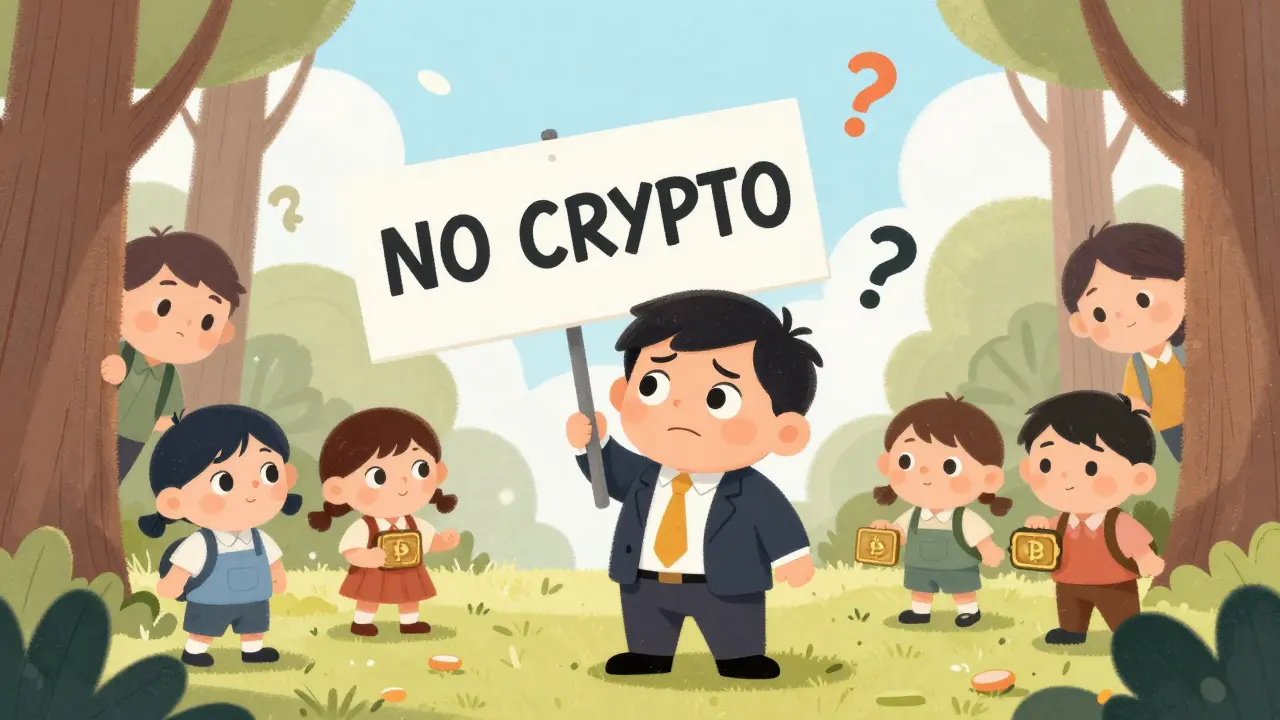
The Central Bank of Nigeria didn’t just change its mind about cryptocurrency - it completely rewrote the rulebook. What started as a warning in 2017 became a full-blown banking blockade in 2021, and by 2025, it turned into a structured, licensed system. This isn’t just a policy flip. It’s a story of a country learning the hard way that you can’t stop what people already use - especially when it’s the only way to move money during a crisis.
2017: The First Warning
In January 2017, the Central Bank of Nigeria (CBN) sent out a quiet but firm message: don’t touch crypto. Not because it was illegal, but because banks weren’t allowed to touch it. The CBN’s circular told all financial institutions to avoid handling virtual currencies. No accounts. No transactions. No services. The goal? Prevent money laundering and terrorist financing. But here’s the catch - the CBN didn’t ban crypto itself. It banned banks from helping people use it. That distinction mattered. People could still buy Bitcoin. They just had to do it without a bank.2021: The Blockade
Fast forward to February 2021, and the CBN went from cautious to aggressive. A new letter ordered all banks to shut down accounts linked to crypto exchanges. If you ran a crypto business, your bank account was gone. If you traded crypto regularly, your account was flagged. The message was clear: cut off the pipes. The result? Nigeria’s crypto scene didn’t die - it went underground. People switched to peer-to-peer (P2P) trading. Platforms like Paxful and Binance P2P became lifelines. Nigerians traded naira for Bitcoin directly with each other, using mobile money, cash deposits, and even airtime credits. The CBN thought it was stopping crypto. It was actually forcing innovation.The Protest Effect
The 2020 EndSARS protests changed everything. When the government froze bank accounts of activists and donors, crypto became the only way to fund the movement. Donations poured in via Bitcoin and USDT. The CBN couldn’t track it. Couldn’t freeze it. Couldn’t control it. That scared officials more than any fraud or scam ever had. Suddenly, crypto wasn’t just a financial risk - it was a political one. The government realized it had no power over a system that didn’t need banks. That realization started the slow shift away from prohibition.2023: The Reversal
In December 2023, the CBN dropped a bombshell: it was now okay for banks to work with crypto companies - if they were licensed by the Securities and Exchange Commission (SEC). The Virtual Asset Service Provider (VASP) Guidelines gave crypto firms a legal path. No more shadow operations. No more account closures. Just licensing, KYC, and AML checks. The SEC, which had already declared digital assets as securities in 2020, now had the final say. The CBN stepped back from enforcement and let the SEC handle regulation. This wasn’t a surrender - it was a strategic retreat. The government realized: if you can’t stop it, regulate it.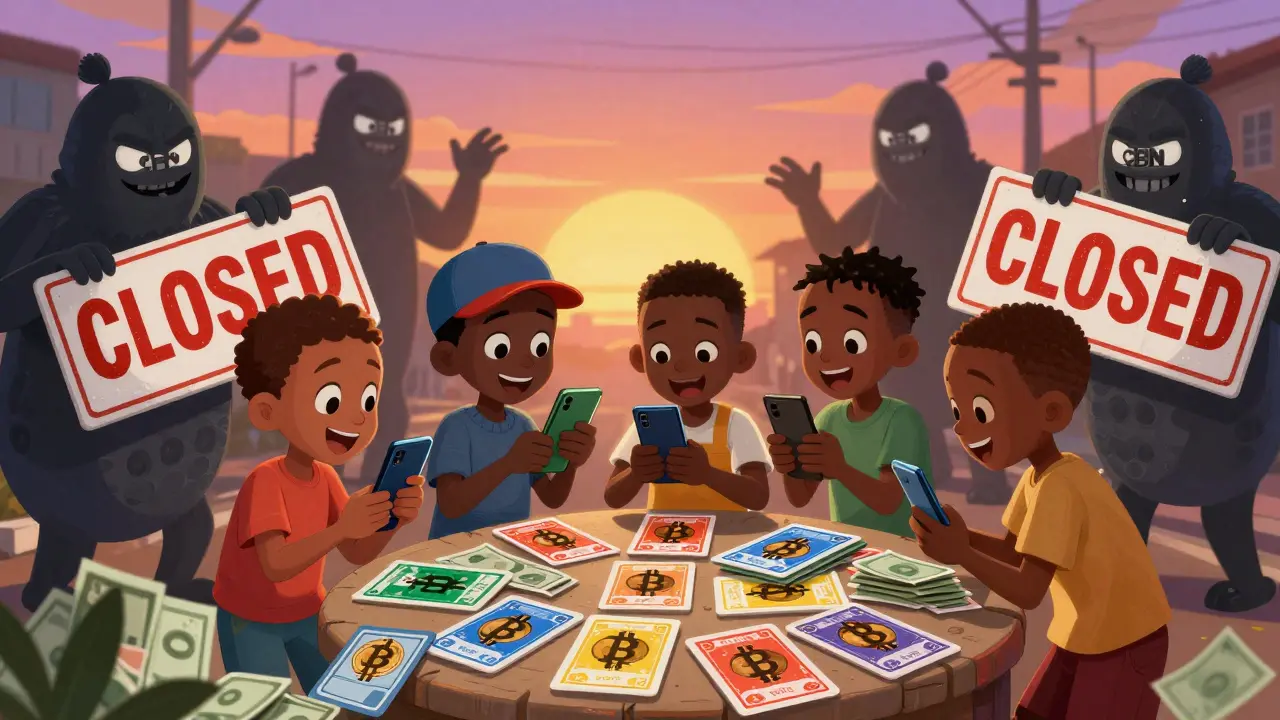
The New Rules: SEC Leads, CBN Watches
By 2025, Nigeria’s crypto system looks nothing like it did in 2021. Crypto businesses must now register with the SEC under the Investments and Securities Act 2025. They need to prove they know their customers, track every transaction, and report suspicious activity. The CBN still controls banks - but it no longer blocks them from working with SEC-licensed firms. This dual system works: the SEC handles the crypto side, the CBN handles the banking side. It’s messy, but it’s functional.What Happened to the Big Exchanges?
The crackdown had real casualties. OKX pulled out of Nigeria in July 2024, telling users to withdraw funds or lose them. Binance removed the Nigerian naira from its trading pairs. Two of its executives were detained in early 2024 over untraceable fund flows. These weren’t just business moves - they were survival tactics. When the rules are unclear and enforcement is random, global companies don’t stick around. But now, with clear licensing rules, some are creeping back. The message to exchanges is simple: register with the SEC, follow the rules, and you can operate legally. Skip the paperwork, and you’re out.Why This Matters for Nigeria
Nigeria is Africa’s largest crypto market. Over 30% of adults have used or owned crypto. The ban didn’t kill it - it just made it harder. Now, with regulation, Nigeria has a shot at being removed from the Financial Action Task Force’s Gray List. That’s huge. Being on that list scares off foreign investors and makes international banking harder. By creating a transparent, supervised crypto system, Nigeria is showing it can manage risk without stifling innovation.
The Trade-Off: Control vs. Freedom
But it’s not all smooth sailing. In 2024, the government blamed crypto traders for foreign exchange volatility. The naira’s value dropped, and officials pointed fingers at crypto users for moving money out of the system. That tension hasn’t gone away. The government still wants control. It still worries about capital flight. That’s why the SEC’s rules are strict - and why compliance costs are high. Crypto isn’t free here anymore. It’s regulated. And that means it’s slower, pricier, and more monitored.What’s Next?
The next step? More integration. Expect to see licensed crypto firms offering naira-to-crypto wallets directly through mobile apps. Some banks are already testing crypto-linked debit cards. The goal is to make legal crypto as easy to use as mobile money. If Nigeria pulls this off, it could become a model for other African countries. Right now, Kenya, South Africa, and Ghana are watching closely. If Nigeria’s system works, they’ll copy it.What This Means for You
If you’re in Nigeria and you trade crypto: get licensed. If you’re a business, apply for SEC registration. If you’re an investor, stick to platforms that show their SEC license. The days of anonymous trading are over. The risk of account freezes is gone - but only if you play by the new rules. The government isn’t your enemy anymore. It’s your regulator. And that’s better than being banned.Is cryptocurrency legal in Nigeria in 2025?
Yes, cryptocurrency is legal in Nigeria - but only if you operate through licensed channels. The SEC regulates all crypto businesses as Virtual Asset Service Providers (VASPs). You can buy, sell, and hold crypto, but banks can only work with you if you’re SEC-licensed. Unlicensed trading isn’t banned, but it’s risky and unsupported by the financial system.
Can Nigerian banks process crypto transactions today?
Yes, but only for SEC-licensed crypto companies. Banks are no longer allowed to block or close accounts of licensed VASPs. They can now offer banking services to these firms - including payroll, settlement, and custody. However, banks still cannot process crypto transactions for unlicensed individuals or businesses. The rule is simple: if it’s licensed, it’s allowed. If it’s not, it’s still blocked.
Why did the CBN change its stance on crypto?
The CBN realized its ban wasn’t working. Crypto use kept growing, even during the 2021-2023 crackdown. People used P2P trading to bypass banks. During the EndSARS protests, crypto became a critical funding tool the government couldn’t control. When global exchanges like OKX and Binance pulled out, Nigeria lost tax revenue and job opportunities. The CBN shifted from prohibition to regulation because control through enforcement failed - control through licensing works better.
What role does the SEC play in Nigeria’s crypto market?
The SEC is now the main regulator for crypto in Nigeria. It licenses all Virtual Asset Service Providers (VASPs), enforces KYC and AML rules, and treats digital assets as securities under the Investments and Securities Act 2025. The SEC decides who can operate, what rules they must follow, and how to report suspicious activity. The CBN still supervises banks, but the SEC handles the crypto side. This split reduces conflict and creates clearer accountability.
Can I still use P2P crypto trading in Nigeria?
Yes, P2P trading is still allowed and widely used. The regulations target businesses, not individuals. You can still buy Bitcoin from someone on Paxful or Binance P2P using bank transfers, cash, or mobile money. But if you start selling crypto regularly or running a P2P marketplace, you’ll need an SEC license. For casual users, P2P remains the easiest way to enter and exit crypto without bank interference.
Will Nigeria’s crypto policy change again soon?
A major overhaul is unlikely before 2027. The 2025 SEC rules are the most comprehensive framework Nigeria has ever had. The government is now focused on implementation, not reform. But pressure could come from two sides: if crypto use explodes, regulators may loosen rules to capture more tax revenue. If money laundering rises, they may tighten compliance. For now, the system is stable - but it’s still evolving.

18 Comments
Monty Burn
December 31, 2025 AT 16:42 PMThey didn't ban crypto they banned banks from touching it
That's the real story
People always find a way
Power doesn't disappear it just shifts hands
Kenneth Mclaren
January 1, 2026 AT 22:43 PMTHIS IS A COVERT OPERATION BY THE ILLUMINATI TO TRACK EVERY SINGLE TRANSACTION UNDER THE GUISE OF 'REGULATION'
They let you trade but now they know EVERYTHING
EndSARS was just the distraction they needed
They're building a digital prison with KYC forms and SEC stamps
They're not regulating crypto they're weaponizing it
Alexandra Wright
January 3, 2026 AT 07:07 AMOh wow the CBN finally figured out you can't stop people from using money they trust
Let me guess next they'll realize water is wet and gravity isn't optional
It took a protest movement and global exchanges fleeing to make them notice
Good job Nigeria you're now 5 years behind the rest of the world
And still thinking regulation means control
It doesn't. It means bureaucracy.
And now you're charging people $500 just to file paperwork so you can pretend you're not powerless
Jack and Christine Smith
January 3, 2026 AT 22:57 PMsooo like i just learned that nigeria's crypto scene went full underground and people were trading via airtime credits??
that's wild
i thought p2p was just for crypto bros but this is like survival mode
and now the gov is like 'oh hey we can tax this??'
lol
but honestly i'm impressed they didn't just double down on the ban
they kinda adapted
which is more than most countries can say
also i spelled 'naira' wrong twice but you get the vibe
Jackson Storm
January 5, 2026 AT 15:23 PMBiggest takeaway: crypto didn't die because the ban was stupid
It survived because people needed it
When banks freeze your account during protests, you don't cry
You open Binance P2P
And that's when governments realize they're not in charge
It's not about tech
It's about trust
People trust crypto because it doesn't ask permission
And now Nigeria's trying to make it ask permission again
But the genie's out of the bottle
They can't unsee what happened during EndSARS
And they can't unlearn that crypto moves when banks won't
Keep going
But make the licensing cheaper
And stop blaming traders for the naira's problems
You've got bigger fish to fry
Raja Oleholeh
January 5, 2026 AT 21:01 PMNigeria is the real MVP of crypto 🇳🇬🔥
Prateek Chitransh
January 6, 2026 AT 21:58 PMIt's funny how the same people who screamed 'crypto is for criminals' now want to license it
They didn't stop it
They just realized they could tax it
And now they're calling it 'responsible innovation'
Meanwhile, the average Nigerian still needs to pay a 15% fee just to convert naira to USDT
And the SEC is busy sending compliance emails instead of fixing the power grid
But hey - at least now you can get a certificate
That's progress, right?
Michelle Slayden
January 7, 2026 AT 20:35 PMIt is a remarkable case study in institutional adaptation under duress.
The Central Bank of Nigeria, initially operating under a paradigm of prohibition, was compelled by emergent socioeconomic realities to transition toward a regulatory framework grounded in legal positivism and pragmatic governance.
The EndSARS movement served as an exogenous shock, revealing the inadequacy of centralized financial control in the face of decentralized, peer-to-peer value transfer mechanisms.
Subsequent regulatory bifurcation - with the Securities and Exchange Commission assuming oversight of virtual asset service providers, while the CBN retained control over banking infrastructure - represents a sophisticated, if imperfect, institutional compromise.
One must question, however, whether the imposition of KYC/AML protocols upon a population already burdened by systemic financial exclusion constitutes genuine inclusion - or merely the colonization of autonomy by bureaucratic formalism.
Nevertheless, the evolution from suppression to structured oversight remains, in the annals of financial policy, a nontrivial act of institutional learning.
Phil McGinnis
January 9, 2026 AT 09:24 AMOf course the government caved.
They always do when people stop listening.
But now they think they're smart because they slapped a license on it.
Let me be clear - this isn't regulation.
This is surrender dressed in a suit.
And now they want to charge people for the privilege of being allowed to use their own money.
Meanwhile, the real criminals are still in the government - the ones who caused the naira to collapse and then blamed crypto traders.
Pathetic.
Ian Koerich Maciel
January 10, 2026 AT 13:07 PM...I just want to say... thank you.
This post... it really made me reflect.
It’s not just about crypto... it’s about resilience.
People didn’t wait for permission.
They built something real when the system failed them.
And now the government is trying to catch up...
It’s beautiful... and tragic...
And honestly? I’m crying a little.
Not because I’m emotional...
But because I know what it means to be ignored...
And then to be regulated.
It’s not victory.
It’s survival.
And that’s enough.
For now.
❤️
Andy Reynolds
January 11, 2026 AT 14:56 PMNigeria didn’t win the crypto war - it turned the battlefield into a marketplace.
They didn’t kill P2P trading, they turned it into a national sport.
Now the SEC is the referee, and everyone’s still playing - just with receipts.
It’s messy, it’s bureaucratic, it’s still rigged for the rich - but it’s alive.
And that’s more than most countries can say.
Imagine if every African nation did this: not ban, but build.
Not fear, but framework.
That’s the real legacy here.
Not the licenses.
The hustle.
The way people turned a blockade into a bridge.
That’s the story worth telling.
Alex Strachan
January 13, 2026 AT 08:16 AMSo let me get this straight - the government banned crypto, people used it anyway, now they’re charging $200 to register and calling it ‘progress’?
Classic.
Like banning Netflix and then launching your own streaming service with ads.
At least now you can get a certificate to hang on your wall.
Meanwhile, my cousin in Lagos is still trading via WhatsApp with a guy who pays in airtime.
He doesn’t need your license.
He needs a working internet connection.
And maybe a new naira.
😂
Rick Hengehold
January 14, 2026 AT 18:58 PMStop blaming traders. Fix the economy.
Jake West
January 16, 2026 AT 03:02 AMWow what a woke crypto fairy tale
You guys really believe this ‘people power’ nonsense?
They’re not heroes - they’re tax evaders
And now the government is letting them play dress-up with licenses
What a joke
Next they’ll give them medals
Meanwhile, real businesses are still drowning in inflation
And you’re celebrating people who bypass the system?
Pathetic.
Gavin Hill
January 17, 2026 AT 19:24 PMThey banned it
People kept using it
Now they’re charging for the privilege
Same story
Everywhere
Power doesn't vanish
It just changes uniforms
SUMIT RAI
January 18, 2026 AT 06:44 AMNigeria is not special. India has 10x more crypto users and no chaos. 🇮🇳👑
Andrea Stewart
January 19, 2026 AT 22:06 PMOne thing people miss: the SEC’s role here is actually smart.
They’re not trying to control the tech.
They’re controlling the *gatekeepers* - the businesses.
That’s how you regulate without killing innovation.
It’s not perfect - compliance is expensive, and the poor still get squeezed.
But at least now there’s a path.
Before? Zero.
Now? A shaky, expensive, bureaucratic path.
But a path.
And that’s the difference between a dead market and a living one.
Also - yes, P2P is still alive.
And it should be.
Because regulation should never punish the user.
Only the operator.
Alexandra Wright
January 21, 2026 AT 14:33 PMOh look, someone thinks Nigeria’s system is ‘working’
Let me guess - you’ve never tried to open a VASP account?
It takes 6 months, 17 forms, and a bribe to a SEC intern
And then your bank still freezes your corporate account because ‘risk’
So don’t give me this ‘it’s functional’ nonsense
It’s a glorified tax trap with extra steps
And the people who actually need it? Still using WhatsApp and cash.
Regulation without access isn’t progress.
It’s exclusion with a logo.