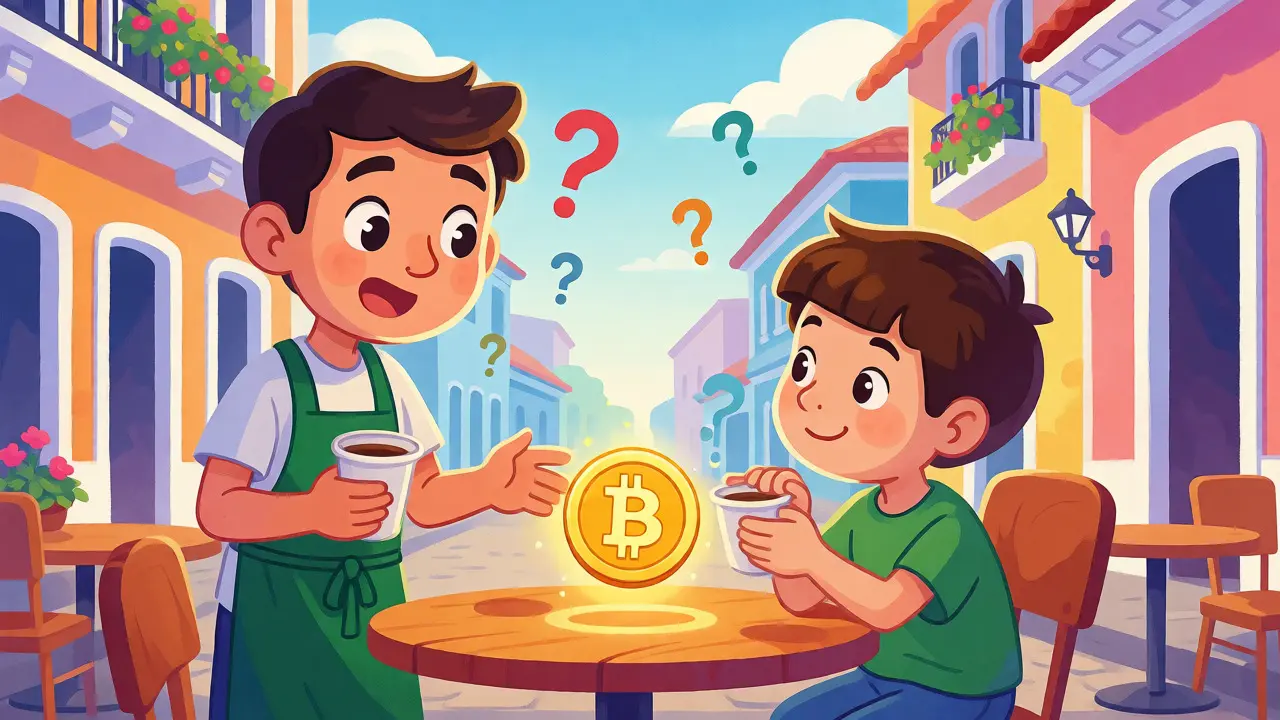
Imagine trying to buy a coffee with Bitcoin in Quito. You might find the vendor confused, but if you try to pay your rent or salary in crypto, you’re breaking the law. Ecuador is one of the few countries where cryptocurrencies are neither fully banned nor legally recognized as money. This creates a confusing "gray area" for investors and everyday users alike. Since Ecuador adopted the US dollar in 2000, its government has been fiercely protective of this monetary stability. The result? A strict regulatory environment that blocks banks from touching crypto while allowing individuals to trade it privately. If you’re planning to invest, live, or send money here, understanding these rules isn't just smart-it's essential to avoid frozen accounts and tax surprises.
The Legal Status: Not Money, But Not Illegal
Here’s the core conflict: The Central Bank of Ecuador (BCE) explicitly states that cryptocurrencies are not legal tender. Under Article 94 of the Organic Monetary and Financial Code, only the US dollar counts as official currency. This means shops, service providers, and employers cannot legally accept Bitcoin or Ethereum as payment for goods and services without risking fines. However-and this is the crucial part-buying, holding, and selling crypto is perfectly legal for individuals.
You can open an account on Binance, OKX, or Mercado Bitcoin, buy some tokens, and hold them in your wallet. The state won’t arrest you for it. But because the BCE doesn’t recognize crypto as money, it offers zero consumer protection. If your exchange collapses or you get scammed, there’s no central bank safety net to bail you out. It’s a wild west scenario where personal responsibility is everything.
Banking Barriers: Why Your Card Might Get Declined
If you’ve ever tried to buy crypto with a credit card in Ecuador, you know the pain. Banks are legally mandated to refuse transactions related to cryptocurrencies. They classify these transfers as high-risk operations. In practice, this means:
- Direct Purchases Are Blocked: Most local banks will block direct transfers to international exchanges like Coinbase or Kraken.
- Account Freezes: Frequent, unexplained transfers to crypto platforms can trigger anti-money laundering alerts, leading to temporary account freezes.
- No Crypto-Friendly Banks: Unlike in Switzerland or Singapore, you won’t find local banks offering easy integration with crypto wallets.
This restriction pushes most Ecuadorian users toward Peer-to-Peer (P2P) trading. Instead of sending dollars to an exchange, you send cash to another person who sends crypto to your wallet. While effective, P2P comes with its own risks, including fraud and significant price premiums-often 8-12% higher than global market rates due to the hassle involved.

Taxes: The Hidden Cost of Profits
Just because you can’t use crypto to buy groceries doesn’t mean the taxman ignores it. The Internal Revenue Service (SRI) treats realized gains from cryptocurrency sales as income. Here is how it breaks down for different taxpayers:
| Taxpayer Type | Tax Rate on Realized Gains | Key Considerations |
|---|---|---|
| Individuals | Up to 35% | Progressive rate based on total annual income. |
| Corporations | 25% | Standard corporate income tax rate applies. |
| Holders (No Sale) | 0% | No tax until you sell or spend the asset. |
You don’t owe taxes just for holding Bitcoin. The taxable event happens when you convert crypto back into US dollars or use it to acquire goods. Many users miss this step, assuming that because crypto isn’t "money," it’s untaxed. That’s a dangerous assumption. Keep detailed records of every transaction, including dates, amounts, and USD values at the time of sale, to stay compliant with SRI audits.
Mining: Expensive and Inefficient
Can you mine Bitcoin in Ecuador? Technically, yes. There is no specific ban on mining hardware. But practically, it’s a tough business. Ecuador suffers from frequent power outages in the Andean regions, averaging nearly 15 hours of downtime per month. Additionally, electricity tariffs hover around $0.145/kWh, which is about 23% higher than the Latin American average.
Add to that a 35% import duty on computing equipment, and you see why large-scale mining farms haven’t taken off. Most activity consists of small, residential setups in Quito’s suburbs. The total hash rate contributed by Ecuador is negligible on a global scale, less than 0.0001% of the network’s capacity. For now, buying crypto is far more cost-effective than mining it locally.

Remittances: The Real Use Case
While paying for coffee with crypto is illegal, using it to send money home is booming. Ecuador receives roughly $3.8 billion in remittances annually, accounting for 8.5% of its GDP. Traditional wire transfers charge hefty fees-averaging 6.3%, well above the UN target of 3%. Stablecoins like USDT offer a cheaper, faster alternative.
Families abroad send USDT via blockchain networks. Recipients then convert this to cash through informal OTC (Over-The-Counter) desks. These desks charge fees between 5-7%, which is competitive compared to traditional banks. This method bypasses the banking system entirely, avoiding the blocks mentioned earlier. It’s not perfect, but for many unbanked Ecuadorians, it’s a lifeline.
Future Outlook: Will Rules Change?
Ecuador is under pressure. Neighboring countries like Paraguay and Peru are creating clear frameworks for crypto businesses. Meanwhile, 78% of local fintech startups say they’d launch crypto services if the rules were clearer. The Central Bank is exploring a Central Bank Digital Currency (CBDC) pegged to the dollar, potentially launching by 2026. This could modernize payments without surrendering monetary sovereignty to private coins like Bitcoin.
For now, expect the status quo to persist. The BCE remains wary of capital flight and inflationary pressures. Until new laws pass, crypto in Ecuador remains a tool for investment and remittances, not daily commerce.
Is Bitcoin legal in Ecuador?
Yes, owning and trading Bitcoin is legal. However, it is not considered legal tender, meaning businesses cannot be forced to accept it as payment for goods or services.
Do I have to pay taxes on crypto in Ecuador?
Yes, realized gains are taxed as income. Individuals face progressive rates up to 35%, while corporations pay a flat 25%. Holding crypto without selling does not trigger a tax event.
Can I use my bank card to buy crypto?
Directly, usually no. Most local banks block transactions to major exchanges. Users typically rely on Peer-to-Peer (P2P) platforms or cash deposits via third-party processors to fund their accounts.
Is crypto mining profitable in Ecuador?
It is challenging. High electricity costs ($0.145/kWh), frequent grid outages, and expensive import duties on hardware make large-scale mining difficult. Small residential setups exist but are not highly profitable.
What is the best way to receive remittances in crypto?
Stablecoins like USDT are popular. Senders transfer USDT to the recipient's wallet, who then converts it to USD cash via local OTC desks. This avoids traditional banking fees and delays.
