
Think you can hide money in the blockchain? Think again. While cryptocurrency was sold on the promise of anonymity, the reality for regulators is quite different. Every transaction leaves a permanent digital footprint. Today, authorities aren't just guessing who owns what; they are using sophisticated blockchain forensics tools to trace funds across chains, identify sanctioned entities, and freeze assets before a suspect even realizes they're being watched. If you run a business dealing in digital assets or simply want to understand how governments keep up with the crypto world, this breakdown covers exactly how it works.
The End of Anonymity: How Blockchain Forensics Works
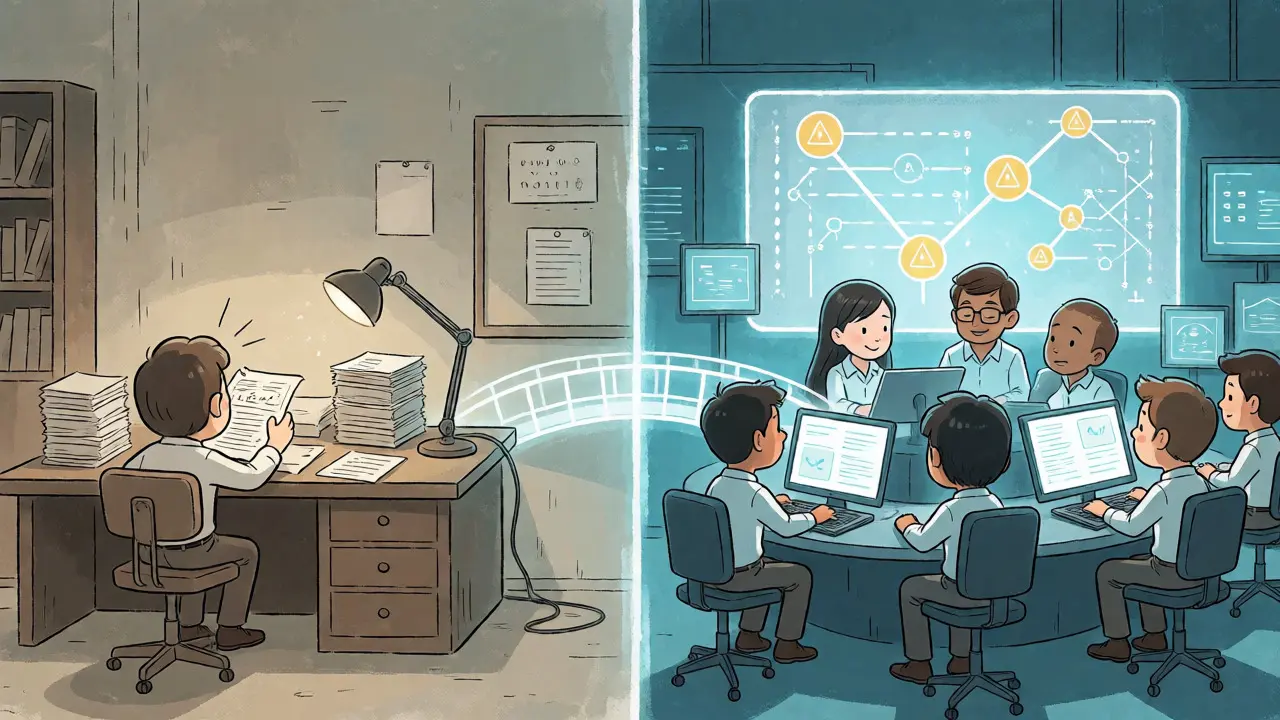
At its core, blockchain forensics is the process of analyzing public ledger data to determine the source, destination, and history of cryptocurrency transactions. Unlike cash, which disappears once spent, Bitcoin and Ethereum transactions are immutable records. Investigators use specialized software to map these transactions, creating visual graphs that show how funds move from one wallet to another. This isn't magic; it's math and pattern recognition. By clustering addresses based on spending patterns, investigators can link multiple wallets to a single entity, effectively de-anonymizing users without needing their real names immediately.
The technology has evolved rapidly. In the early days, like during the initial Helix investigation in 2016, analysts had to manually review hundreds of thousands of transactions. It was slow and prone to error. Today, automated systems powered by machine learning can scan billions of transactions in seconds. They look for specific behaviors-like "peeling" (sending small amounts repeatedly) or rapid exchanges between coins-that signal laundering attempts. The goal is simple: connect the dots between a darknet market sale and a legitimate bank account withdrawal.
Detecting Sanctions Evasion in Real-Time
Sanctions evasion is a cat-and-mouse game. When countries like Iran or Russia face financial restrictions, actors often turn to crypto to bypass traditional banking channels. Authorities now use blockchain analytics to detect five common evasion techniques identified by firms like TRM Labs. These include using mixers to obscure origins, moving funds through non-custodial wallets to avoid KYC checks, and utilizing stablecoins pegged to the dollar for easier conversion into fiat currency.
The challenge for compliance teams is speed. A sanctioned entity might move millions in USDT within minutes. Modern forensic platforms provide real-time alerts. If a transaction touches an address linked to a sanctioned group, the system flags it instantly. This allows exchanges to block withdrawals or freezes accounts before the money leaves the platform. It’s not just about catching bad guys after the fact; it’s about stopping the flow of capital in real-time.
Key Tools and Technologies Powering Investigations
You don’t need to be a coder to understand the landscape, but knowing the players helps. Three major vendors dominate the space: Chainalysis, Elliptic, and TRM Labs. Each offers slightly different strengths, but all serve the same purpose: making sense of chaotic blockchain data.
| Provider | Primary Strength | Best For | Notable Feature |
|---|---|---|---|
| Chainalysis | Law Enforcement Integration | Government agencies & large banks | React platform for rapid case building |
| Elliptic | Risk Scoring & Compliance | Fintechs & mid-sized exchanges | Strong focus on AML workflow automation |
| TRM Labs | Cross-Chain Analytics | Complex multi-chain investigations | Advanced detection of DeFi risks |
These tools integrate directly with exchange infrastructure. For example, Bitget uses Elliptic to monitor incoming deposits. If a deposit comes from a high-risk address, the system can automatically hold the funds for manual review. This integration is critical because human analysts cannot monitor every single transaction manually at scale.

Case Study: The Helix Mix and the Evolution of Laundering
To understand why this matters, look at the Helix case. Larry Dean Harmon ran Helix, a mixing service designed to break the link between sender and receiver. He processed over $300 million in illicit proceeds from darknet markets. In 2016, investigators started with a simple trick: they sent bitcoin through Helix themselves. By tracking where those specific coins ended up, they found a commission payment trail leading back to Harmon. It took years of manual work, but the result was clear: he pleaded guilty in 2021 and got prison time in 2024.
Today, that same investigation would take weeks, not years. Automated tools would have flagged the commission payments immediately. They would have clustered Harmon’s operational wallets based on timing and amount patterns. The lesson here is that privacy tools like mixers are not invisible. They add noise, but they don’t erase the signal. Advanced algorithms, such as the MPOCryptoML method recently introduced in academic research, can now detect complex laundering patterns like fan-in/fan-out structures with higher precision than ever before.
Compliance Challenges for Businesses
If you’re running a crypto business, you’re on the front lines. You are required to know your customer (KYC) and screen for anti-money laundering (AML) risks. But screening isn’t just checking a list of names anymore. It’s checking addresses. A new user might pass ID verification but deposit funds from a wallet linked to a ransomware attack. Your forensic tool needs to catch that connection.
The burden falls on compliance teams to interpret these alerts. False positives are common. A legitimate user might interact with a protocol that also serves illicit users. Analysts must distinguish between malicious intent and accidental exposure. This requires training and context. Many firms hire specialized blockchain analysts or outsource to managed service providers. The cost is significant, but the alternative-a regulatory fine or license revocation-is far worse.
The Future: Cross-Chain and Privacy Tech
Criminals aren’t sitting still. As Bitcoin and Ethereum become heavily monitored, activity shifts to newer chains and privacy-focused coins like Monero. However, cross-chain bridges create new vulnerabilities. Moving assets from Ethereum to Solana via a bridge creates a traceable event. Forensic firms are racing to support more chains. Currently, major platforms cover over 30 networks, including emerging ones like Internet Computer Protocol (ICP).
Privacy technologies like Tornado Cash remain a hurdle. Mixing services obscure direct links, but they don’t hide everything. Behavioral analysis-looking at when and how much someone moves-can still reveal patterns. Regulators are also cracking down on the mixers themselves, sanctioning protocols rather than just users. This changes the risk profile for anyone interacting with these tools. If you use a sanctioned mixer, your funds might get frozen, even if you did nothing wrong personally.
Practical Steps for Staying Compliant
Whether you’re an investor or a business owner, here’s how to navigate this landscape:
- Monitor your exposure: Regularly check your wallet addresses against risk databases. Tools from Chainalysis or Elliptic offer free or low-cost tiers for basic checks.
- Understand the rules: Stay updated on OFAC (Office of Foreign Assets Control) updates. Sanction lists change frequently.
- Document everything: Keep records of why you interacted with certain addresses. If a regulator asks, you need a story that makes sense.
- Automate where possible: Don’t rely on manual checks for high-volume operations. Integrate API-based screening into your workflow.
Frequently Asked Questions
Can authorities really track Bitcoin transactions?
Yes. Because Bitcoin operates on a public ledger, every transaction is visible. Authorities use clustering algorithms to group addresses owned by the same entity and follow the flow of funds from origin to destination, eventually linking them to off-ramps like exchanges where identity is known.
What happens if my crypto is linked to a sanctioned address?
Your funds may be frozen by an exchange or custodian. Exchanges are legally required to block transactions involving sanctioned entities. You might need to provide proof of innocence or undergo enhanced due diligence to regain access.
Do mixers make me anonymous?
Mixers obscure direct links but do not guarantee anonymity. Advanced forensic tools can analyze timing and amount patterns to probabilistically link inputs to outputs. Furthermore, some mixers themselves have been sanctioned, adding legal risk to their use.
Which blockchains are hardest to trace?
Privacy coins like Monero and Zcash are harder to trace due to built-in encryption. However, most mainstream activity occurs on transparent chains like Bitcoin and Ethereum, which are fully traceable. Cross-chain bridges also leave traces that can be analyzed.
Is blockchain forensics expensive for small businesses?
It depends on volume. Enterprise solutions are costly, but many providers offer tiered pricing. Small businesses can start with basic screening APIs or manual checks using free explorer tools before upgrading as transaction volume grows.
