
You’ve got Bitcoin. You want to use it in a DeFi protocol on Ethereum. But you can’t just send BTC to an ETH address and expect it to work. That’s where Blockchain Bridges come in. They are the digital toll booths of the crypto world, letting assets hop from one chain to another without getting lost in transit.
If you’ve ever felt stuck holding assets on a network with high fees or limited apps, you know the pain. Bridges solve this by creating a path between isolated blockchains. But how do they actually move value? Do they physically pick up your coins and walk them over to the next street? Not quite. Let’s break down exactly how these protocols unlock your assets across different ecosystems.
The Core Mechanism: Locking and Minting
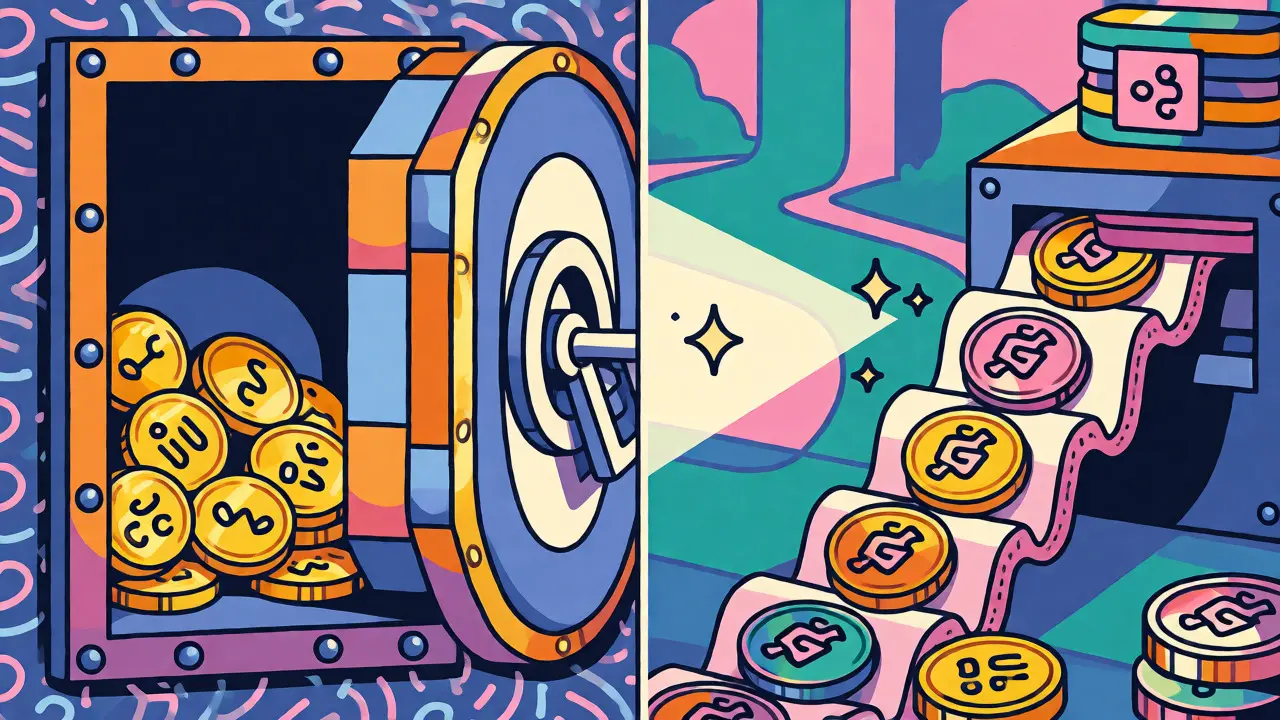
Here is the biggest misconception about blockchain bridges: they don’t actually move the original asset. Instead, they use a method called "lock and mint." Think of it like exchanging currency at an airport. You hand over your US Dollars (the source asset), and the exchange gives you Euros (the wrapped asset). Your dollars stay in the vault; you now hold a claim on them in a different form.
When you initiate a transfer, say moving USDC from Ethereum to Solana, the bridge sends your USDC into a smart contract on Ethereum. This contract locks those tokens so no one else can spend them. Once locked, the bridge verifies the transaction using validators or oracles. Then, it mints an equivalent amount of wrapped USDC on Solana. Now you have USDC on Solana that represents your locked USDC on Ethereum. It’s a 1:1 peg, but technically, they are two different tokens living on two different ledgers.
Two Main Methods: Wrapped Assets vs. Liquidity Pools
Not all bridges work the same way. The most common approach is the Wrapped Asset Method. As described above, this involves locking funds on Chain A and minting synthetic tokens on Chain B. This is great for simple transfers but relies heavily on the security of the smart contracts holding the funds.
The other major type is the Liquidity Pool Method. Here, instead of minting new tokens, the bridge uses pre-existing pools of liquidity. If you want to swap ETH for SOL, you might deposit ETH into a pool on Ethereum, and the bridge pays out SOL from a separate pool on Solana. No new tokens are created; you’re just swapping existing ones. This method is faster and often cheaper because it avoids the gas costs associated with minting and burning tokens, but it requires deep liquidity to function smoothly.
Step-by-Step: How a Transfer Actually Happens
Let’s walk through a real-world scenario. Imagine you want to move Bitcoin to Ethereum as WBTC. Here is what happens under the hood:
- Deposit: You connect your wallet to a bridge interface and specify the amount of BTC to send. You confirm the transaction on the Bitcoin network.
- Locking: Your BTC is sent to a custodial smart contract on the Bitcoin chain. It sits there, untouched, until you decide to redeem it.
- Verification: Bridge nodes monitor the Bitcoin chain. They detect your deposit and verify that the transaction has enough confirmations to be considered final.
- Minting: Once verified, the bridge creates WBTC on Ethereum. This is an ERC-20 token that mirrors the value of your locked BTC.
- Usage: You now have WBTC in your Ethereum wallet. You can lend it on Aave or trade it on Uniswap.
- Redemption: When you want your actual Bitcoin back, you send the WBTC back to the bridge. The WBTC is burned (destroyed) on Ethereum, and the bridge unlocks your original BTC on the Bitcoin network.
Why Use Bridges? The Real Benefits
Beyond just moving money, bridges unlock opportunities that single-chain users miss. First, there is Interoperability. You aren’t forced to choose one ecosystem forever. If Solana offers lower fees for gaming NFTs, you can move your assets there temporarily. If Ethereum has better lending rates, you can move back.
Second, bridges boost Liquidity. Smaller chains often suffer from low trading volume. By allowing assets from larger chains to flow in, bridges deepen the order books and reduce slippage for everyone. Third, they enable Scalability. During periods of congestion on Ethereum, gas fees can spike to $50 per transaction. Bridges let you park your assets on Layer 2 solutions or alternative Layer 1s like Polygon or Avalanche, where fees are cents, not dollars.

Security Risks You Need to Know
With great power comes great risk. Bridges are complex pieces of software, and complexity invites bugs. Since the assets are locked in smart contracts, if that contract has a vulnerability, hackers can drain the vault. Remember the Ronin Bridge hack? Attackers stole $624 million because they compromised validator keys. Unlike a native blockchain where consensus protects you, many bridges rely on a smaller set of trusted validators.
To mitigate this, look for bridges that use decentralized validation networks rather than a single centralized custodian. Also, check if the bridge has undergone multiple independent audits. Never bridge more money than you can afford to lose while the technology matures.
| Feature | Wrapped Asset Bridge | Liquidity Pool Bridge |
|---|---|---|
| Mechanism | Lock on Source, Mint on Destination | Swap via Pre-funded Pools |
| Asset Type | Creates new synthetic tokens | Uses existing native tokens |
| Speed | Slower (requires confirmation) | Faster (atomic swaps) |
| Cost | Higher (mint/burn gas fees) | Lower (swap fees only) |
| Best For | Long-term holding, unique assets | Quick swaps, high-frequency trading |
Practical Tips for Smooth Transfers
Before you hit that "Confirm" button, double-check three things. First, ensure the bridge supports the specific token standard. Not all versions of USDC are compatible across all chains. Second, account for gas fees on both sides. You need native currency (like ETH or SOL) on the destination chain to pay for future transactions. Don’t end up stranded with assets you can’t move because you forgot to bridge some gas money.
Finally, always test with a small amount first. Send $10 worth of assets before moving $1,000. It sounds basic, but it saves hours of support tickets when a bridge updates its UI or changes its contract addresses.
Are blockchain bridges safe?
They are generally safe if you use reputable, audited protocols, but they carry higher risk than native blockchains due to smart contract vulnerabilities and validator centralization. Always research the bridge's history and security audits before transferring large sums.
Do I lose my original assets when bridging?
No, your original assets are locked in a smart contract on the source chain. You receive wrapped tokens on the destination chain that represent a 1:1 claim on those locked assets. When you bridge back, the wrapped tokens are burned, and your original assets are unlocked.
Why are bridge fees sometimes high?
Fees include the gas cost on the source chain to lock the asset, the gas cost on the destination chain to mint or swap, and a service fee charged by the bridge provider. High network congestion on either chain will increase these costs.
Can I bridge any cryptocurrency?
Not every coin is supported on every bridge. Most popular bridges support major assets like ETH, USDC, USDT, and WBTC. Check the specific bridge's supported asset list before attempting a transfer.
What happens if a bridge gets hacked?
If a bridge is hacked, the backing assets may be stolen, meaning your wrapped tokens could become worthless. Some insurance funds exist, but recovery is rare. Diversifying across multiple bridges reduces this risk.
