
When you see a cryptocurrency price surge overnight-say, a token jumps 200% in a few hours-it’s easy to think you’ve stumbled onto the next big thing. But more often than not, that spike isn’t driven by innovation, adoption, or real demand. It’s engineered. Market cap manipulation is one of the most widespread and damaging practices in crypto, quietly siphoning billions from retail investors every year. Unlike stock markets with watchdogs like the SEC, crypto markets operate in the shadows, where a few players can move prices with a few keystrokes.
How Pump and Dump Schemes Destroy Retail Investors
Pump and dump is the most common form of market cap manipulation. It’s simple: a group buys a low-cap token, hyped it up on Telegram, Discord, Twitter, or YouTube influencers, and then sells when the price peaks. The people who buy in late? They’re left holding a worthless coin. In 2023, over 90,000 tokens were flagged as part of pump-and-dump schemes, generating $241.6 million in illicit profits. These aren’t random actors. They’re organized rings-sometimes with marketing teams, fake news sites, and bot networks. One notorious case was "Operation Token Mirrors" by the FBI in October 2024. They created a fake token called NexFundAI, set up fake trading volumes, and waited. Within weeks, 18 people were charged for running a $25 million scheme. The token never existed. The entire "project" was a trap. The real danger? These schemes target new investors. People who don’t know how to read on-chain data or spot fake volume. They see a trending hashtag, a "guaranteed 10x" post, and jump in. By the time they realize it’s a scam, the price has already collapsed 80% or more.Wash Trading: The Illusion of Demand
If pump and dump is loud, wash trading is silent. It’s when traders buy and sell the same asset between accounts they control. No real buyer. No real seller. Just fake trades designed to make the market look busy. Why does this matter? Because trading volume is one of the first things investors check. High volume = trust. Low volume = risk. Manipulators exploit that. On unregulated exchanges, over 70% of reported volume is fake. Some exchanges even encourage it to attract listings. A token with $500,000 in daily volume? Maybe $350,000 of that is just the same coins moving between three wallets. Blockchain analysis tools can detect this. Look for circular flows: Wallet A sends to Wallet B, which sends to Wallet C, which sends back to Wallet A. Repeat. That’s wash trading. If a token’s price is rising but its wallet activity looks like a loop, it’s not a breakout-it’s a trap.Spoofing and Sell Walls: Playing the Order Book
Spoofing is like holding up a fake sign that says "Sold Out!" to scare people away from buying. In crypto, it’s done through the order book. A manipulator places a massive sell order-say, 10,000 tokens at $0.50-knowing they’ll cancel it before it fills. The order looks like heavy resistance. Retail traders see it and think, "Price won’t go higher." They hold off. Meanwhile, the manipulator quietly buys up the real bids at $0.45. Sell walls are the same tactic, but more refined. They place a huge sell order just above the current price, blocking upward movement. While everyone thinks the price is stuck, the manipulator accumulates more tokens below. Then-poof-the wall disappears. The price rockets up. Those who bought during the "blockade" are now trapped, watching their gains vanish as the manipulator dumps. This works best on low-liquidity tokens. A $2 million market cap coin can be moved with $200,000. A $2 billion coin? Not so much. That’s why small-cap altcoins are the prime targets.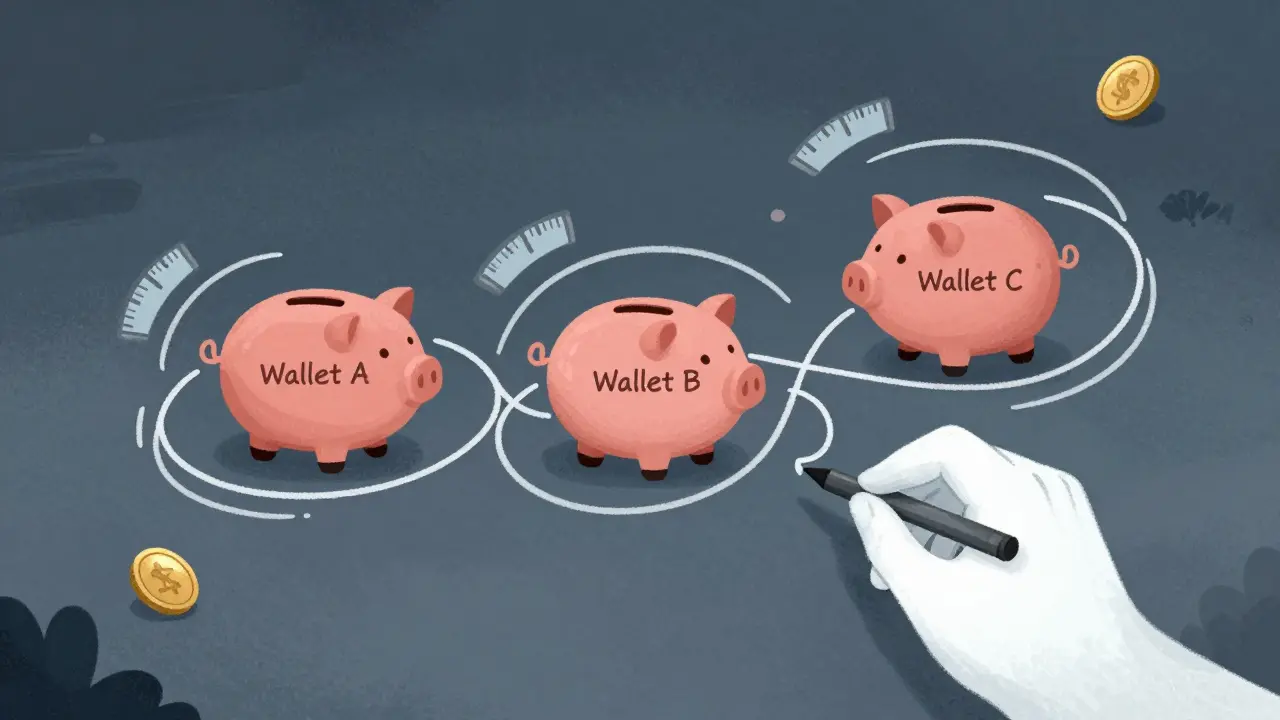
Oracle Manipulation: Hacking the Truth
DeFi is built on price oracles-systems that feed real-time prices into smart contracts. If the oracle says ETH is $3,500, then your loan collateral is calculated based on that. But what if someone hacks the oracle? In October 2022, trader Avraham Eisenberg manipulated the price oracle on Mango Markets, a Solana-based DeFi platform. He used a loophole to inflate the price of Mango token from $0.05 to $1.20. He then borrowed millions in loans using the inflated token as collateral. He cashed out, and the price crashed. He walked away with $115 million. The SEC charged him with market manipulation. Mango Markets sued to recover $47 million. The court didn’t call it a hack. It called it a trade. And that’s the scary part: it was legal… until it wasn’t. This shows how fragile DeFi can be. No central authority. No backup. Just code. And code can be gamed.Multi-Exchange Manipulation: The Hidden Game
There are over 500 crypto exchanges. Some are huge-Binance, Coinbase. Others are obscure, with no KYC, no audits, no oversight. Manipulators exploit this. They’ll pump a token on Exchange A, where volume is easy to fake. Then they move the price on Exchange B by placing large buy orders. Then they list it on Exchange C with fake trading pairs. Each exchange reports its own data. Regulators can’t track it all. By the time someone notices, the token’s been dumped across 12 platforms, and the price has crashed. This is cross-product manipulation. It’s harder to detect because no single exchange looks suspicious. But the pattern? When a token appears on five new exchanges in one week-with zero real news-it’s a red flag.
How to Spot Manipulation Before It’s Too Late
You can’t stop manipulation. But you can avoid becoming a victim. Here’s what to look for:- Sudden volume spikes with no news or upgrade announcement
- Coordinated social media-same message across 100 Telegram groups, all posted within 10 minutes
- Low liquidity-if a token has less than $1 million in daily volume, it’s easy prey
- Unusual wallet activity-check the blockchain. Are 80% of trades between the same 5 addresses?
- Price doesn’t match fundamentals-if a token has no team, no product, no roadmap, but is trending? Run.
Why This Keeps Happening
Crypto markets are open 24/7, global, and mostly unregulated. Traditional markets have circuit breakers, insider trading laws, and real-time surveillance. Crypto has none of that. Even when regulators step in-like the SEC going after a major pump scheme-it’s always behind the curve. The result? Manipulators adapt. They use AI to generate fake tweets. They hire influencers with 50,000 followers to push tokens. They create fake whitepapers with technical jargon to look legit. They know retail investors want to believe in the next big thing. And they’re happy to give them a dream-until it’s time to cash out.What You Can Do
Don’t chase trends. Don’t trust influencers. Don’t buy because "everyone’s talking about it." Do your own research. Look at on-chain data. Check the team behind the project. See if the token has real use, not just hype. Ask: "If this token vanished tomorrow, would anyone notice?" If you’re new, stick to the top 10 coins by market cap. They’re harder to manipulate because they’re too big. A whale can’t move Bitcoin with $100 million. But they can flip a $2 million token with $200,000. The crypto market isn’t rigged. It’s just wide open. And that’s what makes it dangerous-and why you need to be smarter than the manipulators.Is market cap manipulation illegal in cryptocurrency?
Yes, it’s illegal under securities laws in many jurisdictions-including the U.S., EU, and Australia-when it involves fraud, false advertising, or artificial price inflation. The SEC has charged individuals for pump-and-dump schemes, wash trading, and oracle manipulation. However, enforcement is difficult because crypto operates globally, and many exchanges aren’t registered. So while it’s technically illegal, many manipulators operate in unregulated jurisdictions and avoid prosecution.
Can blockchain analysis detect market manipulation?
Absolutely. Tools like Nansen, Arkham, and Chainalysis track wallet movements across blockchains. They can identify wash trading by spotting circular transfers between linked addresses. They can flag pump-and-dump patterns by detecting sudden spikes in volume followed by mass sell-offs. Even spoofing leaves traces-large orders that appear and vanish within seconds. While not foolproof, blockchain analysis is the most reliable way to spot manipulation after the fact-and sometimes before it happens.
Are all low-market-cap tokens scams?
No. Some small-cap tokens are legitimate projects with real innovation. But they’re also the most vulnerable to manipulation because they require less capital to move. A token with a $5 million market cap can be pumped 500% with $1 million. A token with a $5 billion market cap? That’s nearly impossible. So while not all small-cap tokens are scams, they carry far higher risk. Always research the team, the code, the community, and the on-chain activity before investing.
Why do exchanges allow wash trading to happen?
Many smaller exchanges rely on fake volume to appear active and attract listings. High trading volume makes a token look popular, which draws in new users. Some exchanges even partner with manipulators to boost volume in exchange for listing fees. Regulated exchanges like Coinbase or Binance ban this practice. But hundreds of unregulated exchanges still allow it because they have no oversight. It’s a race to the bottom: more volume = more users = more fees.
How can I protect myself from pump-and-dump schemes?
Avoid tokens promoted on social media with phrases like "10x guarantee" or "limited time." Never invest based on a Telegram group tip. Stick to coins with real usage, transparent teams, and on-chain activity that matches trading volume. Use blockchain explorers to check if the top 10 wallets hold more than 50% of supply. If a token’s price jumps 200% in a day with no news, wait 48 hours. Most pump-and-dump schemes collapse within hours after the dump starts.

10 Comments
nalini jeyapalan
March 8, 2026 AT 07:21 AMThis is exactly why I refuse to touch anything under $500M market cap. I don't care if it's 'the next Solana' - if a token can be moved with $200K, it's not an investment, it's a casino bet. I've lost money on three of these 'revolutionary' projects. Now I only look at coins with real usage, real teams, and real on-chain volume. No hype, no Telegram groups, no influencers. Just data.
Christina Young
March 9, 2026 AT 15:13 PMWash trading isn't even the worst part. The real scam is exchanges listing these tokens knowing full well the volume is fake. They make money off listing fees and trading commissions. The retail investor? Just collateral damage. And no one gets punished because regulators are still using 2015 tools to fight 2024 scams.
prasanna tripathy
March 11, 2026 AT 02:47 AMI remember one time I saw a token jump 300% overnight. I checked the wallet activity - 92% of trades were between three addresses. One of them was created 48 hours before the pump. I didn't buy. Two days later, it crashed 85%. I didn't make money, but I didn't lose any either. Sometimes the best trade is the one you don't make.
Megan Lutz
March 11, 2026 AT 03:31 AMThe oracle manipulation case is terrifying because it exposes a fundamental flaw in DeFi: trust in code. But code doesn't have ethics. It doesn't have morality. It just executes. If someone finds a loophole, the system doesn't protect you - it enables them. That’s not innovation. That’s an invitation to chaos.
Julie Potter
March 12, 2026 AT 18:20 PMI used to be one of those people who chased 10x coins. Then I lost $12K on a token called 'MetaGamerZ' that had a whitepaper written in Google Translate. Now I read every single comment on CoinGecko. I look for patterns - same usernames, same timing, same emojis. If five people say '10x or GTFO' in the same 10-minute window? I scroll past. It's not rocket science. It's psychology.
Rachel Rowland
March 14, 2026 AT 08:23 AMI wish more people understood that liquidity isn't just about volume - it's about depth. A token with $1M volume but 80% held by 3 wallets? That's not a market. That's a puppet show. And the strings? They're held by people who don't even care if you make money. They just want your money.
Nick Greening
March 15, 2026 AT 16:39 PMYou think this is bad? Wait until AI-generated pump schemes go mainstream. Imagine bots creating fake Reddit threads, fake Twitter threads, fake YouTube reviews - all auto-generated, all coordinated. No human ever touched it. The market won't know what hit it. And by the time regulators wake up? The money's already in Monero.
Leah Dallaire
March 16, 2026 AT 08:55 AMThe real manipulation isn't in the markets. It's in the narrative. They sell you the dream of financial freedom, then use your greed against you. You think you're outsmarting the system? You're just another pawn in their game. The system isn't rigged - it was built to be rigged. And we all signed up for it.
Bonnie Jenkins-Hodges
March 17, 2026 AT 11:22 AMAmerica needs to lead here. Why are we letting these scammers operate from Russia and Nigeria? We have the tech. We have the laws. We just need the will. If you're trading on an unregulated exchange, you're not investing - you're funding foreign criminals. Wake up.
James Burke
March 18, 2026 AT 17:23 PMOne sentence: If you don't know what on-chain data looks like, don't touch altcoins.