
Imagine trying to buy a coffee with Bitcoin in Tehran. You pull out your phone, open your wallet, and try to pay. But instead of a simple transaction, you hit a wall of government surveillance, strict purchase limits, and the constant threat of frozen assets. This isn't a dystopian novel; it’s the reality for Iranians navigating the cryptocurrency landscape in 2026.
The question "Is crypto regulated in Iran?" doesn't have a simple yes or no answer. It has a complicated, shifting, and highly restrictive one. While owning Bitcoin isn't technically illegal for individuals, the way you can buy, sell, and use it is tightly controlled by the Central Bank of Iran (CBI). The government wants to harness the technology for its own gain-specifically to bypass international sanctions-while simultaneously crushing the decentralized freedom that makes crypto valuable to ordinary people.
If you are an Iranian resident, a business owner looking to trade with Iran, or just someone curious about how geopolitics shapes digital finance, understanding these rules is critical. One wrong move could mean losing your funds, facing legal trouble, or getting caught in the crossfire of international sanctions.
The Current Legal Status: Ownership vs. Usage
Let’s clear up the biggest confusion first. Is it illegal to hold crypto in Iran? No. As of mid-2026, individuals are allowed to own cryptocurrencies like Bitcoin and Ethereum. However, using them as a primary currency for daily transactions within the country is prohibited. The CBI does not recognize foreign cryptocurrencies as legal tender.
The real restriction lies in *how* you interact with the market. In late 2024, the CBI cut off all direct payment channels between Iranian bank accounts and cryptocurrency exchanges. This was a massive blow to users who relied on easy fiat-to-crypto ramps. Today, if you want to buy crypto with Rials, you must go through specific, government-approved gateways. These platforms require full identity verification and share all your transaction data directly with the central bank.
This creates a paradox. The government bans crypto ads to keep the public discourse quiet, yet it forces all legitimate trading into a transparent, monitored box. Why? Because they need to track capital flight. With the Rial volatile, many Iranians turn to crypto to save their wealth. The state needs to see where that money is going.
Mining: From Boom to Busted
You might remember headlines from a few years ago about Iran being a top global hub for Bitcoin mining. That era is effectively over. Here is what happened:
- The Energy Crisis: Unregulated miners were consuming vast amounts of electricity, leading to blackouts during summer heatwaves. This angered the public and threatened industrial production.
- The 2019 Ban: The government initially banned mining entirely. Then, they allowed it back but only under strict licenses.
- The Trap: Licensed miners were forced to sell their mined coins directly to the Central Bank at fixed rates. Combined with extremely high energy tariffs imposed on these operations, licensed mining became financially unviable.
So, did mining stop? Not really. It went underground. Many operators moved their rigs to hidden locations, paying bribes or stealing power to keep running. But for any legitimate business, mining in Iran today is a high-risk, low-reward endeavor. The state sees mining hardware as a drain on national resources unless it directly benefits the treasury.
The Stablecoin Squeeze: New Limits for 2025-2026
If you thought holding Bitcoin was the main issue, think again. The real pain point for most Iranians is the restriction on stablecoins like Tether (USDT). Stablecoins are crucial for Iranians because they offer a hedge against inflation without the volatility of Bitcoin.
In September 2025, the Central Bank introduced severe caps on stablecoin holdings:
| Restriction Type | Limit | Enforcement Mechanism |
|---|---|---|
| Annual Purchase Limit | $5,000 USD equivalent | Capped via approved exchange APIs |
| Maximum Holding Balance | $10,000 USD equivalent | Wallet monitoring by CBI |
| Compliance Deadline | One month from announcement | Forced liquidation of excess holdings |
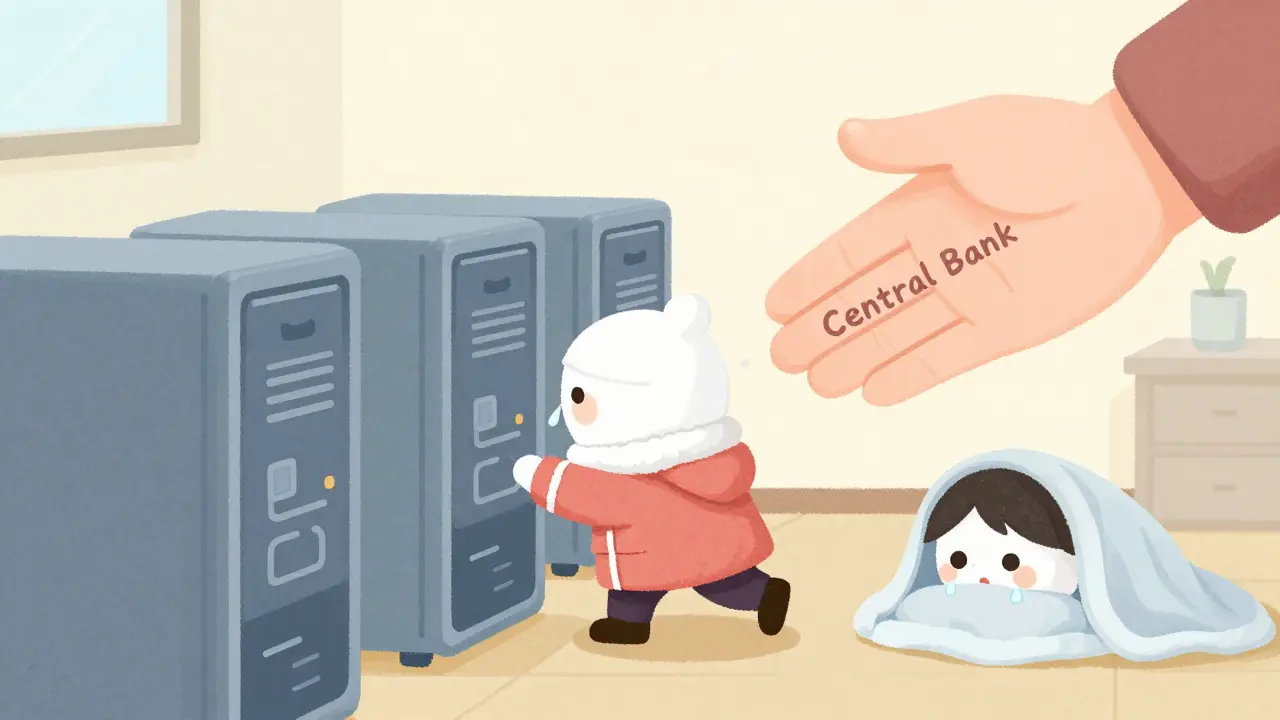
Why this limit? The government fears that large-scale adoption of USDT would completely undermine the Rial. If everyone holds dollars in digital form, why would anyone use the national currency? By capping holdings, they try to force savings back into gold, real estate, or government bonds.
But there’s a catch. Tether, the company behind USDT, has been freezing Iranian-linked addresses since 2025 due to US sanctions pressure. In July 2025 alone, they froze dozens of addresses linked to major Iranian exchanges like Nobitex. This left thousands of users unable to access their funds. As a result, many Iranians have shifted to DAI, a decentralized stablecoin that doesn’t rely on a single company to unfreeze accounts. DAI’s usage among Iranian users jumped from 35% in Q3 2025 to nearly 65% by late 2026.
Taxation: The Government Wants Its Cut
It’s not just about control; it’s also about revenue. In August 2025, Iran passed the Law on Taxation of Speculation and Profiteering. For the first time, cryptocurrency profits are explicitly taxable.
Here is how it works:
- Capital Gains Tax: Profits from selling crypto are taxed similarly to other speculative assets like gold or forex.
- Reporting Requirements: Since all approved exchanges report to the CBI, tax authorities can easily cross-reference your trading history with your bank statements.
- Integration Plan: By Q2 2026, the Ministry of Economic Affairs plans to fully integrate crypto tax collection into the standard financial reporting system.
This means the days of anonymous, tax-free crypto trading in Iran are gone. If you trade on a compliant platform, the government knows exactly how much you made. Evasion is possible only by using unofficial channels, which brings us to the risks.
The Risks: Sanctions, Freezes, and Surveillance
Trading crypto in Iran involves three major layers of risk that don’t exist in most other countries.
1. International Sanctions
The United States and European Union impose heavy sanctions on Iran. Financial institutions worldwide comply with these sanctions to avoid penalties. This means Iranian users cannot use global exchanges like Coinbase or Binance directly. They must rely on local exchanges or peer-to-peer (P2P) networks. Even then, if a local exchange interacts with sanctioned entities, its entire liquidity pool can be frozen. We saw this happen with Nobitex when Tether blocked its connections.
2. State Surveillance
The CBI demands "unprecedented state surveillance capabilities" over digital assets. Every transaction on approved platforms is logged. Your IP address, your identity, and your transfer history are all visible to the state. If you are involved in political dissent or unauthorized business activities, your crypto wallet becomes a liability, not an asset.
3. Regulatory Whiplash
Rules change overnight. One day, buying USDT is fine; the next, there’s a $10,000 cap. One week, mining is tolerated; the next, raids occur. This unpredictability makes long-term planning impossible. According to TRM Labs, this regulatory instability caused an 11% drop in crypto inflows in the first half of 2025 alone.

How People Adapt: The Underground Market
Despite the crackdowns, the demand for crypto in Iran remains huge. The estimated market size is between $30 billion and $50 billion. So, how do people get around the rules?
- VPNs and Foreign Exchanges: Many users still access international platforms via Virtual Private Networks. This is risky because if the exchange detects an Iranian IP or sanctions violation, they will ban you instantly.
- Decentralized Exchanges (DEXs): Platforms like Uniswap or PancakeSwap don’t require KYC (Know Your Customer) checks. Users swap tokens directly from their wallets. This is harder to trace but requires technical knowledge.
- P2P Trading: Buying crypto directly from another person via Telegram or WhatsApp, often paid through informal banking networks (Hawala). This avoids official exchanges but carries scam risks.
Approximately 60% of trading volume in Iran now occurs through these unofficial channels. The government tries to shut them down, but as long as the Rial loses value, people will find a way to protect their savings.
What About the National Digital Currency?
The Central Bank has its own answer to crypto: the "Rial Currency." This is a centralized digital token pegged 1:1 to the physical Rial. Unlike Bitcoin, it cannot be mined, and its supply is controlled entirely by the CBI.
The goal is to use this digital Rial for international trade to bypass SWIFT sanctions. Imagine Iranian oil companies getting paid in digital Rials instead of dollars. It keeps the money inside the Iranian financial ecosystem while allowing global trade. For regular citizens, however, it offers no advantages over a normal bank account-and adds the downside of total transparency.
Summary: What Should You Do?
If you are living in Iran, here is the bottom line:
• Ownership is okay, but usage is restricted.
• Use approved exchanges if you want to stay legal and pay taxes, but accept the surveillance and limits.
• Avoid large stablecoin holdings above the $10,000 cap to prevent forced liquidation.
• Consider decentralized options like DAI if you fear Tether freezes, but understand the technical complexity.
• Never assume anonymity. The state watches closely.
If you are outside Iran, be extremely cautious about doing business with Iranian crypto entities. The risk of secondary sanctions is real. Ensure your counterparties are fully compliant with international laws, though in Iran’s case, compliance is a moving target.
Is it illegal to mine Bitcoin in Iran?
Unlicensed mining is illegal and actively suppressed due to energy concerns. Licensed mining exists but is financially difficult because miners must sell their output to the Central Bank at fixed rates and face high electricity costs. Most mining has moved underground or ceased.
Can I use Tether (USDT) in Iran?
You can hold it, but with strict limits. As of 2025, individuals are capped at purchasing $5,000 annually and holding a maximum balance of $10,000. Additionally, Tether itself has frozen many Iranian-linked addresses due to US sanctions, making it risky. Many users are switching to DAI.
Are crypto profits taxed in Iran?
Yes. Since August 2025, capital gains from cryptocurrency trading are subject to taxation under the Law on Taxation of Speculation and Profiteering. Approved exchanges report transactions to the Central Bank, making evasion difficult for those using official channels.
Which exchanges are safe to use in Iran?
Local exchanges like Nobitex operate under government oversight and are "safe" in terms of legality, but they carry the risk of fund freezes if international partners (like Tether) cut ties. International exchanges are generally inaccessible or risky due to sanctions. Many users turn to decentralized exchanges (DEXs) for better privacy, though this requires technical skill.
Will the regulations change soon?
The trend is toward tighter control, not loosening. The government is expanding its digital Rial, enforcing tax collection, and limiting stablecoins. Changes usually depend on geopolitical shifts, such as nuclear deal negotiations, but domestic policy aims to maximize state control over financial flows.

10 Comments
Jocelyn Garcia
May 24, 2026 AT 23:49 PMThe regulatory arbitrage happening here is fascinating from a macroeconomic perspective. The CBI is essentially trying to have its cake and eat it too by leveraging the tech stack of decentralized finance while maintaining the centralized control mechanisms of a command economy. It’s a classic example of state capture in the digital age.
Amit Varpe
May 26, 2026 AT 19:11 PMGood for them. If they can’t manage their own currency, they shouldn’t be allowed to play with global markets. Sanctions are working exactly as intended. :)
Albert Lee
May 28, 2026 AT 00:45 AMI honestly feel so much empathy for the everyday people caught in this crossfire. It must be terrifying to watch your life savings evaporate because of political decisions you had no say in. The shift to DAI is such a desperate but smart move for survival. We need more awareness about how these geopolitical tensions directly impact human lives on the ground. It’s not just numbers on a screen; it’s families losing their security. 💔
Jesse Alston
May 28, 2026 AT 04:36 AMGreat breakdown! 📊 One thing I’d add for anyone looking at the technical side: the shift to DAI isn’t just about avoiding Tether freezes. It’s also about composability in DeFi. Since many Iranians are using DEXs like Uniswap, DAI integrates better into liquidity pools without the counterparty risk of a centralized issuer like Tether. Just something to keep in mind if you’re navigating these waters! 🚀
Sarah C
May 28, 2026 AT 11:18 AMI appreciate the detailed explanation of the tax laws. It really highlights how difficult it is to remain compliant when the rules change overnight. I think we should focus on supporting educational resources for those trying to navigate this legally.
Kimberly Herbstritt
May 29, 2026 AT 05:23 AMActually, I think the article misses the point. People aren’t just using crypto to survive inflation; they’re using it because they fundamentally distrust the government. The regulations are just a band-aid on a bullet wound. The real story is the collapse of trust in the Rial, not the crypto itself.
Sharada Vakkund
May 31, 2026 AT 04:39 AMLet’s bring everyone together on this topic. Whether you’re a miner, a trader, or just an observer, understanding the local context is key. For those in India or other emerging markets, watching Iran’s experiment offers valuable lessons on how states react to decentralized technology. Let’s share our experiences and learn from each other’s challenges.
Tobias Gjerlufsen
May 31, 2026 AT 16:55 PMyou guys are missing the forest for the trees. this isn’t about crypto. it’s about energy sovereignty. iran has cheap electricity and they want to monetize it. the ban on mining wasn’t about saving the grid it was about forcing miners to sell to the state. typical kleptocracy behavior. stop romanticizing the rebels and look at the economics.
Gavin Wonnacott
June 1, 2026 AT 22:35 PMIt is quite amusing to watch the masses scramble for 'financial freedom' while ignoring the fact that they are merely trading one master for another. The elite understand that true wealth is never held in volatile digital tokens but in tangible assets and connections. You are all playing a game rigged against you from the start.
Samara McCallum
June 3, 2026 AT 17:02 PMthe whole concept of regulation is an illusion anyway. money is a social construct and when the social contract breaks down people find new ways to trade. whether it’s daai or usdt or even bartering chickens the desire to preserve value is primal. let them freeze what they want the spirit of decentralization cannot be jailed.