You minted an NFT. It looks like a JPEG in your wallet. But under the hood, it’s code. And that code follows strict rules called NFT standards. These are technical specifications that dictate how unique digital assets are created, transferred, and managed across different networks. If you’ve ever tried to move an NFT from Ethereum to Solana and watched it vanish into the void, you’ve felt the pain of incompatible standards.
Why does this matter? Because not all blockchains speak the same language. A token standard is essentially a contract interface-a set of functions every smart contract must implement so wallets and marketplaces know how to interact with it. Without these shared protocols, your digital art would be locked in silos, useless outside its native chain. As of Q2 2025, Ethereum still hosts about 80% of all NFT transactions, but the landscape is shifting fast. Understanding which standard runs on which chain helps you save money, avoid bugs, and pick the right platform for your project.
The Ethereum Foundation: ERC-721 and Its Siblings
Ethereum started it all. In late 2017, CryptoKitties clogged the network so badly that developers realized existing fungible token standards (like ERC-20) couldn’t handle unique assets. Enter ERC-721, proposed by William Entriken and others in January 2018. This standard ensures each token ID is unique within its contract. If you own #42 in a collection, no one else can claim it. It’s simple, secure, and universally supported by wallets like MetaMask and marketplaces like OpenSea.
But ERC-721 has flaws. It’s expensive. Every transfer requires a separate transaction. If you’re selling ten items, you pay gas fees ten times. During peak congestion, those fees can hit $15 per swap. For high-volume traders, this kills margins. To fix this, Enjin proposed ERC-1155 in June 2018. This multi-token standard lets you bundle fungible and non-fungible tokens in one transaction. Think of it as buying a game skin (non-fungible) and gold coins (fungible) in a single click. Rapid Innovation’s 2025 analysis shows this cuts gas costs by up to 90%. It’s efficient, but harder to audit because the metadata structure is more complex.
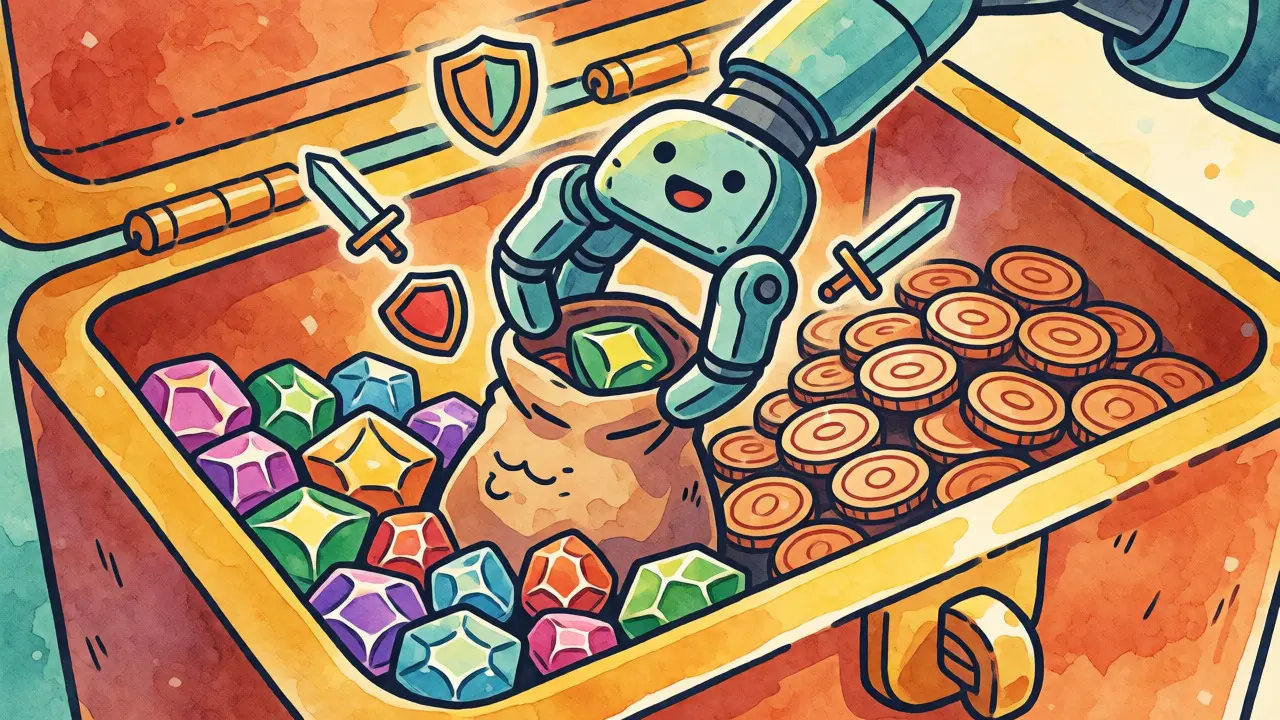
Then there’s ERC-998, the composable standard. Imagine owning a sword NFT that contains three gem NFTs inside it. With ERC-998, you transfer the sword, and the gems go with it automatically. It’s powerful for gaming but risky. A 2025 audit of 147 contracts found that 22% had critical vulnerabilities related to recursive ownership. Use it only if you have serious security resources.
Solana and Polygon: Speed vs. Compatibility
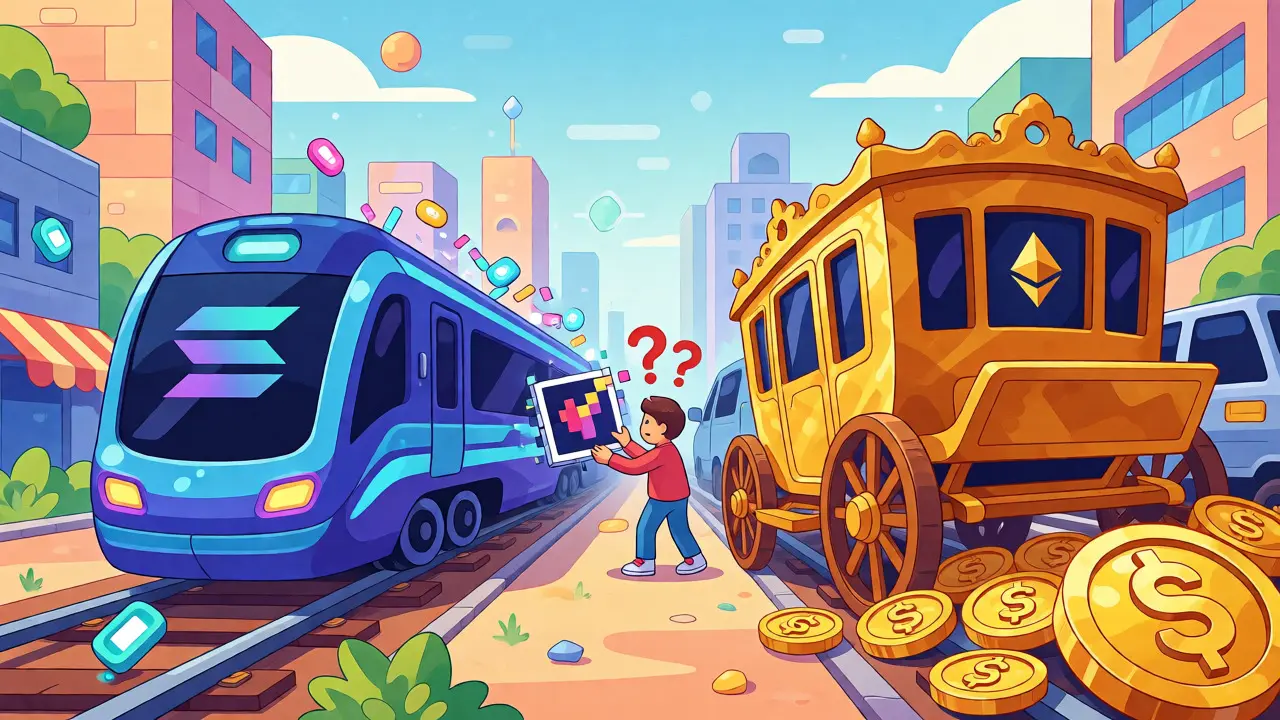
If Ethereum feels like a highway during rush hour, Solana is a bullet train. It uses the SPL Token Standard, part of the Solana Program Library. Unlike Ethereum’s account-based model, Solana handles state differently, allowing for ultra-low costs-averaging $0.00025 per transaction as of Q3 2025. You can mint thousands of NFTs for pennies.
However, speed comes at a cost. Solana isn’t EVM-compatible. You can’t just copy-paste Solidity code; you need Rust or Anchor. The learning curve is steep-about 8-10 months for new developers. Plus, reliability has been shaky. Solana suffered six major outages in 2024, totaling 19 hours of downtime. If you’re building a time-sensitive auction, that’s a nightmare. Still, for PFP projects like Mad Lads, the low barrier to entry wins out.
Polygon takes a different approach. It’s an EVM sidechain, meaning it speaks Ethereum’s language. If you know ERC-721, you already know Polygon. Gas fees average $0.001, and transactions settle in about 2 seconds. Major brands like Starbucks use Polygon for their Odyssey program because it balances cost with familiarity. The catch? Bridging assets back to Ethereum mainnet can take 45 minutes, which frustrates users expecting instant finality.
Tezos and Flow: Niche Players with Specific Strengths
Not everyone wants to compete with Ethereum’s raw power. Tezos focuses on sustainability. It uses the FA2 standard, a multi-asset protocol similar to ERC-1155 but optimized for energy efficiency. Tezos’ proof-of-stake consensus consumes nearly zero carbon compared to old Proof-of-Work chains. Artists like Björk prefer it for this reason. Minting costs around $0.10, which is cheap enough for hobbyists but slower than Solana, with transaction speeds hovering around 30 seconds.
Flow, built by Dapper Labs (the team behind CryptoKitties), was designed specifically for consumer apps. It uses the Cadence programming language, which enforces stricter safety checks at compile time. This reduces runtime errors but limits flexibility. Flow powers NBA Top Shot, achieving finality in 3-5 seconds. However, developer adoption lags behind Ethereum and Solana. Documentation scores lower (3.2/5 in recent surveys), making it harder for indie devs to jump in without prior experience.
| Blockchain | Primary Standard | Avg. Cost | Speed/Finality | Best For |
|---|---|---|---|---|
| Ethereum | ERC-721 / ERC-1155 | $1.50 - $15.00 | 15 TPS | High-value art, established collections |
| Polygon | ERC-721 (EVM) | $0.001 | 2.1 seconds | High-volume retail, brand campaigns |
| Solana | SPL Token | $0.00025 | 0.4 seconds | PFP projects, gaming, mass minting |
| Tezos | FA2 | $0.10 | 30 seconds | Eco-conscious creators, small communities |
| Flow | Cadence Native | $0.05 | 3-5 seconds | Consumer apps, sports collectibles |
The Rise of Composable Accounts: ERC-6551
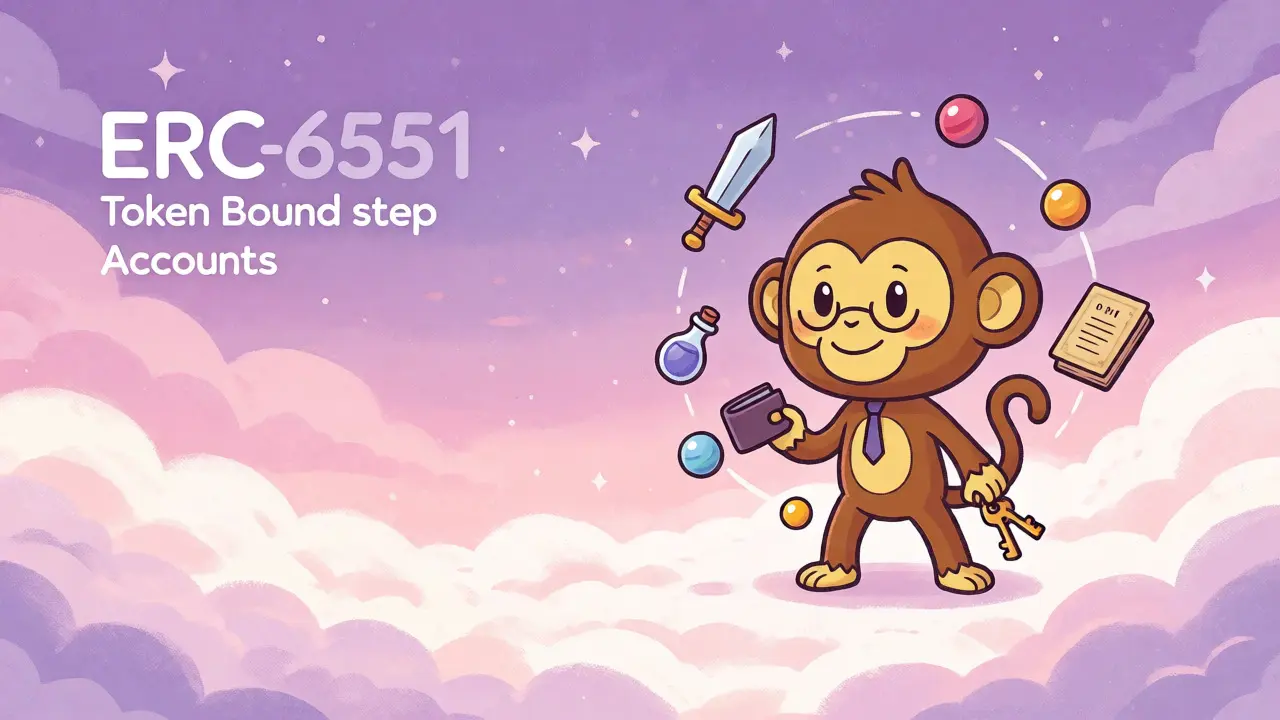
We’re seeing a shift toward utility over speculation. ERC-6551, known as Token Bound Accounts, is changing the game. Proposed in 2023 and gaining traction in 2025, it allows an NFT to have its own wallet address. Your Bored Ape can now hold other tokens, sign transactions, and interact with DeFi protocols directly. Vitalik Buterin calls this the "next evolutionary step." Instead of just being a picture, your NFT becomes an active participant in the ecosystem.
This solves the composability issue of earlier standards. You don’t need complex ERC-998 nesting anymore. Just give the NFT a wallet. It’s simpler, safer, and easier to audit. Expect this to become the default for enterprise implementations, especially as real-world asset (RWA) tokenization grows. Gartner predicts 60% of enterprise NFTs will use purpose-built solutions or advanced standards like this by 2027.
Choosing the Right Standard for Your Project
Don’t pick a blockchain because it’s trendy. Pick it based on your needs. Here’s a quick decision tree:
- Selling fine art? Stick with Ethereum ERC-721. Collectors want the prestige and liquidity of OpenSea.
- Building a game with thousands of items? Go with ERC-1155 on Polygon or SPL on Solana. You need bulk transfers.
- Targeting eco-conscious buyers? Tezos FA2 is your best bet for marketing angle.
- Need extreme speed and low cost? Solana SPL, but monitor network health closely.
Remember, cross-chain compatibility is still weak. While projects like Chainlink CCIP aim to bridge 15+ chains by 2026, most NFTs remain trapped on their native chain today. If you plan to expand later, choose a standard that has good bridging support, like EVM-compatible ones.
Can I move an ERC-721 NFT to Solana?
Not directly. They use different standards and virtual machines. You must "wrap" the NFT using a bridge service, which locks the original on Ethereum and mints a representation on Solana. This process can be slow and may incur double fees.
Is ERC-1155 better than ERC-721?
It depends. ERC-1155 is more efficient for batching and supports both fungible and non-fungible tokens. However, ERC-721 offers stronger uniqueness guarantees and broader tooling support. For pure unique art, ERC-721 is often preferred for its simplicity and widespread recognition.
What is the cheapest way to mint NFTs?
As of late 2025, Solana is generally the cheapest, with costs averaging $0.00025 per transaction. Polygon is also very affordable at around $0.001. Ethereum remains the most expensive due to network congestion.
Do NFT standards affect copyright?
No. Standards define technical functionality (transfer, ownership), not legal rights. Copyright is determined by the license attached to the metadata, usually stored off-chain (e.g., on IPFS). Always check the specific license terms of the collection.
What is ERC-6551?
ERC-6551 is a newer standard that gives each NFT its own Ethereum wallet address. This allows the NFT to hold assets, execute transactions, and interact with smart contracts independently, turning static tokens into active agents.
