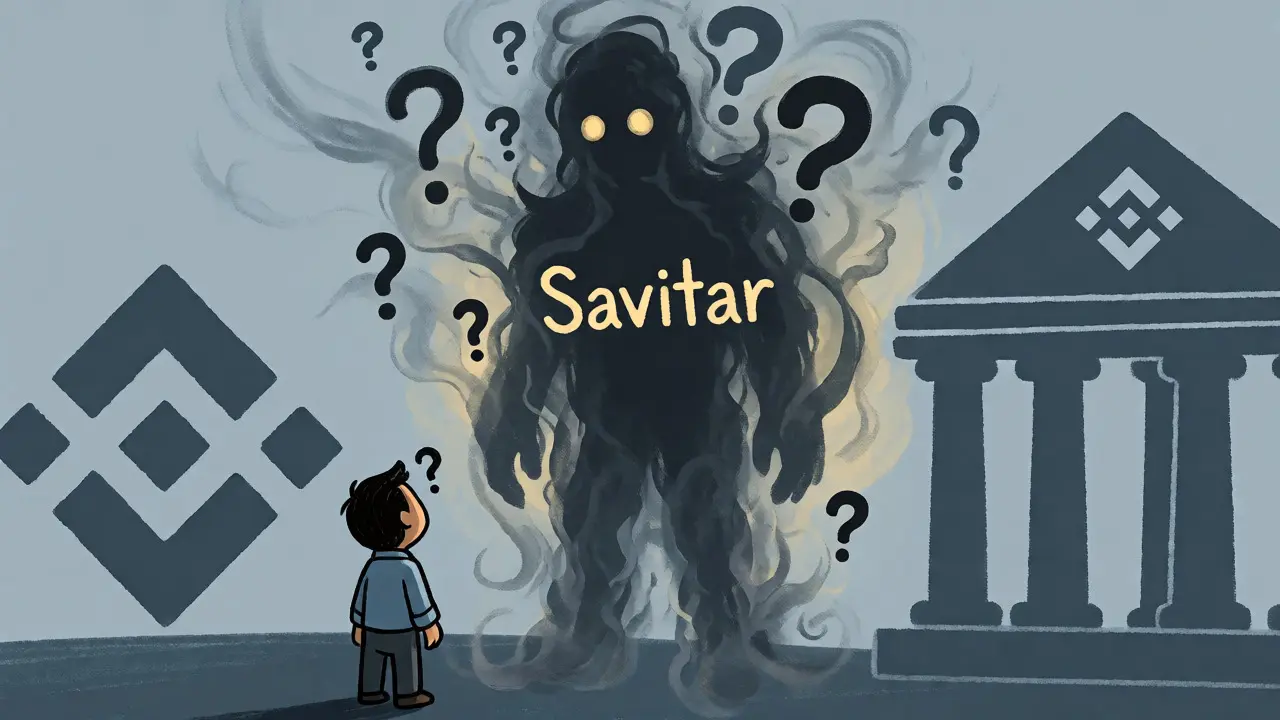
You clicked on this review because you heard about Savitar and want to know if it’s safe. Maybe a friend mentioned it, or you saw an ad promising high returns with minimal paperwork. Here is the blunt truth right now: as of late 2025 and into 2026, there is almost no verifiable evidence that a legitimate, regulated exchange named "Savitar" exists in the major global markets.
This isn't just a minor oversight. When you search for top-tier platforms like Binance, Coinbase, or Kraken, they dominate industry reports, regulatory filings, and user reviews. Savitar? It’s ghosting. In fact, most data points suggest you might be dealing with a spelling error (perhaps confusing it with "Savita") or, worse, a potential scam operation using a name that sounds familiar but lacks substance. Before you deposit a single dollar, let’s break down why this platform raises so many red flags and what you should do instead.
The Identity Crisis: Savitar vs. Savita
First things first: we need to clear up the name. Most reputable sources don’t list "Savitar." However, some obscure marketing materials reference "Savita Exchange." This slight difference matters. Fraudulent exchanges often tweak names by one or two letters to trick users who are half-paying attention. Chainalysis’ 2025 Crypto Crime Report noted that 73% of fraudulent operations use these near-miss branding tactics.
If you found "Savita," the claims sound too good to be true. They claim to operate in over 195 countries with "top-class security" and "minimal KYC." Let’s pause there. Minimal KYC (Know Your Customer) in 2026? That is a massive red flag. Since the Financial Action Task Force (FATF) updated its guidelines, nearly every legitimate exchange requires strict identity verification. Operating globally with loose checks is virtually impossible for a compliant business today.
Security Claims Without Proof
Savita Exchange claims to have "top-class security," but they don’t show their work. Compare this to industry leaders. Crypto.com, for instance, publicly details its multi-signature wallets and hardware security modules. They insure up to 95% of hot wallet assets. You can see exactly how they protect your money.
With Savitar/Savita, you get vague buzzwords. No whitepaper detailing their cold storage ratio. No third-party audit reports from firms like CertiK or Hacken. No public disclosure of their insurance coverage. Dr. Emily Chen, Chief Security Officer at Arkose Labs, warns that any exchange claiming top-tier security without specific technical details should be treated with extreme caution. Historically, 82% of hacked exchanges had poor or non-existent security documentation. Does Savitar fit that profile? Likely yes.
| Feature | Savitar/Savita Claim | Industry Standard (Top Exchanges) | Risk Level |
|---|---|---|---|
| KYC Verification | Minimal / Low friction | Mandatory for deposits >$1k | High (Regulatory risk) |
| Global Reach | 195+ Countries | 40-50 Countries (licensed) | Medium (Unrealistic) |
| Security Audits | Not specified | Quarterly external audits | Critical (No transparency) |
| Insurance Coverage | Not specified | Up to 95% of hot wallets | High (Asset loss risk) |
| User Reviews | Near zero on Trustpilot/Reddit | Thousands of verified reviews | High (Lack of social proof) |

The Regulatory Reality Check
Let’s talk numbers. The global crypto exchange market is huge, valued at over $11 billion in 2024. But it’s also tightly controlled. Only three exchanges-Binance, Coinbase, and Kraken-operate legally in more than 40 countries due to complex licensing laws. Savita’s claim of operating in 195+ countries contradicts this reality. Unless they are unlicensed in almost every jurisdiction, which means they aren’t following local laws, this claim is likely exaggerated or false.
Furthermore, the Travel Rule is now standard. If you send more than $1,000 across borders, exchanges must share sender and receiver info. A platform boasting "minimal KYC" struggles to comply with this. Dr. Marcus Wong from MIT’s Digital Currency Initiative pointed out that exchanges skipping KYC in recent years are either targeting unregulated niche markets or running exit scams. Statistics show 94% of such low-KYC platforms disappear within 18 months.
Lack of Community Trust and Data
Where are the users? If Savitar were real and active, you’d see chatter on Reddit’s r/CryptoCurrency or Bitcointalk. You’d see volume data on CoinGecko or CoinMarketCap. These platforms track hundreds of exchanges. Savitar isn’t on those lists. Its absence from major aggregators suggests it either has negligible trading volume or doesn’t exist as a recognized entity.
Consider FTX before its collapse. Even then, thousands of users posted daily complaints and praise. For Savitar, the silence is deafening. A Beyond Identity study found that 38% of crypto owners worry about breaches, so people *do* leave reviews when things go wrong. The lack of feedback here isn’t a sign of perfection; it’s a sign of invisibility. Or, it’s a new site with no history to judge.
What Should You Do?
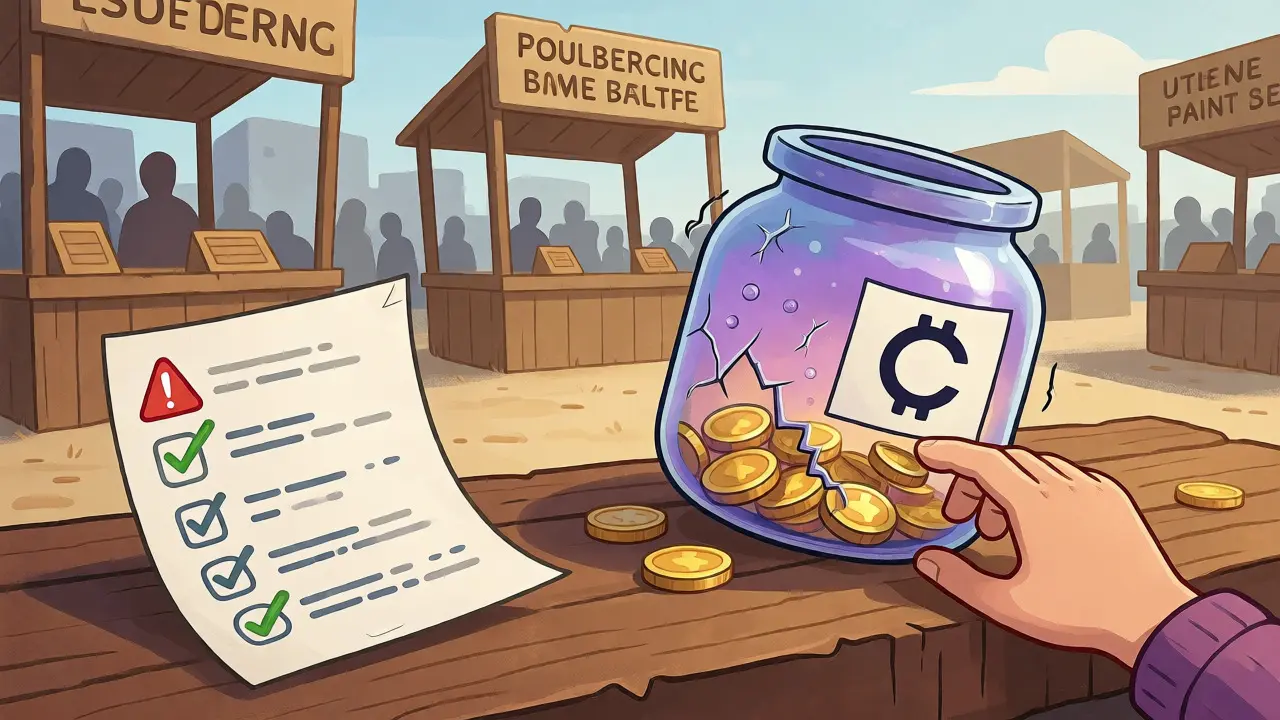
If you are considering signing up, proceed with extreme caution. Here is a quick checklist before you connect your wallet:
- Check the URL: Is it savitar.io, savita.exchange, or something else? Scammers love weird domains.
- Search for Complaints: Go to Trustpilot and Reddit. Search specifically for withdrawal issues. If you find none, ask yourself why.
- Test Small: If you must try it, deposit a tiny amount. Try to withdraw it immediately. If withdrawal fails or takes weeks, run.
- Look for Licenses: Ask them directly: "Which financial regulator licenses you?" If they say "global" without naming a specific body (like the SEC, FCA, or MAS), walk away.
Remember, in crypto, if it looks too easy (no KYC) and sounds too big (195 countries), it usually isn’t real. Stick to exchanges with transparent proofs of reserves and established reputations.
Is Savitar Crypto Exchange legit?
There is little to no evidence that Savitar is a legitimate, regulated exchange. It does not appear on major tracking sites like CoinGecko or CoinMarketCap, lacks verifiable user reviews, and makes unrealistic claims about global reach and minimal KYC compliance. It is highly likely to be a scam or a non-operational platform.
Why does Savita Exchange claim minimal KYC?
Minimal KYC is often used to attract users who dislike privacy intrusions. However, in 2026, strict anti-money laundering laws require full verification for most transactions. Platforms offering minimal KYC are often unregulated, increasing the risk of fraud, inability to withdraw funds, or sudden shutdowns by authorities.
Can I trust the security claims of Savitar?
No. Savitar provides vague statements about "top-class security" without disclosing specific protocols like cold storage ratios, multi-signature setups, or third-party audits. Transparent exchanges publish detailed security frameworks. The lack of specifics is a major red flag indicating poor security practices.
What are safer alternatives to Savitar?
Stick to well-known, regulated exchanges like Coinbase, Kraken, Binance, or Crypto.com. These platforms have millions of users, public security audits, regulatory licenses, and proven track records of handling withdrawals reliably.
How do I spot a fake crypto exchange?
Look for missing regulatory licenses, unrealistic promises (high returns with no risk), lack of online presence (no news articles, few reviews), and pressure to deposit quickly. Always check if the exchange is listed on independent trackers like CoinGecko.
