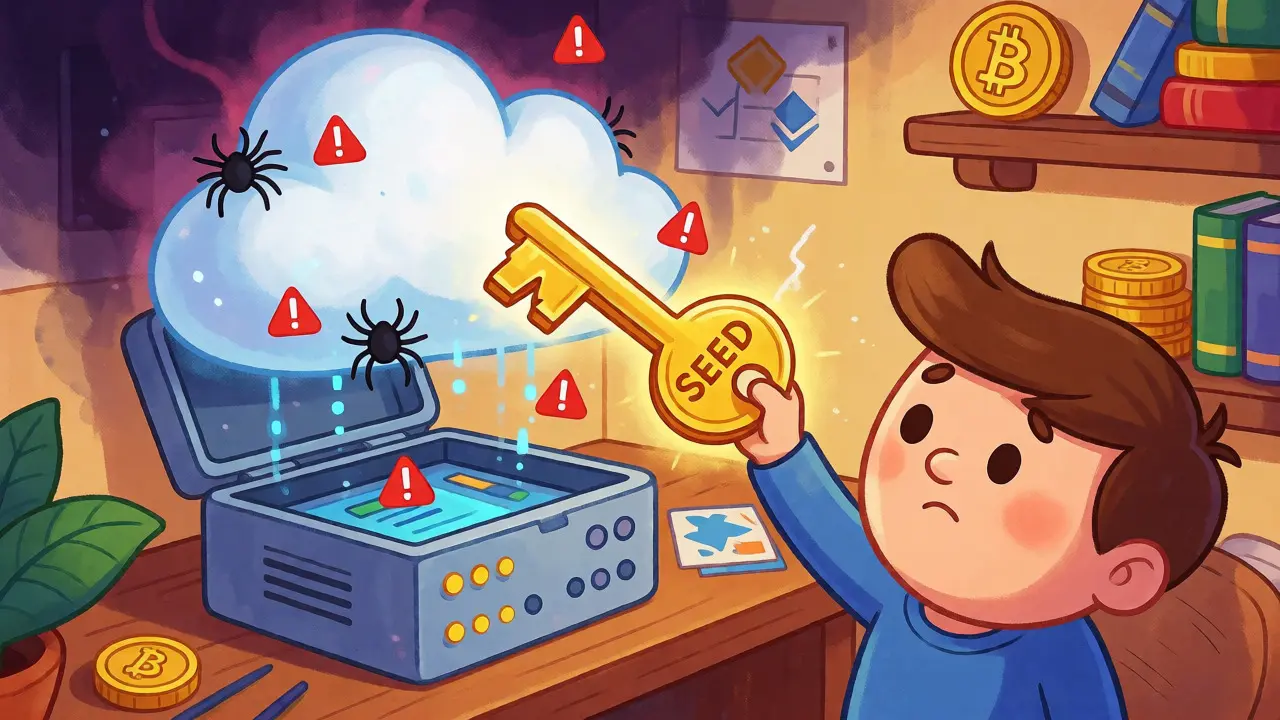
You’ve got your Bitcoin or Ethereum safely tucked away in a hardware wallet. You feel secure. But here’s the uncomfortable truth: if you lose the string of words that generated that wallet, your coins are gone forever. No bank can help you. No customer support line exists. This is the reality of seed phrase security. It’s not just about keeping your password safe; it’s about protecting the master key to your financial life in Web3.
A seed phrase-often called a recovery phrase-is a list of 12 or 24 random words that act as the master backup for your cryptocurrency wallet. If your device breaks, gets stolen, or you simply upgrade your phone, this phrase is the only thing standing between you and total loss. Yet, most people treat it with the same casualness as a Wi-Fi password. That’s a mistake. In decentralized finance, there is no "forgot password" button. Let’s break down exactly how to keep these phrases safe, why digital storage often fails, and what the pros actually do to protect their assets.
What Exactly Is a Seed Phrase?
To understand how to protect it, you need to know what it is. Technically, a seed phrase is a human-readable representation of a complex cryptographic number. The industry standard is BIP-39, which stands for Bitcoin Improvement Proposal 39. Introduced in 2013, this standard converts a random binary seed into a sequence of words from a specific list of 2,048 English words.
Why use words instead of numbers? Because humans are bad at remembering long strings of hex codes but decent at memorizing word lists. Each word represents 11 bits of entropy (randomness). A 12-word phrase provides 128 bits of security, while a 24-word phrase offers 256 bits. To put that in perspective, guessing a 12-word phrase by brute force would take longer than the age of the universe. However, that security vanishes instantly if someone else sees those words.
| Phrase Length | Entropy (Bits) | Security Level | Common Use Case |
|---|---|---|---|
| 12 Words | 128 | Standard | Most mobile wallets (MetaMask, Trust Wallet) |
| 24 Words | 256 | High | Hardware wallets (Ledger, Trezor) for large holdings |
The Golden Rule: Never Go Digital
Here is the biggest pitfall for beginners: storing your seed phrase digitally. Taking a photo of your paper backup and saving it to your phone gallery seems convenient. It’s also dangerous. Your phone connects to Wi-Fi, Bluetooth, and cellular networks constantly. Malware can scan your image files. Cloud backups sync that photo to servers where data breaches happen regularly.
Consider the case of user u/CryptoCaution on Reddit, who lost $12,000 because they stored their seed phrase screenshot in Google Drive. Their account was compromised via SIM swapping-a technique where attackers hijack your phone number to reset passwords. Within 15 minutes, all funds were drained. The lesson? If it touches the internet, it’s vulnerable.
Even encrypted cloud storage isn’t foolproof. While AES-256 encryption is strong, the risk lies in the implementation and the potential for keylogging malware on your device when you type the password to decrypt the file. The National Institute of Standards and Technology (NIST) explicitly recommends against digital storage of cryptographic seeds for long-term holding, citing unnecessary attack surfaces.
Physical Storage: Paper vs. Metal
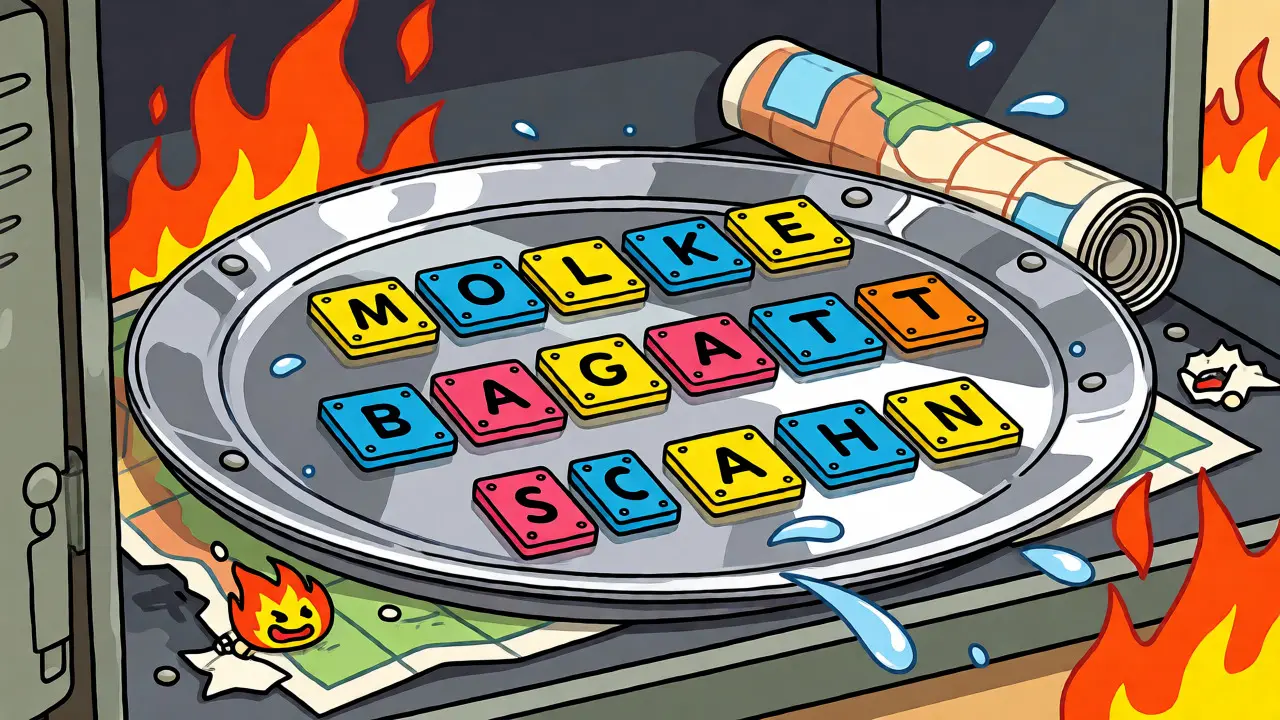
If digital is risky, physical is safer. But not all physical storage is created equal. Most people start with pen and paper. It’s cheap, easy, and effective for small amounts. However, paper is fragile. Fire, water, humidity, and even sunlight can degrade ink and paper over time. A house fire doesn’t care about your blockchain knowledge; it will burn your backup just like it burns your furniture.
This is where metal backups shine. Products like Cryptosteel or Billfodl are made from stainless steel or aluminum plates. They allow you to stamp or screw individual letter tiles onto a plate to spell out your words. These devices are designed to survive extreme conditions:
- Fire Resistance: Tested to withstand temperatures up to 1,400°C (approx. 2,550°F).
- Water Resistance: Can be submerged without rusting or degrading.
- Corrosion Resistance: Will last decades without tarnishing.
For holdings over $1,000, the cost of a metal backup ($50-$100) is negligible insurance. For whales holding six-figure sums, it’s mandatory.
Geographic Redundancy: Don’t Put All Eggs in One Basket
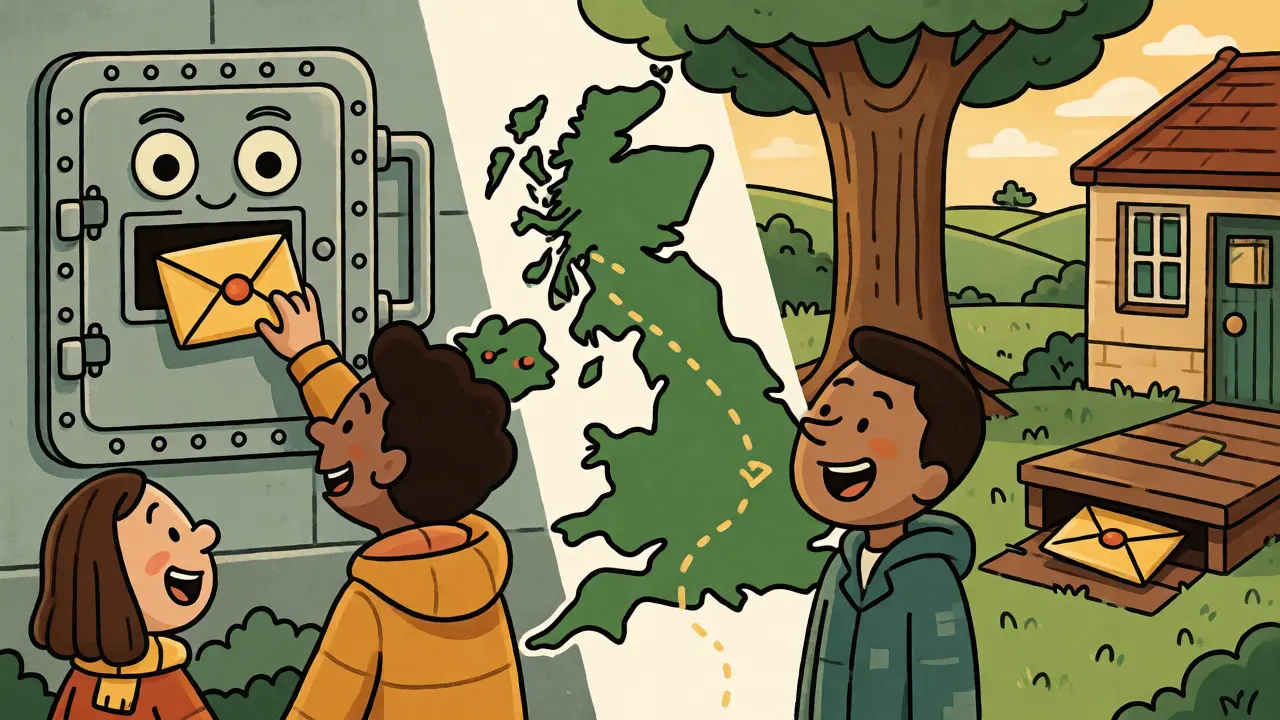
Having one copy of your seed phrase is better than none, but it’s still a single point of failure. What if your safe is stolen? What if your house floods? The best practice is geographic redundancy. This means creating multiple copies of your seed phrase and storing them in different physical locations.
Experts recommend a minimum of two copies, ideally three. Here’s a practical setup:
- Primary Location: A home safe with a UL Class 2 fire rating. This is for quick access.
- Secondary Location: A bank safety deposit box. This protects against house fires or theft.
- Tertiary Location (Optional): A trusted family member’s house or another secure location in a different city.
Crucially, never store the seed phrase and the passphrase (if using a hidden wallet) together. If someone finds your seed phrase but not the passphrase, they can’t access your funds. This adds a layer of security known as a "25th word" or bonus passphrase, supported by hardware wallets like Ledger and Trezor.
Advanced Protection: Shamir Secret Sharing
For those managing significant wealth, simple duplication has a flaw: any single copy contains the full key. If an attacker finds one copy, they have everything. Enter Shamir Secret Sharing, a cryptographic method that splits your seed phrase into multiple parts.
Imagine splitting your 24-word phrase into five cards. You set a rule: any three cards are needed to reconstruct the original phrase. You give one card to your spouse, one to your parents, one to a lawyer, and keep two in separate safes. If your house burns down, you still have four cards left. If a thief steals one card, they can’t do anything because they don’t have enough pieces to rebuild the key.
Wallets like Casa and Unchained Capital already implement this feature. It’s more complex to set up but offers superior protection against both physical disasters and targeted theft.
Common Mistakes to Avoid
Even experienced users make errors. Here are the top three traps to avoid:
- Storing in Memory: Thinking you’ll remember the words is a gamble. Stress, age, or distraction can cause memory lapses. Always write it down.
- Using Non-Standard Words: Some older wallets used non-BIP-39 wordlists. Ensure your backup uses the standard 2,048-word list to guarantee compatibility with future wallets.
- Testing Improperly: When testing your backup, don’t just read it. Actually restore a wallet on a fresh device with a small amount of funds to verify the process works before trusting it with your life savings.
Also, beware of scams. No legitimate support agent will ever ask for your seed phrase. If someone asks for it online, it’s a con. Period. The only time you enter your seed phrase is inside a trusted wallet application during initial setup or recovery.
Conclusion: Treat It Like Cash
Your seed phrase is cash. Not digital cash, but actual cash. If you buried $10,000 in cash in your backyard, you wouldn’t leave a map next to it. You’d hide the map well. You might even split the map in half. That’s the mindset required for seed phrase security.
Start with a metal backup. Create two copies. Store them in different locations. Add a passphrase if you’re comfortable with the complexity. And test your recovery process annually. In the world of crypto, being paranoid is just being prepared.
Can I change my seed phrase after setting up a wallet?
No, you cannot directly change the seed phrase of an existing wallet. The seed phrase generates the private keys, which generate the addresses. To change it, you must create a new wallet with a new seed phrase and transfer all your funds from the old address to the new one. This is often recommended if you suspect your old seed phrase has been compromised.
Is it safe to store my seed phrase in a password manager?
It is safer than plain text files but less secure than offline physical storage. Password managers like Bitwarden or 1Password are encrypted, but they rely on your master password and the security of the app itself. If your computer is infected with keyloggers or malware, your master password could be captured. For large holdings, physical metal backups are preferred.
What happens if I lose one word of my seed phrase?
If you lose one word, you can potentially recover your wallet using brute-force software tools that try all 2,048 possible words for that position. This is computationally intensive but feasible for a single missing word. However, if you lose two or more words, recovery becomes exponentially harder and may require professional services or advanced computational resources.
Should I laminate my paper seed phrase?
Lamination helps with water resistance and prevents smudging, but it does not protect against fire. Laminated paper can melt or char in high heat. Furthermore, some experts argue that lamination makes it easier for thieves to photograph the phrase quickly without noticing. A metal backup is generally superior to laminated paper for long-term security.
Can I use the same seed phrase for multiple cryptocurrencies?
Yes, most modern multi-coin wallets (like MetaMask, Trust Wallet, or Ledger Live) use a single seed phrase to derive keys for various blockchains. This is based on the BIP-44 standard, which organizes keys by coin type. So, one seed phrase controls your Bitcoin, Ethereum, and other supported assets within that specific wallet structure.
