P2P Crypto Withdrawal Impact Calculator
Calculate Your Withdrawal Impact
Important: Thailand's June 28, 2025 deadline forced many users to accept 15% below market prices due to illiquidity. Licensed exchanges charge 3x higher fees than banned platforms.
Estimated Withdrawal Impact
Thailand Just Shut Down Five Major Foreign Crypto Platforms
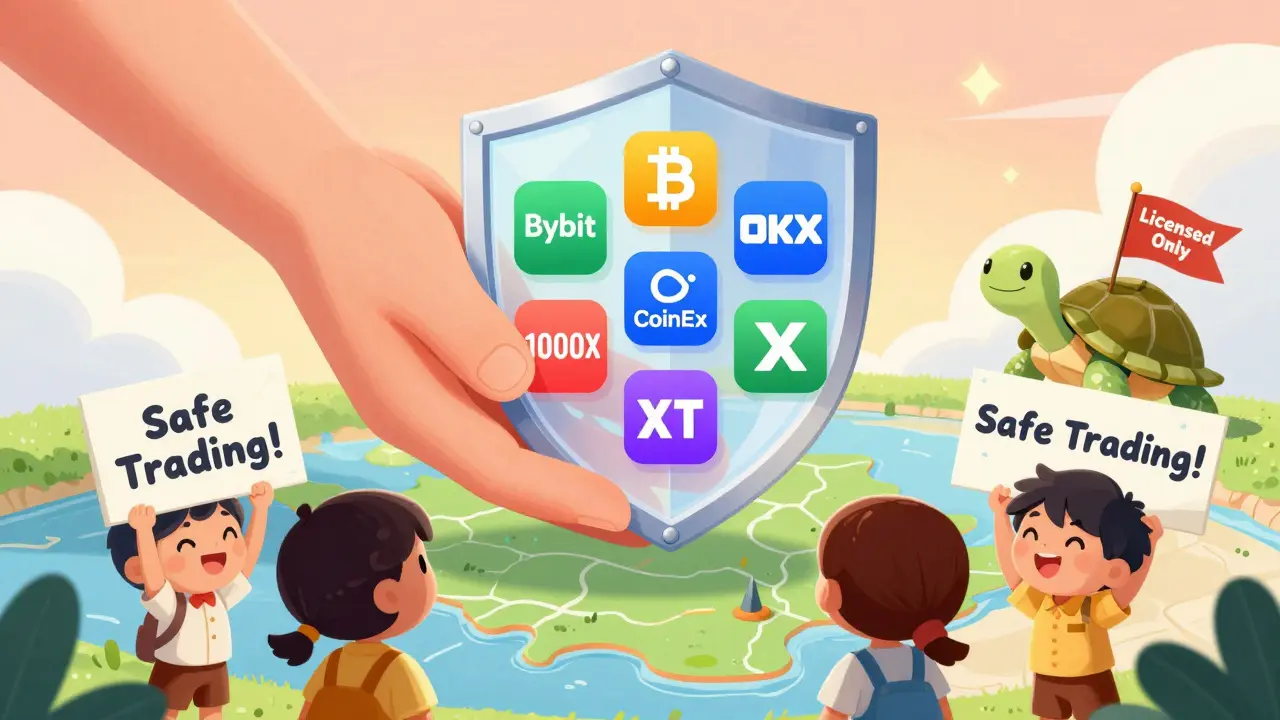
In June 2025, Thailand pulled the plug on five of the world’s biggest crypto exchanges - Bybit, OKX, CoinEx, 1000X, and XT.COM - overnight. No court order. No warning beyond a one-month notice. Just a government decree and a block on every Thai internet connection. This wasn’t a technical glitch. It was a deliberate, state-enforced shutdown of unlicensed foreign peer-to-peer (P2P) crypto platforms.
Why? The Thai Securities and Exchange Commission (SEC) said it was about protecting people. Not from market swings or bad trades - but from fraud, money laundering, and online scams that had ballooned over the past two years. Thai users were sending millions in crypto to platforms with no physical presence in the country, no Thai-language support, and no accountability. When things went wrong - and they did - there was no one to call, no regulator to complain to, and no way to recover lost funds.
How the Ban Actually Worked
The Thai government didn’t just tell people to stop using these platforms. It cut them off at the source. Under the Royal Decree on Measures to Prevent and Suppress Technology Crimes (No. 2), B.E. 2568 (2025), the Ministry of Digital Economy and Society (MDES) got direct power to block websites and apps without needing approval from a judge. That’s rare. Most countries require a court order before shutting down a service. Thailand skipped that step entirely.
On June 28, 2025, Thai ISPs started redirecting traffic from those five platforms. If you tried to open Bybit or OKX on your phone or laptop in Thailand, you got a blank page or an error message. No more login screens. No more deposit buttons. No more trading. The platforms themselves didn’t go offline - they just became invisible to anyone in Thailand.
But the ban didn’t stop there. Banks and telecom companies were also ordered to help. If a Thai bank account was used to fund a transaction to one of these blocked platforms, the bank had to flag it. If a messaging app like Line or WhatsApp was used to coordinate P2P trades, the telecom provider had to report suspicious activity. Failure to comply could mean legal liability - not just for the platform, but for the bank or telecom company too.
Who Got Hit - And Why
The five banned platforms weren’t chosen randomly. They were the most popular among Thai retail investors. According to SEC data, over 60% of unlicensed P2P crypto trades in Thailand flowed through these five. Many users didn’t even realize they were using foreign platforms - they just downloaded apps from the Google Play Store or Apple App Store, where the country of origin wasn’t clearly labeled.
These platforms operated under a loophole: they claimed they weren’t targeting Thai users. But their marketing was all in Thai. Their customer support responded in Thai. Their Telegram groups had thousands of Thai members. Their ads ran on Thai YouTube influencers and Facebook pages. The SEC called it “de facto targeting” - and that was enough to trigger the ban.
It wasn’t about whether these platforms were safe or unsafe. It was about control. Thailand’s Digital Asset Business Act requires any company offering crypto services to Thai residents to get a license. That means submitting detailed KYC/AML systems, storing user data locally, paying taxes, and submitting to audits. None of these five platforms did that. So they were treated as illegal operators - not because they stole money, but because they refused to play by Thai rules.
The One-Month Warning That Wasn’t Enough
On May 29, 2025, the SEC announced the ban. Investors had until June 28 to withdraw their funds. Sounds fair, right? Except for one thing: many users had large amounts locked in P2P trades. Some had deposited 500,000 baht ($14,500 USD) or more. Withdrawing that much in a month meant rushing trades, accepting terrible rates, or getting stuck with illiquid assets.
Reddit threads from Thai users showed panic. One person wrote: “I had 20 BTC on Bybit. I tried to sell it all in 30 days. I had to accept 15% below market price because no one wanted to buy that much at once.” Another said: “I used OKX for daily trading. Now I have to start over with a local exchange that charges 3x the fees.”
The SEC didn’t offer extensions. No grace period. No help with liquidity. The message was clear: if you didn’t act fast, you lost your money. And many did.
What’s Allowed Now - And What’s Not
Thailand didn’t ban crypto. It banned unlicensed foreign crypto. Trading is still legal - but only through platforms licensed by the Thai SEC. As of October 2025, there are only six licensed exchanges: Bitkub, Zipmex, DigiFinex, Satang Pro, AssetTree, and CoinRabbit. These platforms are required to:
- Store all user data on servers inside Thailand
- Verify every user’s identity with Thai ID or passport
- Report all transactions over 50,000 baht to the Anti-Money Laundering Office
- Pay corporate taxes and file quarterly financial reports
That means you can still buy Bitcoin, Ethereum, or Solana - but only through a Thai-regulated middleman. You can’t send crypto directly from your wallet to someone in India using a P2P app. You can’t use Binance or Kraken. You can’t trade on decentralized exchanges like Uniswap unless you’re using a Thai-licensed gateway.
Even foreign stablecoins like USDT or USDC are restricted. You can hold them, but you can’t trade them directly on licensed exchanges unless they’re pegged to the Thai baht - and no such stablecoin exists yet.
Thailand’s Strange Double Game
Here’s the twist: Thailand still wants to be a leader in blockchain tech. While it banned foreign platforms, it’s actively building its own digital infrastructure. In May 2025, the government announced plans to issue 5 billion baht ($150 million) in digital tokens called “G Tokens” - backed by government bonds. These aren’t cryptocurrencies. They’re digital securities, meant to be traded on a blockchain platform operated by Thai banks and securities firms.
They’re also testing blockchain for land titles, supply chain tracking, and digital voting. The message? “We don’t trust foreign crypto. But we trust our own tech.”
This creates a strange reality: Thai investors are forced to use local exchanges with higher fees and fewer assets, while the government quietly builds a parallel financial system using blockchain - one that’s fully controlled by the state.
What This Means for Businesses and Travelers
If you run a business in Thailand and accept crypto payments, you’re now stuck. You can’t use a foreign P2P service to settle invoices with a supplier in Vietnam. You can’t receive payments from freelancers in the Philippines. You have to route everything through a Thai licensed exchange - which means delays, extra fees, and compliance paperwork.
Businesses that relied on crypto for cross-border payments are now facing cash flow problems. One Bangkok-based import company said it lost 20% of its monthly revenue because its Chinese supplier stopped accepting crypto payments after the ban. They’re now paying in Thai baht, which means currency conversion fees and longer settlement times.
For travelers, it’s simpler: don’t bring crypto into Thailand expecting to use it. ATMs don’t accept it. Hotels don’t take it. Even crypto-friendly cafes now only accept baht or credit cards. The only way to use crypto in Thailand is through a local exchange - and even then, you’re limited to what they offer.

Is This the Future for Southeast Asia?
Thailand’s move is the strictest in the region. Singapore allows foreign platforms with licensing. Vietnam lets P2P trading with some restrictions. Indonesia has banned foreign platforms too, but enforcement is patchy. Thailand didn’t just ban - it built a wall.
Other countries are watching. Cambodia and the Philippines are considering similar laws. If Thailand’s crackdown reduces scams and fraud - and early data suggests it has - others may follow. But there’s a cost. Innovation slows. Competition drops. Fees rise. And ordinary people lose access to global markets.
Thailand’s goal wasn’t to kill crypto. It was to control it. And so far, it’s working - for the government. For users? It’s a mixed bag. Some feel safer. Others feel trapped.
What Should You Do If You’re Affected?
If you held crypto on one of the banned platforms:
- Check if you withdrew before June 28, 2025. If not, your funds are likely frozen. Contact the platform’s support - but don’t expect a response.
- If you’re still trading, switch to a Thai SEC-licensed exchange. Bitkub and Satang Pro are the most popular.
- Never use a VPN to access banned platforms. It’s illegal under Thailand’s Computer Crime Act and can lead to fines or jail time.
- If you’re a business, set up a local bank account and use licensed exchanges for crypto settlements.
There’s no legal workaround. The ban is absolute. And the government isn’t backing down.
Will This Change?
Unlikely. The Thai SEC has shown zero interest in reversing the ban. Their annual report in November 2025 showed a 68% drop in crypto-related fraud complaints compared to 2024. That’s their metric for success. User convenience? Not on the list.
Future changes will come from within - not from foreign platforms begging to return. If a Thai startup builds a better, faster, cheaper exchange, it might get licensed. But don’t expect Bybit or OKX to be allowed back unless they move their entire operation to Thailand - servers, staff, compliance teams, and all.
Thailand didn’t ban crypto. It banned chaos. And for now, it’s winning.

19 Comments
Annette LeRoux
December 4, 2025 AT 08:48 AMI get why Thailand did this. People were getting scammed left and right - whole families losing life savings to fake P2P trades. It’s not about control, it’s about survival. 🌏💔
Yzak victor
December 5, 2025 AT 16:53 PMHonestly? I’m surprised it took this long. If you’re targeting a country’s citizens with ads in their language and support in their dialect, you’re not some neutral global platform. You’re a predator with a UI.
Holly Cute
December 5, 2025 AT 17:13 PMLet’s be real - this isn’t about fraud prevention. It’s about the Thai government wanting to monopolize the crypto market so their own ‘G Tokens’ can be the only game in town. Classic authoritarian crypto-washing. And yes, I’m calling it out. 🤡
Josh Rivera
December 6, 2025 AT 09:15 AMOh wow. So now the government gets to decide what financial freedom looks like? Next they’ll be banning VPNs and then telling you which memes you can laugh at. Welcome to the new digital feudalism, folks. 😌
Chris Jenny
December 7, 2025 AT 06:32 AMThis is just the beginning... they're using this to track EVERYTHING. Your crypto activity? Linked to your ID. Your phone? Monitored. Your WhatsApp? Logged. This isn't a ban-it's a surveillance rollout disguised as consumer protection. They're building the Panopticon... and you're handing them the keys. 🕵️♂️🔒
Jon Visotzky
December 7, 2025 AT 22:09 PMI used to trade on Bybit when I was in Bangkok. It was easy. Now my cousin there says he has to wait 3 days to swap BTC to baht on Bitkub and pays 5% in fees. I mean... it’s safer but also kind of a joke
Madison Agado
December 8, 2025 AT 08:33 AMThere’s a deeper tension here: autonomy vs. safety. Thailand chose safety. But at what cost? If your only option is a state-approved exchange with limited assets and high fees, are you really free to invest? Or are you just... compliant?
ronald dayrit
December 9, 2025 AT 17:37 PMThe irony is that the same government that banned these platforms is now building a blockchain-based digital bond system. So they trust blockchain - just not the people who use it. It’s like allowing someone to own a piano but only letting them play one song. The medium is fine, but the expression is controlled. That’s not innovation. That’s curated conformity.
Doreen Ochodo
December 9, 2025 AT 22:58 PMPeople lost money. That’s the bottom line. Better to be safe than sorry.
Roseline Stephen
December 10, 2025 AT 22:42 PMI’m not sure I agree with the ban, but I can’t say I blame them either. I’ve seen too many friends get burned by shady P2P deals. Maybe there’s a middle ground - but this was the path they chose.
Billye Nipper
December 12, 2025 AT 15:14 PMTo everyone who says this is oppressive - I get it. But think of the grandma who lost her pension because she thought a Telegram group was legit. This isn’t about control. It’s about protecting the vulnerable. We don’t need more crypto bros. We need more safety.
Nelson Issangya
December 13, 2025 AT 12:32 PMYou think this is bad? Wait till you see what happens when they start forcing local exchanges to freeze accounts based on AI ‘risk scores’. This isn’t regulation - it’s financial authoritarianism with a smile. And guess what? They’re gonna call it ‘financial literacy’.
Isha Kaur
December 13, 2025 AT 19:39 PMI’m from India and we’ve had similar issues with P2P scams. The government here is watching Thailand closely. Honestly, I think this is the only way to stop the flood of fraud - even if it hurts some legitimate users. The cost of inaction is way higher. People are dying over this. Not metaphorically. Literally. Suicides. Families broken. It’s not just about money.
Noriko Robinson
December 14, 2025 AT 14:15 PMi mean yeah i get it the platforms were sketchy but now im stuck paying 3x fees and cant trade my solana for anything useful and also the local ones are so slow like why is it taking 2 days to withdraw 50 bucks this is ridiculous
Mairead Stiùbhart
December 16, 2025 AT 05:15 AMOh, so now we’re pretending that state-controlled crypto is somehow ‘ethical’? How quaint. The only difference between Bybit and Bitkub is that one doesn’t have Thai police in the back office. Brilliant. Truly. 🙄
Thomas Downey
December 18, 2025 AT 00:45 AMThe Thai government’s action is not merely regulatory - it is a philosophical assertion of sovereignty over digital financial space. The West has long preached decentralization, yet when it comes to systemic risk, it relies on centralized institutions. Thailand, in its sovereign right, has chosen to reject the illusion of global neutrality. This is not oppression; it is epistemic self-determination. The platforms were not merely unlicensed - they were epistemologically illegitimate. They operated under the false premise that the digital realm is borderless. But human beings are not data packets. They live in nations. They speak languages. They belong to cultures. To claim otherwise is not libertarianism - it is neo-colonialism in the guise of innovation.
Tisha Berg
December 18, 2025 AT 02:55 AMI just hope they make it easier for small traders to get started on the licensed ones. Some of these platforms are so confusing for people who aren’t techy. A simple app with Thai instructions would go a long way.
Neal Schechter
December 18, 2025 AT 18:57 PMAs someone who’s lived in Bangkok for 8 years, I’ve seen this coming. The P2P scene exploded after the pandemic - and so did the scams. Local banks were getting flooded with complaints. People were sending money to strangers in Facebook groups thinking they were ‘investing’. The government didn’t create the problem - it just finally tried to fix it. Not perfect, but better than doing nothing.
Vincent Cameron
December 19, 2025 AT 06:34 AMThe real question isn’t whether the ban was justified - it’s whether any state should have the power to unilaterally erase access to a global financial tool without judicial oversight. This isn’t about fraud. It’s about power. And once you give a government the ability to cut off financial access on a whim, you’ve already lost the battle for digital freedom. The platforms may have been shady, but the state’s response? That’s the real dystopia.