
You just sent $500 worth of Bitcoin to a friend. How does the network know it was actually you who sent it, and not some hacker who intercepted your request? The answer isn't a password or a PIN code. It’s something far more elegant: a digital signature is a cryptographic proof that verifies the authenticity and integrity of a transaction without revealing your secret key. If you’ve ever wondered how trust works in a system where nobody knows each other personally, understanding digital signatures is the first step.
| Concept | What It Means for You |
|---|---|
| Proof of Ownership | Proves you hold the private key without showing it. |
| Integrity Check | Ensures no one changed the amount or recipient mid-transfer. |
| Non-Repudiation | You can’t later claim you didn’t send the transaction. |
| Trustless Verification | Anyone can verify it; no bank needed. |
The Problem With Traditional Trust
In the old world of banking, trust is centralized. When you swipe your credit card, Visa or Mastercard checks if you have the money. They are the middlemen. But in cryptocurrency, there is no central authority. There is no CEO of Bitcoin calling you up to ask if you really meant to send those coins. So, how do strangers on a global network agree that a transaction is valid?
This is where asymmetric cryptography comes in. Unlike symmetric encryption (where everyone shares one secret password), asymmetric cryptography uses two different but mathematically linked keys. Think of it like a mailbox. The public key is the slot on the front of the mailbox where anyone can drop mail. Anyone can send money to your public key. But only you have the private key, which is the unique physical key that opens the mailbox to retrieve the contents. In crypto, the private key doesn't just open a box; it signs documents.
How a Digital Signature Actually Works
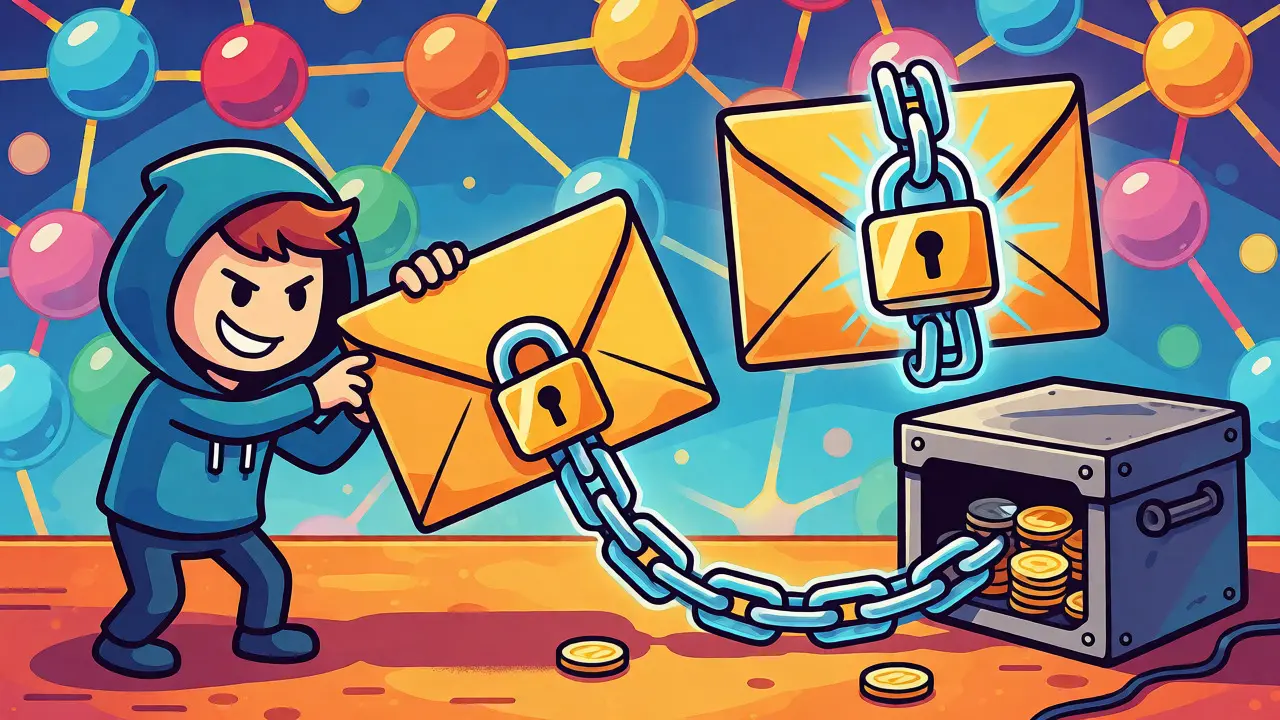
A digital signature isn't an image of your handwritten name pasted onto a file. It’s a complex mathematical calculation. Here is the simple workflow when you send Ethereum or Bitcoin:
- The Transaction Hash: Your wallet takes all the details of the transaction-sender address, receiver address, amount, fee-and runs them through a hashing algorithm (like SHA-256). This creates a fixed-length string of characters, often called a "fingerprint." Even changing one decimal point changes this fingerprint entirely.
- The Signing Process: Your wallet combines this fingerprint with your private key using a specific algorithm (such as ECDSA in Bitcoin). This generates a unique code: the digital signature.
- Broadcasting: Your wallet sends the original transaction data, your public key, and the digital signature to the network.
- Verification: Other nodes (computers running the software) take the transaction data and your public key. They run their own verification algorithm. If the result matches the digital signature you provided, they accept the transaction.
Notice what didn't happen? Your private key was never sent over the internet. It stayed safely inside your device. The signature proves you knew the private key, but it doesn't reveal it. This is the magic trick of modern cryptography.

Why You Can’t Fake It
You might be thinking, "Can't I just copy someone else's signature?" Not really. Because the signature is generated from the specific transaction hash, it is unique to that exact transfer. If a hacker tries to change the amount from 1 BTC to 10 BTC after you sign it, the transaction hash changes. The old signature no longer matches the new hash. The network rejects it immediately.
This provides three critical security guarantees:
- Authentication: Confirms the sender owns the funds.
- Integrity: Guarantees the transaction details haven't been tampered with.
- Non-repudiation: You cannot deny sending the transaction later, because only your private key could have created that specific signature.
Imagine trying to forge a check written in invisible ink that only glows under a specific UV light. You can write anything you want, but unless you have the pen, the bank won't accept it. That’s essentially what happens on the blockchain.
Digital Signatures vs. Electronic Signatures
People often confuse these two terms, but they are very different. An electronic signature (like clicking "I Agree" on a website) is just a record of intent. It’s easy to fake. A digital signature is a cryptographic seal. It relies on heavy-duty math that makes forgery computationally impossible with current technology.
| Feature | Electronic Signature | Digital Signature |
|---|---|---|
| Technology | Image, click, or typed name | Cryptographic algorithm (e.g., ECDSA) |
| Security | Low (easy to copy/paste) | Very High (mathematically bound) |
| Use Case | Signing PDFs, emails | Crypto transactions, SSL certificates |
| Verification | Visual inspection | Automated network validation |
Common Pitfalls and Security Risks
The strength of a digital signature depends entirely on the secrecy of the private key. If you lose your private key, you lose access to your funds forever. No support team can reset it. Conversely, if someone steals your private key, they can generate valid signatures for your funds. This is why hardware wallets (like Ledger or Trezor) exist-they keep the private key offline, away from malware that might try to steal it during the signing process.
Another risk involves "signature malleability," a technical quirk in older Bitcoin versions where a third party could slightly alter the format of a signature without invalidating it. While this rarely affects average users today thanks to upgrades like SegWit, it highlights how sensitive the underlying math is. Always ensure your wallet software is up to date to handle these edge cases correctly.
The Future: Post-Quantum Concerns
We live in Wellington, New Zealand, where tech trends often arrive a few years late, but the threat of quantum computing is real globally. Current digital signatures rely on problems that classical computers find hard to solve, like factoring large numbers or discrete logarithms. Quantum computers, theoretically, could solve these quickly. This has sparked a race to develop "post-quantum" cryptographic algorithms. While we aren't at immediate risk today, major blockchains are already experimenting with new signature schemes to stay secure against future threats.
Is my private key sent when I make a transaction?
No. Only the digital signature, the transaction data, and your public key are broadcast to the network. The private key remains stored securely in your wallet device.
Can I use the same digital signature for multiple transactions?
Generally, no. Each signature is tied to the specific data of a single transaction. If you try to reuse a signature for a different amount or recipient, the verification will fail because the transaction hash will not match.
What happens if I lose my private key?
You lose control of your funds permanently. Since the digital signature can only be created by the private key, no one else can authorize transactions from that address. This is why backing up your seed phrase is critical.
Are digital signatures legally binding?
In many jurisdictions, yes, digital signatures carry legal weight similar to handwritten ones. However, in cryptocurrency, their primary role is technical validation within the blockchain protocol rather than legal contract enforcement between parties.
Which algorithm does Bitcoin use for digital signatures?
Bitcoin primarily uses the Elliptic Curve Digital Signature Algorithm (ECDSA). Some newer implementations and altcoins may use Schnorr signatures, which offer better efficiency and privacy features.
