
Imagine buying a ticket to a theme park in 2016, only to find out in 2026 that the park closed years ago, but you still hold the ticket. That’s roughly where CrevaCoin (CREVA) stands today. It’s a Korean-based utility cryptocurrency designed for a specific shopping mall ecosystem, yet its market presence has shrunk to near zero. If you’re seeing this name pop up in old portfolio lists or obscure exchange listings, you might be wondering: Is this a hidden gem, or a relic of the past? Spoiler alert: it’s mostly the latter.
The Core Concept: A Closed-Loop Shopping Token
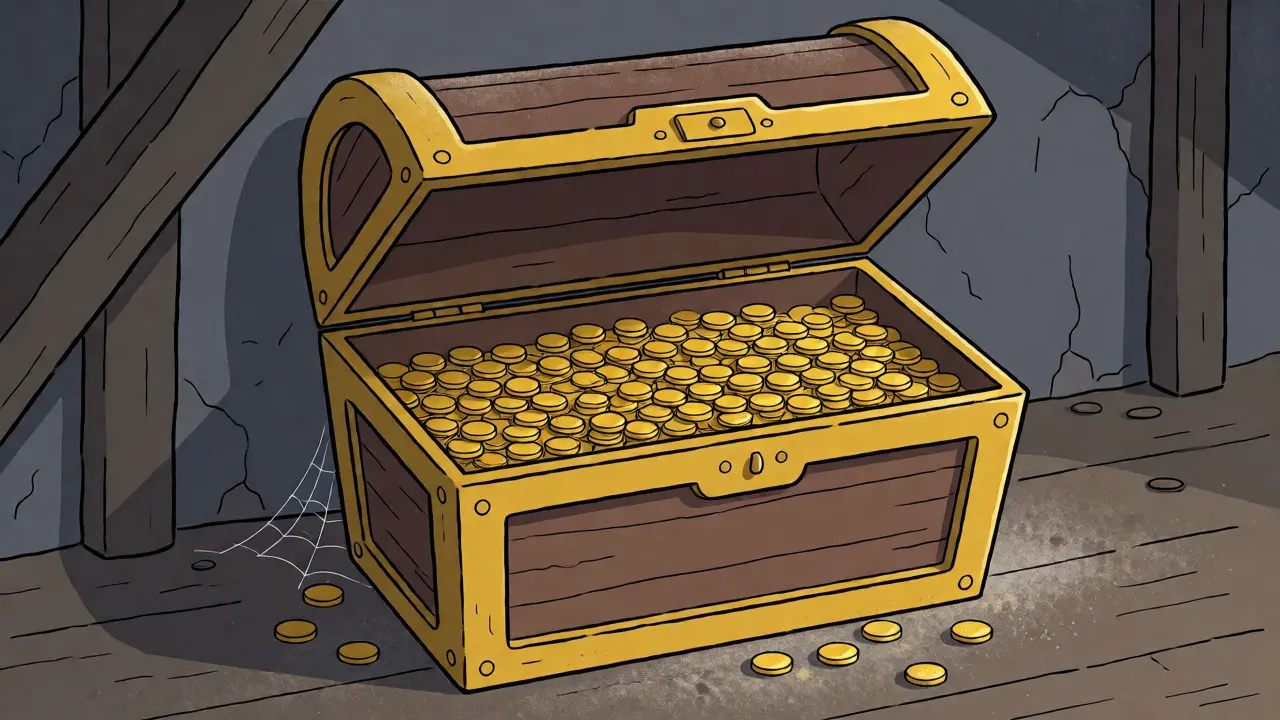
CrevaCoin wasn’t built to replace Bitcoin or compete with Ethereum. Its job was simple: facilitate transactions within the Creva Shopping Mall in South Korea. Think of it like arcade tokens, but on a blockchain. The idea was that users could mine CREVA by confirming transactions and then spend those tokens at participating retail outlets. This model, known as a utility token, aimed to incentivize customer loyalty through blockchain rewards rather than traditional points systems.
The project launched around 2016, right in the middle of the initial coin offering (ICO) boom. At its peak, CREVA hit an all-time high of $0.1475. Fast forward to October 2026, and the price hovers around $0.0009827. That’s a drop of over 99%. Why? Because the utility never really materialized outside its tiny, isolated bubble. Without widespread merchant adoption, the token had nowhere to go.
Market Status: Ghost Town Economics
Let’s look at the hard numbers. As of early 2026, CREVA holds a market capitalization of just $35,760. To put that in perspective, that’s less than the cost of a decent used car. More alarming is the trading volume. Reports indicate a 24-hour trading volume of $0 on its single active exchange. When there’s no volume, there’s no liquidity. You can’t buy it easily, and if you own it, you likely can’t sell it without crashing the price further.
The supply structure adds another layer of complexity. There are over 6.2 billion total tokens, but only about 36 million are in circulation. That means 99.4% of the tokens are sitting idle, likely held by the founders or early investors. This massive gap between total supply and circulating supply creates a risk: if those locked tokens ever get released, the already fragile price could collapse even further.
| Metric | Value (Approx.) | Context |
|---|---|---|
| Current Price | $0.00098 | Down >99% from ATH |
| All-Time High | $0.1475 | Reached April 2016 |
| Circulating Supply | 36.4 Million | <1% of Total Supply |
| Total Supply | 6.24 Billion | Fully Diluted Valuation ~$6M |
| 24h Volume | $0 | Extremely low liquidity |

Technology and Mining: Simple but Stagnant
Technically, CrevaCoin operates on a proof-of-work consensus mechanism. Users could mine CREVA by using their computer hardware to validate transactions on the network. However, unlike Bitcoin, which secures billions in value, CREVA’s mining difficulty and block time details remain largely undocumented in public technical repositories. There’s no major GitHub activity, no protocol upgrades since its inception, and no integration with modern DeFi protocols.
This lack of development is a red flag. In the fast-moving crypto world, standing still means falling behind. While other projects integrated smart contracts, NFTs, or cross-chain bridges, CrevaCoin stayed exactly where it started. For miners, this means economic viability is practically non-existent. With electricity costs rising and the token price plummeting, spending power to mine CREVA would likely cost more than the reward is worth.
Why Did It Fail? The Retail Crypto Trap
CrevaCoin isn’t alone in its struggle. It represents a broader category of "retail-focused" cryptocurrencies that emerged during the 2016-2017 hype cycle. Many promised to revolutionize shopping by replacing credit card fees with blockchain efficiency. But they faced a harsh reality: merchants didn’t want the volatility, and customers didn’t see the benefit over existing loyalty apps.
A report from the Korea Blockchain Industry Association noted that nearly 93% of similar retail crypto projects in Korea failed within five years. The reasons were consistent: limited utility scope, poor user experience, and a lack of network effects. One user report from 2018 highlighted the core issue perfectly: "Tried to use at Creva Mall but staff didn't know what CREVA was." If the store doesn’t understand the currency, the currency is useless.
Community and Sentiment: Silence Speaks Volumes
Where is the community? On Reddit, there are virtually no recent discussions about CREVA. Trustpilot shows zero reviews for the official website. Social media channels appear dormant. This silence isn’t necessarily bad-it’s often a sign that a project has run its course. Active communities usually complain loudly when things go wrong. Here, people have simply moved on.
For investors looking for engagement, this is a dealbreaker. Crypto assets thrive on community support, developer updates, and marketing pushes. CREVA offers none of these. It exists primarily as a data point on aggregators like CoinMarketCap, kept alive by automated scraping rather than human interest.
Should You Invest in CREVA?
If you’re asking whether CREVA is a good investment in 2026, the answer leans heavily toward "no." It’s not a scam in the sense that it stole your money, but it is a defunct asset with no realistic path to recovery. The regulatory environment in South Korea has also shifted, favoring licensed exchanges and established assets over proprietary retail tokens. The Virtual Asset User Protection Act of 2021 made it harder for small, unlisted tokens to survive.
Treat CREVA as a historical artifact. It’s interesting for studying why certain crypto models fail, but don’t expect it to moon. If you hold some from 2016, consider it a lesson learned. If you’re thinking of buying, remember that $0 volume means you might not be able to exit your position.
Is CrevaCoin still active?
Technically, the blockchain may still exist, but the project is effectively inactive. There is no development activity, no marketing, and zero trading volume, indicating the ecosystem has collapsed.
Can I still buy CREVA?
It is listed on one minor exchange, but with $0 daily volume, finding a buyer or seller is extremely difficult. Liquidity is practically non-existent.
Was CrevaCoin a scam?
There is no evidence of malicious fraud, but it failed to deliver on its promises. It suffered from poor execution and lack of adoption, common traits in failed ICOs rather than outright scams.
What was the main purpose of CREVA?
CREVA was designed as a utility token for the Creva Shopping Mall in Korea, allowing users to earn rewards through mining and spend them on retail purchases.
How many CREVA coins are there?
The total supply is capped at approximately 6.24 billion tokens, but only about 36 million are currently in circulation.
