
Imagine playing your favorite mobile game and seeing a billboard for a new energy drink that actually fits the racing track’s aesthetic, rather than a jarring pop-up video you can’t skip. That’s the pitch behind Cros, also known as Cros World. It’s a cryptocurrency project aiming to revolutionize how brands reach gamers by embedding ads directly into game environments. But is it the next big thing in GameFi, or just another speculative micro-cap asset?
If you’ve seen the ticker CROS flashing on exchange screens with prices hovering near zero, you might be wondering what this token actually does. Is it worth your attention, or should you steer clear? This guide breaks down exactly what Cros is, how its technology works, who’s behind it, and the critical risks you need to know before putting any money on the line.
The Core Idea: Non-Interruptive Gaming Ads
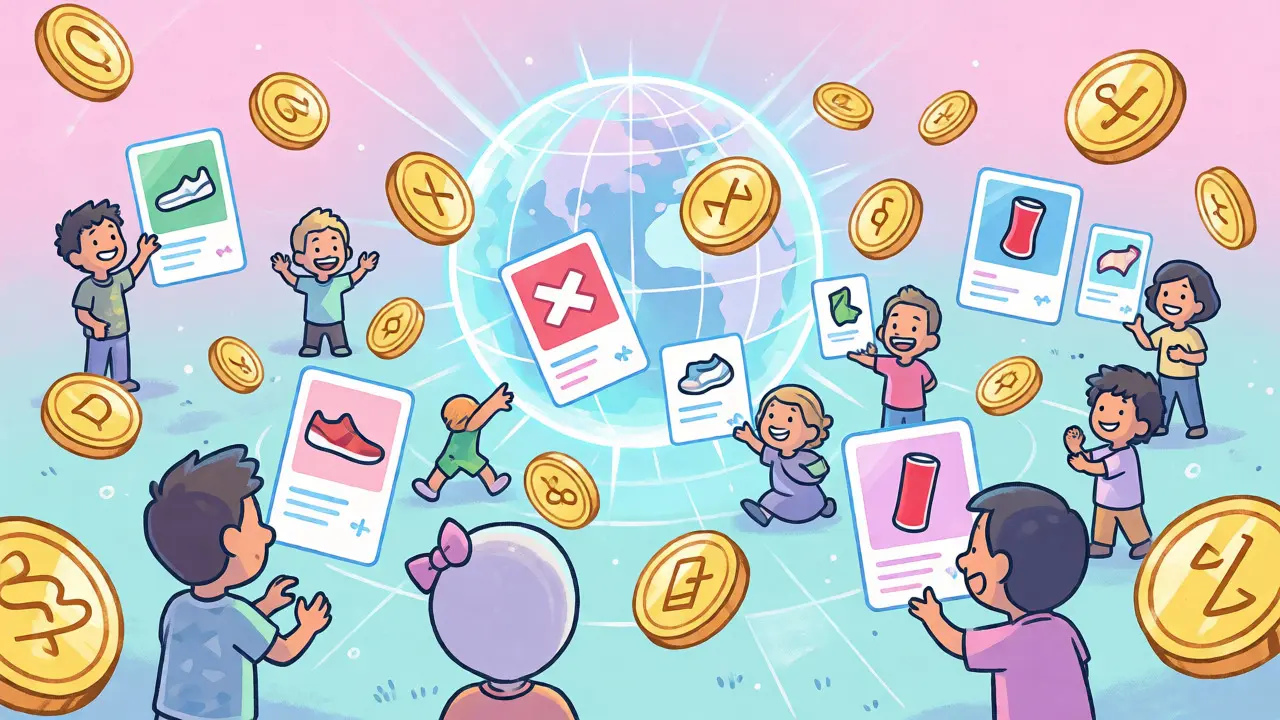
Cros is an Ethereum-based Layer-2 solution and AI platform designed to facilitate decentralized in-game advertising. Unlike traditional mobile gaming, where ads interrupt gameplay (think those forced 30-second videos), Cros aims to make advertising part of the experience. The goal is simple: advertisers get measurable access to players, developers earn extra revenue without annoying users, and players see relevant, realistic ads that blend into the game world.
The project targets a massive audience-potentially 3 billion gamers across mobile, desktop, console, and metaverse platforms. By using composable NFTs called "Adassets," the system allows brands to place dynamic advertisements in virtual spaces. For example, a sneaker brand could sponsor a character’s shoes in a basketball game, updating in real-time based on campaign data. This approach relies heavily on artificial intelligence to ensure the ads are contextually relevant and non-intrusive.
Tokenomics: How CROS Works
CROS is an ERC-20 token on the Ethereum network, with a maximum supply capped at 1 billion tokens. If you’re looking to buy or hold, understanding the utility is key. The token isn’t just for speculation; it serves four main functions within the ecosystem:
- Payments: Advertisers use CROS to purchase ad inventory within games.
- Staking: Users stake tokens to participate in the network and earn rewards.
- Governance: Holders vote on key decisions like fee structures and revenue distribution.
- Validation: Validators verify ad impressions to create an auditable record of activity.
The token distribution was carefully structured to balance incentives. About 18% went to the ecosystem fund, 15% to growth and community rewards, and 12% to airdrops. The team and advisors received 7%, with a significant lock-up period (an 8-month cliff followed by linear vesting over 40 months). This long vesting schedule suggests the team intended to stay committed to the project’s long-term success, reducing the risk of early dumping.
| Category | Percentage | Vesting Highlights |
|---|---|---|
| Ecosystem Fund | 18% | Linear unlock over 16 months |
| Growth & Community | 15% | Linear unlock over 12 months |
| Airdrops & Rewards | 12% | Immediate and phased release |
| Seed Sale | 10% | 3-month cliff, then 12-month linear vesting |
| Private Sale | 10% | Phased releases with cliffs |
| Listing & Market Making | 10% | Phased release to support liquidity |
Technology and Roadmap Status
Cros positions itself as a bridge between Web2 gaming and Web3 infrastructure. The technical stack includes an SDK for game developers, allowing them to integrate ad units easily into Unity and Unreal Engine projects. They also plan support for major consoles like PlayStation and Xbox, as well as platforms like Roblox and Decentraland.
However, here’s the catch: while the roadmap looks ambitious, independent verification of delivery is scarce. The project launched its token in late 2024, with phases planned through 2025. As of October 2026, there is limited public data confirming whether all milestones-such as the full launch of the Cros L2 chain or widespread Roblox integration-have been fully operationalized. Without third-party audits or confirmed user metrics, some claims remain promotional rather than proven.
Who Is Behind Cros?
Trust often comes down to the team. Cros lists several industry veterans among its leadership and backers. Vikranth P., Head of Product, has ties to Cisco, while Sushant K., Head of Engineering, worked at Nitor Infotech. Investors include Jack Selby from Thiel Capital and Vijay Pravin, founder of bitsCrunch. DAO Maker also highlights cofounders Sachin Agrawal (ex-Microsoft) and Ahmed Salama (ex-Google).
Yet, there’s inconsistency in reporting. Some sources claim the founders are anonymous, while others name specific individuals. This discrepancy is a red flag for careful researchers. Always distinguish between named team members and legally verified founders. The lack of a transparent, unified founder profile adds a layer of uncertainty typical of early-stage crypto projects.
Market Reality: Liquidity and Volatility
Let’s talk numbers, because they matter. CROS is a micro-cap asset with extremely low liquidity. Price data varies wildly depending on the source. On some exchanges, it trades for fractions of a cent ($0.000005 to $0.000022), while market caps hover around $5,000 to $22,000. This tiny valuation means even small sell orders can crash the price significantly.
Exchange availability is another hurdle. While listed on Gate.io, Bitget, and MEXC, status updates from KuCoin have been contradictory. One day it’s listed, the next it’s not officially active. Before buying, always check the live order book depth. Thin liquidity leads to high slippage-you might pay more than the displayed price just to enter a position.

Risks and Red Flags
Investing in CROS isn’t for the faint of heart. Here are the primary concerns:
- No Verified Adoption: There are no independently audited reports on active users, integrated games, or actual ad revenue generated.
- Anonymous/Inconsistent Team: Conflicting information about who truly runs the project creates trust issues.
- Liquidity Risk: With such low trading volume, exiting a position can be difficult without impacting the price.
- Roadmap Uncertainty: Milestones may not have been delivered as promised, and there’s no public audit trail to confirm progress.
Don’t confuse CROS with Cronos (CRO), the much larger token associated with Crypto.com. They are entirely different assets. CROS is a niche, high-risk bet on the future of in-game advertising, whereas CRO is a established payment coin with billions in market cap.
Final Verdict: Should You Care?
Cros offers a compelling narrative: fixing the broken model of mobile game ads. If it succeeds, it could tap into the multi-billion dollar gaming advertising market. However, as of late 2026, it remains a speculative play. The lack of verifiable data on adoption and performance means you’re betting on potential, not proof.
For most investors, CROS is too risky for a core portfolio holding. It might appeal to high-risk speculators who enjoy researching early-stage GameFi projects and don’t mind losing their entire investment if the project fails to gain traction. If you do decide to invest, start small, verify the contract address carefully, and keep an eye on official channels for actual product updates rather than marketing hype.
Is Cros (CROS) the same as Cronos (CRO)?
No, they are completely different cryptocurrencies. CROS is a small-cap token focused on in-game advertising, while CRO is the native token of the Cronos Chain, associated with Crypto.com. CRO has a much larger market capitalization and wider adoption.
Where can I buy CROS tokens?
CROS has been listed on exchanges like Gate.io, Bitget, and MEXC. However, listing status can change, so always verify current availability and liquidity directly on the exchange before transferring funds.
Does CROS have a fixed supply?
Yes, the maximum supply of CROS is capped at 1 billion tokens. This fixed supply is intended to prevent inflationary pressure, though actual circulating supply depends on vesting schedules and burn mechanisms.
Is the Cros smart contract audited?
As of the latest available data, there is no widely recognized, independent third-party audit report publicly available for the CROS smart contract. Lack of auditing increases security risks for holders.
What makes Cros different from other GameFi tokens?
Unlike many GameFi tokens that focus on play-to-earn mechanics, Cros focuses specifically on the advertising infrastructure layer. It aims to monetize existing player bases through non-interruptive ads rather than creating a new economy from scratch.
