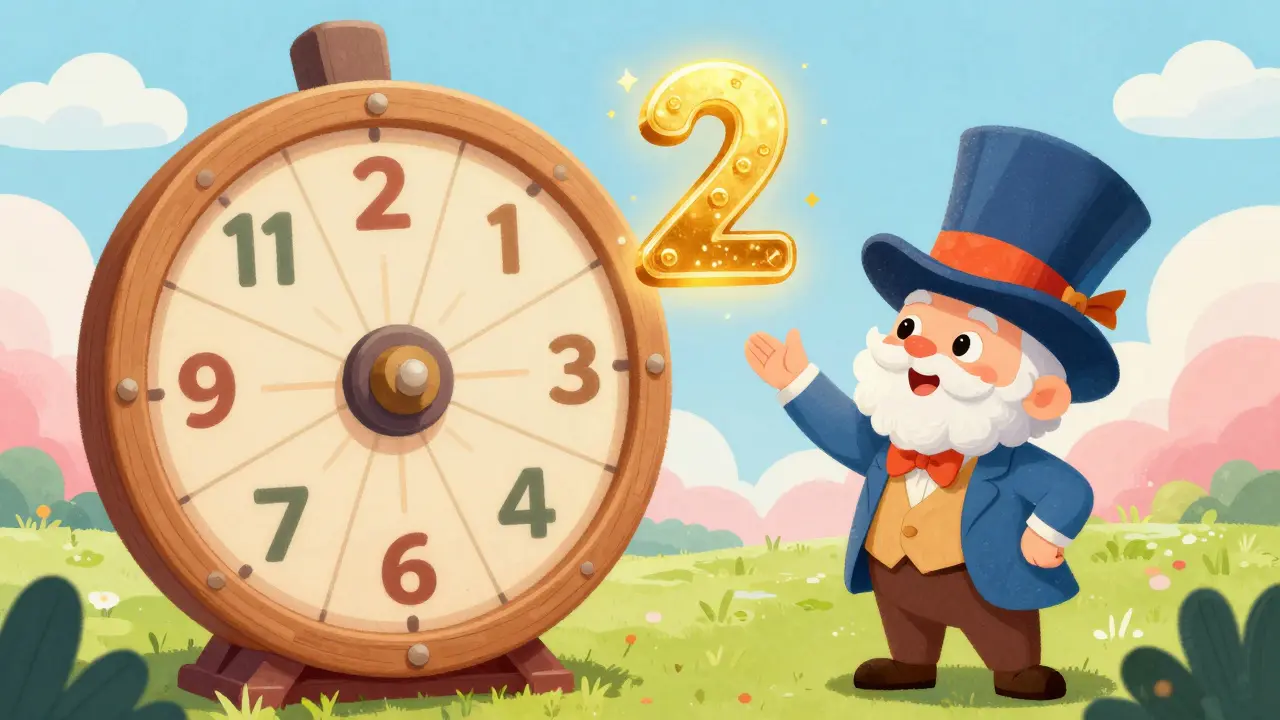
Without this self-regulating system, a blockchain would be chaotic. If a massive wave of new miners joined the network overnight with super-fast hardware, they would solve blocks every few seconds instead of every ten minutes. This would lead to inflation and potential network crashes. By adjusting the difficulty, the network tells the miners, "You're too fast; the puzzle just got harder," keeping everything stable.
How the Difficulty Adjustment Actually Works
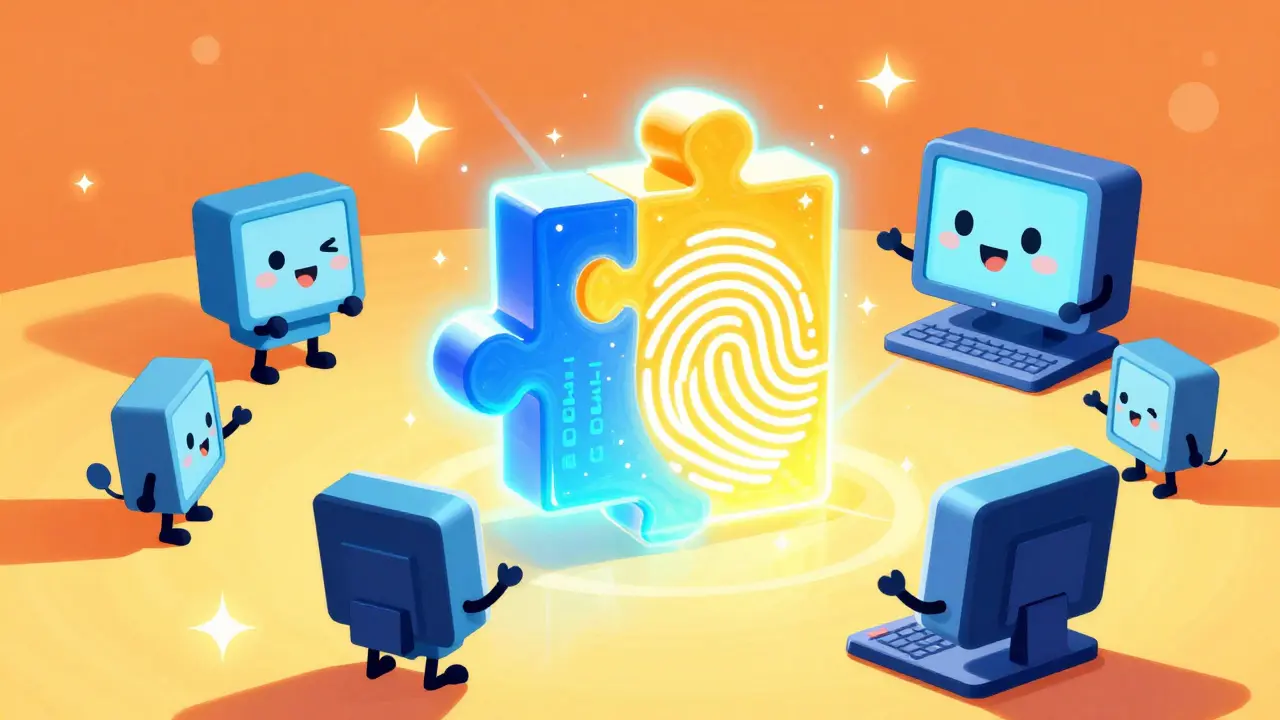
At its heart, mining is a competition to find a specific mathematical value called a hash. Think of a hash as a digital fingerprint. Miners use their hardware to guess millions of variations of this fingerprint until they find one that meets a specific requirement set by the network. This requirement is called the "target."
The relationship is simple: the lower the target value, the harder it is to find a matching hash. When the network notices that blocks are being found too quickly, it lowers the target, which effectively increases the difficulty. To make this fair and stable, Bitcoin doesn't change this value every single second. Instead, it waits for a cycle of 2,016 blocks-which usually takes about two weeks-before recalculating the difficulty.
Here is the basic logic the network uses during an adjustment:
- The Goal: Blocks should be found every 10 minutes on average.
- The Check: The network looks at how long it took to mine the last 2,016 blocks.
- The Math: If it took less than 20,160 minutes (the ideal time), the difficulty goes up. If it took longer, the difficulty goes down.
- The Safety Valve: To prevent wild swings, the difficulty can't change by more than a factor of 4 in either direction during a single adjustment.
The Relationship Between Hash Rate and Difficulty
You can't talk about difficulty without mentioning the hash rate . The hash rate is the total amount of computational power being used by all miners in the network. If more miners join or if existing miners upgrade to faster machines, the hash rate climbs.
When the hash rate goes up, blocks are found faster. This triggers the difficulty adjustment to climb, which then brings the block time back down to that 10-minute average. It's a constant tug-of-war. For example, in the early days of 2009, people mined Bitcoin using basic CPUs (the processors in home computers). Today, the network is powered by ASIC (Application-Specific Integrated Circuits), which are machines built for the sole purpose of mining. This technological leap pushed the difficulty from a starting point of 1 to over 80 trillion in some periods.
| Scenario | Hash Rate Change | Difficulty Reaction | Resulting Block Time |
|---|---|---|---|
| New powerful ASICs enter | Increases ↑ | Increases ↑ (after adjustment) | Stabilizes at ~10 mins |
| Major mining farm shuts down | Decreases ↓ | Decreases ↓ (after adjustment) | Stabilizes at ~10 mins |
| Price crash leads to miner exit | Decreases ↓↓ | Decreases ↓ (delayed) | Slows down temporarily |
Why This Matters for Network Security
High mining difficulty isn't just a hurdle for miners; it's a wall of defense for the network. To attack a blockchain, a malicious actor would need to perform a "51% attack," where they control more than half of the network's computational power. When the difficulty is high, it means the total hash rate is massive.
For a hacker to overcome a high-difficulty network like Bitcoin, they would need to spend billions of dollars on hardware and electricity. This makes the cost of attacking the network far higher than any potential reward. In this way, the difficulty adjustment creates an economic shield that protects your transactions.
The Economic Side: Miner Profitability
For the people actually running the machines, difficulty is the biggest variable in their profit-and-loss statement. As difficulty rises, each miner's share of the total hash rate typically shrinks (unless they buy more hardware). This means they have a lower chance of finding the winning block and earning the block reward.
Miners have to balance three main things: the current cryptocurrency price, their electricity cost, and the network difficulty. If the difficulty spikes but the price of the coin stays flat, small-scale miners often find themselves spending more on power than they earn in coins. This often leads to "mining centralization," where only the giant industrial operations with the cheapest power can survive.
To cope with this, many miners join mining pools . Instead of gambling on finding a block alone, they combine their power and split the rewards based on how much work each person contributed. This smooths out the income and makes mining viable even when difficulty is sky-high.

Different Approaches to Difficulty
Not every blockchain handles difficulty the same way. Bitcoin's two-week window is very stable, but it can be slow to react. If a huge number of miners leave suddenly, blocks might take 20 minutes or more to find until the next adjustment happens.
Other networks have tried to be more agile. Before the big shift to proof-of-stake in 2022, Ethereum adjusted its difficulty with every single block. This meant the network could adapt to hash rate changes almost instantly, though it created a different set of volatility challenges.
Even Dogecoin and Litecoin use variations of these rules. Some use moving averages to prevent the difficulty from jumping too erratically, ensuring that miners aren't suddenly priced out of the market in a single day.
The Future of Mining and Difficulty
We are seeing a shift in how the world views proof-of-work. The energy required to maintain high difficulty levels has led to significant environmental criticism. This is why Ethereum moved to a system where no mining is required at all. In a proof-of-stake system, the "difficulty" is replaced by the amount of currency a validator locks up.
For Bitcoin, the focus is shifting toward sustainability. Miners are moving to regions with excess renewable energy, like geothermal power in Iceland or hydroelectric power in the Americas. While the fundamental math of the difficulty adjustment likely won't change-because changing the core code of Bitcoin is incredibly hard-the way we power that computation is evolving.
What happens if mining difficulty doesn't adjust?
If difficulty remained static while more miners joined, blocks would be produced much faster than intended. This would lead to a massive increase in the supply of coins (inflation) and could cause the network to desynchronize, as some nodes wouldn't receive the blocks fast enough to keep up with the chain.
Does high difficulty mean transactions are slower?
Not directly. The difficulty adjustment's whole purpose is to keep block times consistent (e.g., 10 minutes for Bitcoin). However, if difficulty is very high, it usually means the network is crowded and more miners are competing, which can lead to higher transaction fees as users bid for limited space in a block.
Can I mine Bitcoin if the difficulty is too high?
Technically, yes, but it's practically impossible for a single person with a home computer to find a block. The chance is like winning a massive lottery every day. To actually earn rewards, you would need to join a mining pool where you contribute your small amount of hash power and get a fraction of the reward.
Why does the difficulty change every 2,016 blocks?
This specific number was chosen to provide a balance between stability and responsiveness. Changing too often could make the network volatile; changing too rarely would mean the block time could drift too far from the 10-minute goal during periods of rapid hardware growth.
Is mining difficulty the same as hash rate?
No. Hash rate is the *input* (the total power being thrown at the problem), and difficulty is the *response* (how hard the problem is). When the input (hash rate) goes up, the network increases the difficulty to keep the output (block time) the same.

18 Comments
Rob Mitchell
April 13, 2026 AT 03:41 AMSolid breakdown of the mechanics here.
James Bone
April 13, 2026 AT 12:56 PMIt's honestly hilarious how people think this is just about 'math'. It's a socioeconomic filter. The difficulty adjustment is basically a giant middle finger to the little guy. If you aren't running a warehouse in a place where electricity is basically free, you're just donating your hardware's lifespan to the network. Most people just see a 'guide' and think they can jump in, but the system is designed to consolidate power. It's a digital feudalism masquerading as decentralization, and anyone who doesn't see that is just ignoring the obvious economic reality of hash rate dominance.
Omotola Balogun
April 15, 2026 AT 10:30 AMActually, most ppl forget that the target isn't just a random number but a threshold. If the hash is below the target, you win. The difficulty is just a way to express that target relative to the original one. Its a bit oversimplfied here but it gets the point across for beginners.
Heather Warren
April 17, 2026 AT 06:31 AMI think this is a great way to explain it! For those who are just starting out, looking into mining pools is definitely the best way to go so you don't feel discouraged by the high difficulty. It really helps to share the load and get those steady rewards!
EDOZIEM MICHAEL
April 18, 2026 AT 16:25 PMeverything in the universe seeks balance and the difficulty adjustment is just the blockchain way of breathing in and out keeping the heart beating steady
Aaliyah BROTHERS
April 20, 2026 AT 01:12 AMWAKE UP!!! This 'adjustment' is exactly how they control the flow of wealth!!! It's a rigged game designed by the global elites to ensure that only those with massive industrial complexes can mine the real gold!!! Why do you think they want us on 'renewable energy' in Iceland??? It's about control, control, and more control!!! The math is just a smokescreen for the Great Reset!!!
Amanda Faust
April 20, 2026 AT 03:02 AMBitcoin's 2016 block window is actually quite primitive compared to modern DAG structures
Scott Fenton
April 21, 2026 AT 01:16 AMI would suggest that new enthusiasts research the specific electricity tariffs in their region before investing in ASIC hardware, as the difficulty adjustment can render certain machines unprofitable quite rapidly.
Prasanna Shembekar
April 21, 2026 AT 08:35 AMmy heart sinks thinking about all those miners losing money when difficulty spikes
Jessie Tayaban
April 21, 2026 AT 10:56 AMOmg I totally agree!! Its just so wild how the computers are like fighting each other for a tiny number!! Like its literally a digital war zone out there and we just use it to buy coffee lol!!
Tracie and Matthew Hartley
April 23, 2026 AT 08:25 AMpfft as if proof of stake isnt just as bad but with more buzzwords... totaly fake
Jonathan Chamma
April 25, 2026 AT 07:09 AMIt is wonderful to see people breaking down these complex ideas into something we can all understand. Let's keep supporting each other as we navigate this wild digital frontier together!
william manes
April 25, 2026 AT 13:22 PMUSA makes the best ASICs 🇺🇸🇺🇸 Stay winning! 🚀
Lane Montgomery
April 26, 2026 AT 03:01 AMMining pools are just lazy.
Alan Seiden
April 27, 2026 AT 18:48 PMAbsolute rubbish. The energy waste is a disgrace to any civilized nation, yet people treat this like a scientific breakthrough. It's just a glorified guessing game for gamblers.
Rebecca Violette
April 29, 2026 AT 10:36 AMidk why everyone is so mean here i just want to understand how the coins get made 😭
Stanly Hayes
May 1, 2026 AT 04:19 AMYou guys really need to get out more and stop staring at hashes! This stuff is boring compared to real world assets!
logan bates
May 2, 2026 AT 20:46 PMAmerica leads the hash rate. Period.