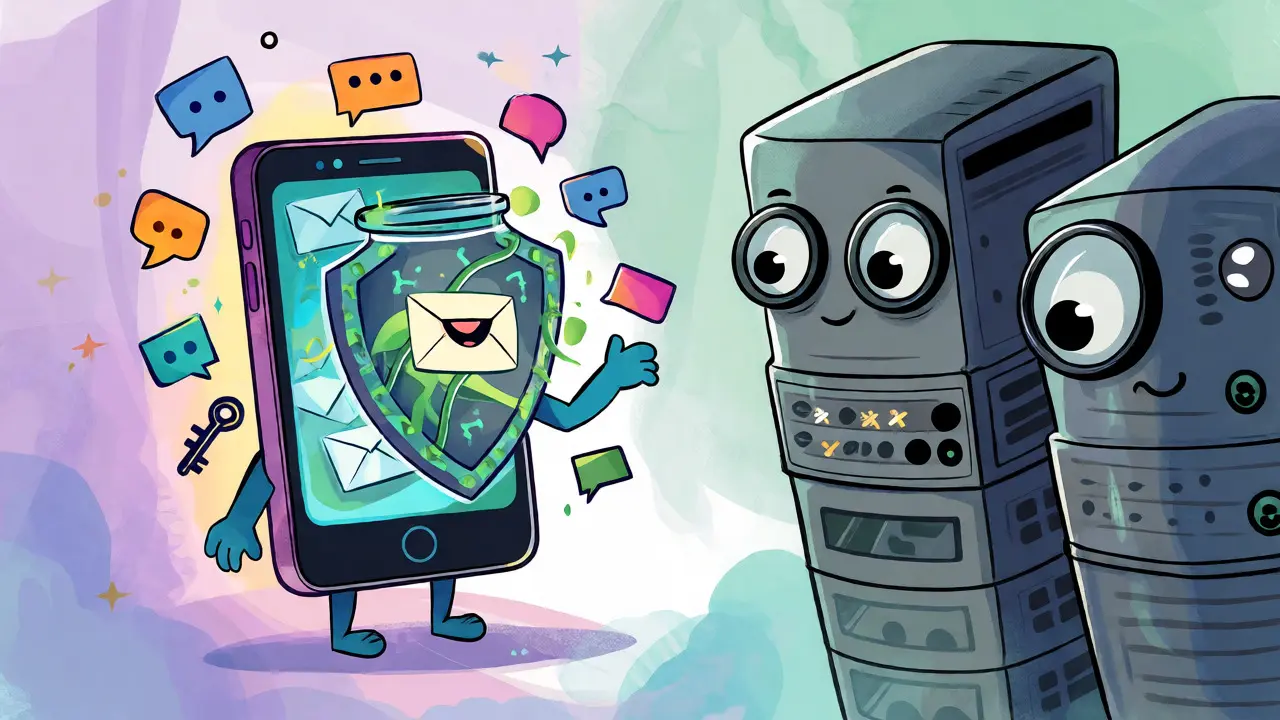
You probably use WhatsApp or Telegram every day. You trust them with your chats, but do you really own your data? What if you could send messages that no server can read, hold your own keys, and browse the decentralized web-all from one app? That’s the core promise of Status and its native token, SNT. But what exactly is this coin, and does it still matter in 2026?
If you’ve seen SNT flashing on your exchange dashboard or heard whispers about a new "gasless" network, you might be confused. Is it just another dead ICO project from 2017? Or is it quietly building something significant? This guide cuts through the noise. We’ll look at what Status actually is, how the token works, why the team is pivoting to a Layer-2 solution, and whether SNT has any real utility left.
The Core Concept: More Than Just a Chat App
Most people think of Status as a crypto wallet first. It’s not. It’s an open-source platform that combines three things usually kept separate: encrypted messaging, a self-custodial wallet, and a browser for Web3 apps. Think of it as a mobile gateway to Ethereum that doesn’t rely on centralized servers like Discord or Slack.
The project launched back in 2017 with a massive $99 million ICO, raising eyebrows and capital alike. The founders, Carl Bennetts and Jarrad Hope, wanted to solve a specific problem: censorship and surveillance. Traditional messaging apps store your metadata-who you talked to, when, and for how long-on their servers. Status uses peer-to-peer technology to minimize this leakage.
Here’s the technical bit without the jargon overload. Modern Status messaging runs on Waku, a protocol designed for decentralized communication. Unlike older systems that used Ethereum’s Whisper protocol, Waku is lighter and more efficient. It ensures that even if someone intercepts a message in transit, they can’t easily tell who sent it or who received it. Your messages live on your device, not in a cloud database owned by a corporation.
Decoding the SNT Token: Utility vs. Speculation
So, where does the token fit in? Status Network Token (SNT) is an ERC-20 token on Ethereum. But don’t mistake it for a simple payment coin like Bitcoin. SNT is primarily a governance and utility token. Its value isn’t tied to equity in a company; it’s tied to the health and usage of the Status ecosystem.
In the early days, SNT was meant for things like reserving usernames, paying for push notifications, and voting on proposals. Today, the role is shifting. With the upcoming launch of the Status Network, SNT is becoming central to staking and network security. If you hold SNT, you’re essentially buying into the idea that a decentralized, privacy-first social layer will become valuable enough to sustain itself economically.
However, there’s a catch. The token supply is huge-over 6.8 billion tokens total. As of October 2026, the circulating supply hovers around 4.8 billion, giving it a market cap of roughly $35 million. That’s tiny compared to major L1s or even many DeFi tokens. This low valuation reflects two things: skepticism about past adoption rates and the high risk associated with unproven future utilities.
The Big Pivot: Status Network and Gasless Transactions
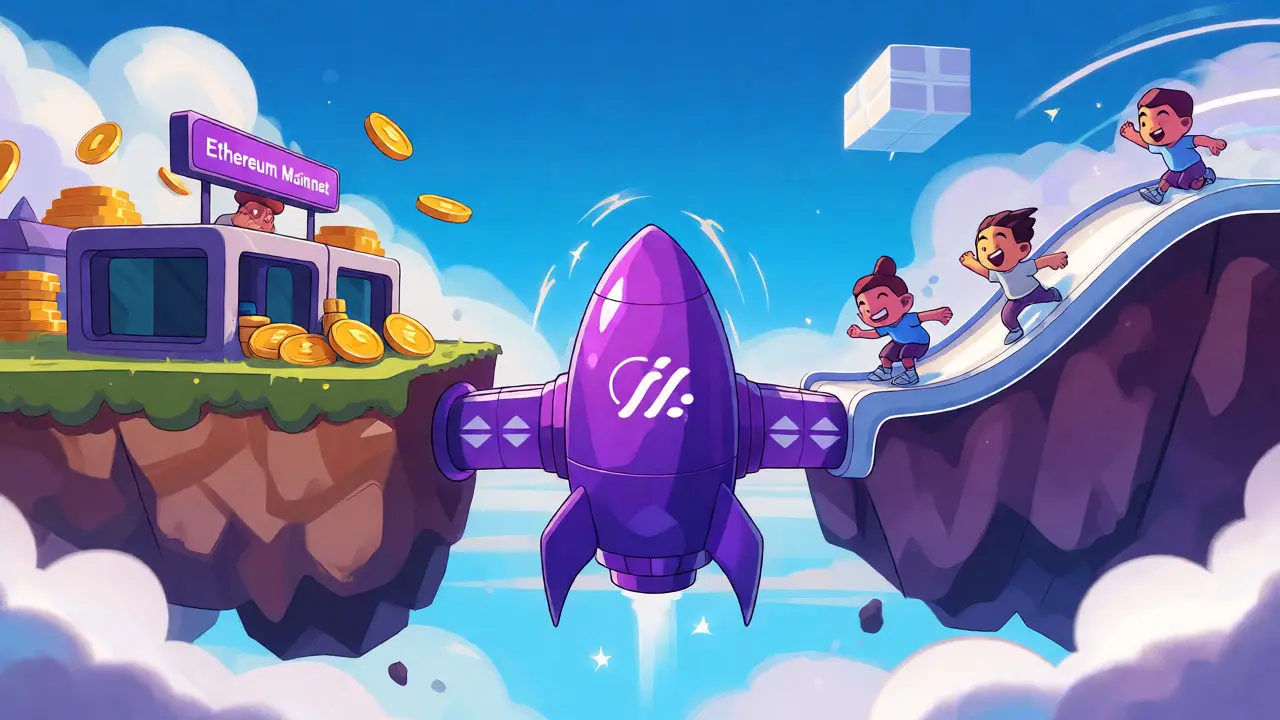
If you only remember one thing about Status in 2026, make it this: the project is moving away from being just an app on top of Ethereum Mainnet. They are building their own Layer-2 network called Status Network.
Why build a Layer-2? Because using Ethereum directly is expensive and slow for everyday chatting. Imagine having to pay $5 in gas fees every time you sent a text message. Nobody would do it. Status Network aims to fix this by offering gasless transactions. How? By leveraging the Linea zkEVM stack from Consensys (the same folks behind MetaMask).
| Feature | Legacy Status (App-only) | Status Network (L2) |
|---|---|---|
| Transaction Cost | User pays ETH gas | Gasless (subsidized/yield-backed) |
| Governance Token | SNT (Voting) | SNT (Staking) + Karma (Reputation) |
| Privacy Focus | Messaging encryption | On-chain privacy + Messaging |
| Tech Stack | Ethereum Mainnet + Waku | Linea zkEVM + RLN Spam Protection |
This shift introduces a new concept: Karma. While SNT remains transferable and tradable, Karma is a non-transferable reputation token. You earn Karma by participating in the network, staking SNT, or contributing to communities. It’s designed to prevent whales from dominating governance purely through wealth, adding a human element to the algorithmic consensus.
Is SNT Worth Holding? Risks and Rewards
Let’s be honest: SNT has had a rough ride. From its peak in 2018, the price has dropped significantly. As of late 2026, it trades around $0.0073. Why hasn’t it recovered alongside the broader crypto bull markets? Partly because the original vision of "crypto for everyone" faced stiff competition from simpler wallets like MetaMask and faster chains like Solana.
But here’s the counter-argument. The integration of messaging and finance is still unsolved. Apps like Telegram have tried crypto integrations (TON), but they often feel clunky or centralized. Status offers true self-custody. If you lose your seed phrase, no support team can help you-that’s freedom, but also responsibility.
Key risks to consider:
- Adoption Gap: Does anyone actually use the chat features daily? Metrics suggest niche usage rather than mass adoption.
- Token Dilution: With billions of tokens, inflationary pressures can suppress price growth unless demand spikes.
- Complexity: Managing SNT staking, Karma, and vault deposits is harder than just holding BTC. Users prefer simplicity.
On the flip side, if the Status Network mainnet launches successfully in Q1 2026 and delivers truly gasless, private interactions, SNT could see renewed interest. Staking rewards provide yield, which attracts passive holders looking for income beyond mere speculation.

How to Use Status Today
Curious? Here’s how to get started without getting burned:
- Download the App: Get the official Status app for iOS or Android. Avoid third-party clones.
- Create a Profile: No phone number or email required. You generate a cryptographic key pair locally.
- Fund Your Wallet: Transfer some ETH or USDC to your Status wallet address. Remember, you control the keys.
- Explore Communities: Join public channels related to DeFi, NFTs, or general tech. These are decentralized spaces, so moderation is community-driven.
- Consider Staking (Advanced): If you believe in the L2 vision, look into the pre-deposit vaults mentioned in recent updates. Note that smart contract risk always exists.
Pro Tip: Use the Keycard hardware integration if available. It adds a physical security layer, ensuring your private keys never touch the potentially compromised software environment of your phone.
Final Verdict
Status isn’t dead, but it’s not the hype monster it was in 2017 either. It’s a resilient project targeting a specific user base: privacy-conscious individuals who want to keep their social life and financial life in one secure place. The introduction of the Status Network and Karma system shows the team is adapting to modern scaling solutions while sticking to their ideological roots.
Should you buy SNT? Only if you understand it’s a bet on the success of a decentralized social infrastructure. It’s not a quick flip. It’s a long-term play on the idea that we’ll eventually reject centralized silos for our communications. If that thesis holds, SNT has room to grow. If users continue preferring centralized convenience over privacy, it may remain a niche asset.
Is Status a good investment for beginners?
Probably not. SNT is a volatile asset with complex mechanics involving staking and new network launches. Beginners should stick to established assets until they understand the risks of small-cap altcoins.
Can I buy Status (SNT) on Coinbase or Binance?
Availability varies by region and exchange. Check major platforms like Binance, OKX, or Kraken. Always verify the contract address (0x744d...5b9e) to ensure you’re buying the correct ERC-20 token.
What is the difference between SNT and Karma?
SNT is a transferable cryptocurrency you can trade. Karma is a non-transferable reputation score earned through participation. SNT represents economic stake; Karma represents social contribution within the Status Network.
Does Status charge transaction fees?
Currently, yes, for on-chain actions on Ethereum. However, the upcoming Status Network Layer-2 aims to eliminate gas fees for users, subsidizing costs through yield mechanisms and network incentives.
Is my chat history stored on the blockchain?
No. Chats are stored locally on your device. The blockchain is used for identity verification and token transactions, not for storing message content, which keeps costs low and privacy high.
